


A slender brick smokestack sticks up between the trees, while a little further on the massive silhouette of a dormant blast-furnace stands out against the surrounding countryside. These are among the relics of factories that were for long the livelihood of the Andelle valley, beginning in the late 18th century.
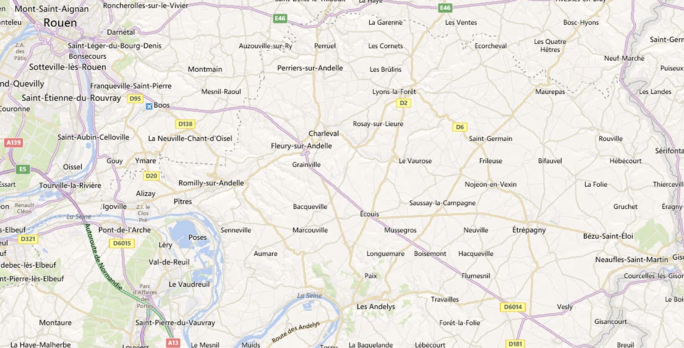
In this largely verdant stretch of countryside, situated between Rouen and Paris in the Eure département (county), in Upper Normandy, there are plants that have recently closed down, and others that are struggling to survive, offering severance packages for those who leave of their own accord (see slideshow here). Those that are still occasionally hiring offer only temporary posts. These companies once provided a livelihood for whole families, but are now liable to lay off more workers, whose children are condemned to temporary jobs and joblessness.
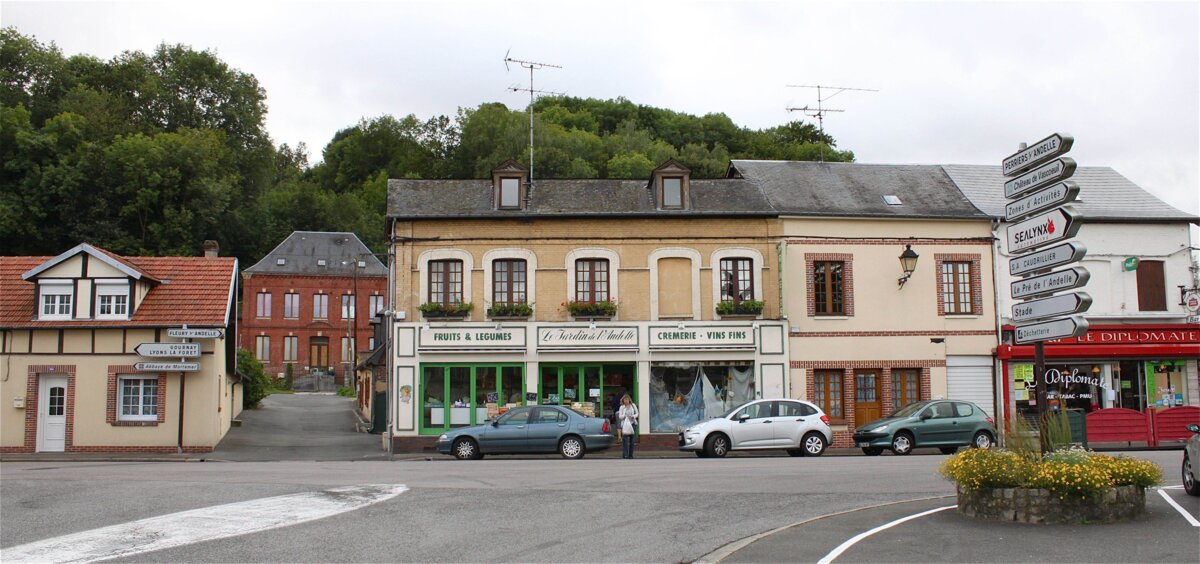
Unemployment has now hit 25% of young men here aged 15-24, and 35% among young women. “There was a time, and not so long ago, when we’d tell kids: no need to take your CAP [Editor’s note: vocational school-leaving certificate]. There’s no need for a diploma to work at Mesnel!” recalls Olivier Martin, the union representative at the Sealynx-Automotive factory. Once a textile mill, it is now used to manufacture rubber gaskets for cars.
Enlargement : Illustration 1
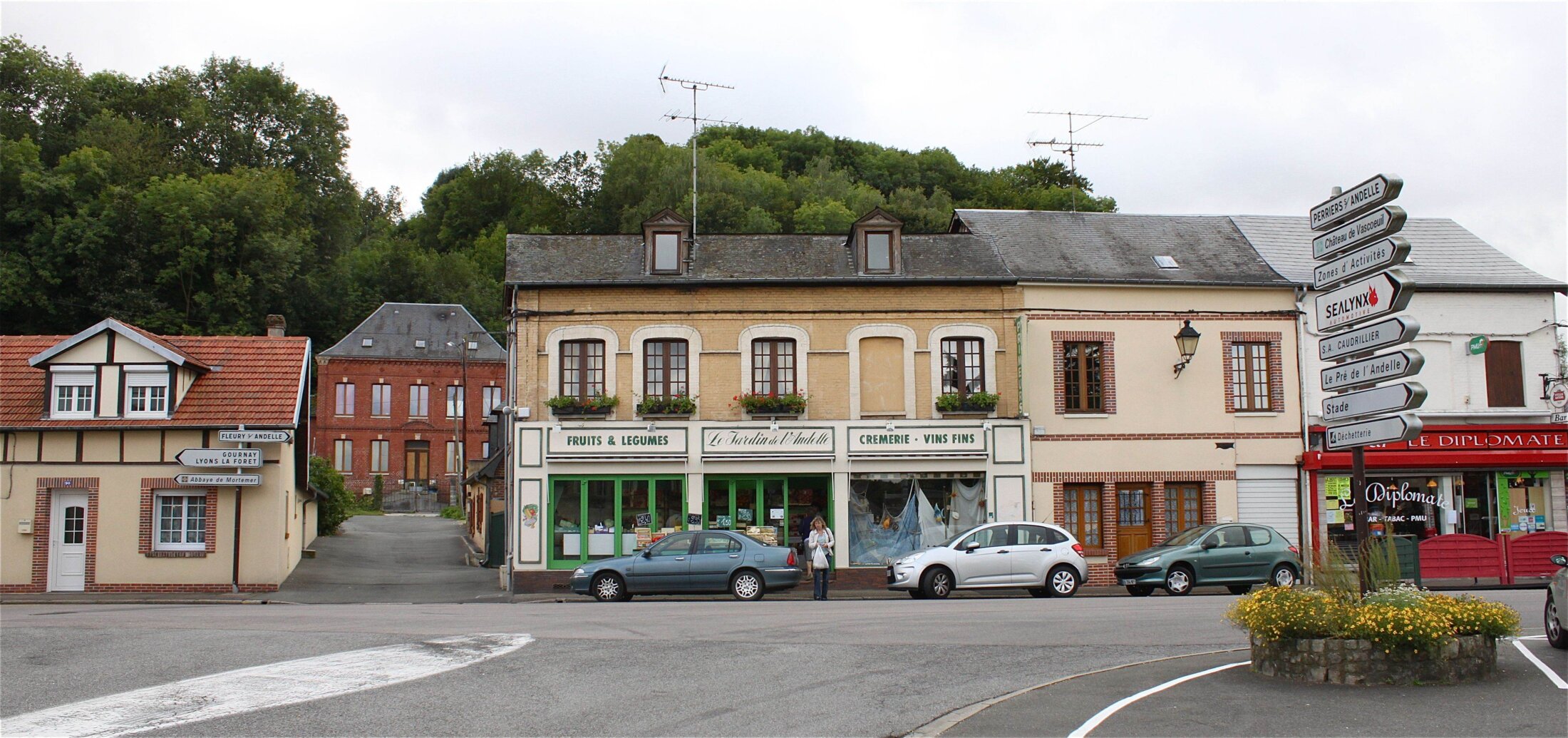
The company, which used to be the mainstay of the village of Charleval, with a population of 1,850, has been in receivership since the end of April. It is the second time it has filed for bankruptcy in less than two years. The latest would-be buyer, an Indian company called Ruia, never followed up on its offer. Until a new candidate to take over the company comes along, the employees are pinning their hopes on a batch of orders promised by carmaker Renault – and waiting for retirement. “A factory where the average age is 49 is clearly a factory in trouble,” sighs Olivier Martin as he rails against what he sees as the government’s ineptitude. “Either they want to save industry or they should tell us starting now, ‘Brace yourselves for unemployment!’”
Enlargement : Illustration 2

And yet it wasn’t long ago that Mesnel’s workforce outnumbered the population of Charleval: 2,000 people were on the company payroll in the early 1990s. The workforce has been scaled down by a factor of four since then and production is going slow. Those on a one-week temporary contract don’t know whether the contract will be renewed until the end of the week.
In spite of all, just about everyone around here ends up working on the assembly line at one point or another. “Young people here do odd jobs. They live with their folks till they’re 30,” says Olivier Martin. “Otherwise they have to drive 50 km for a minimum wage. At least here they’re going to earn 500 euros more.” These days, for example, Sealynx is hiring 90 temps, some of whom have landed 18-month contracts with the company. And many of them are the children of permanent employees.

Enlargement : Illustration 3
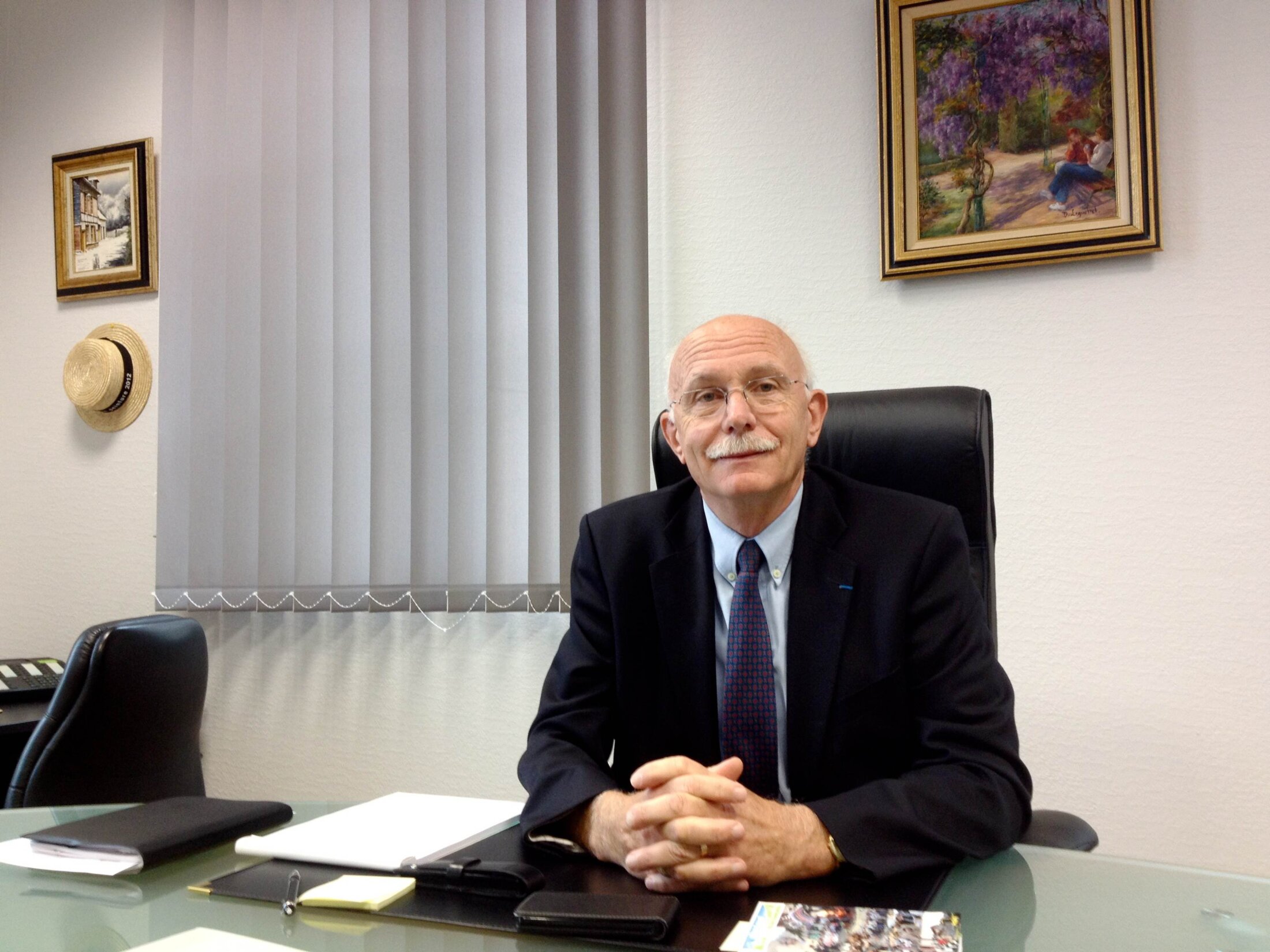
However, over at Charleval’s small town hall, Mayor Denis Lebaillif (Socialist Party) assures us that the days are gone when the children’s goal was to sign up with Mesnel like their parents.
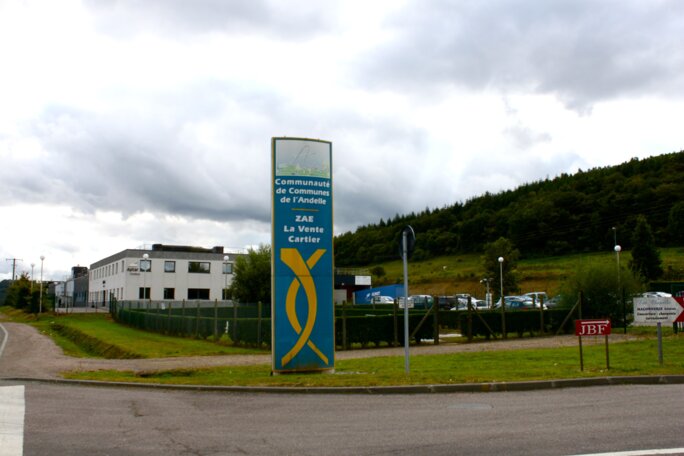
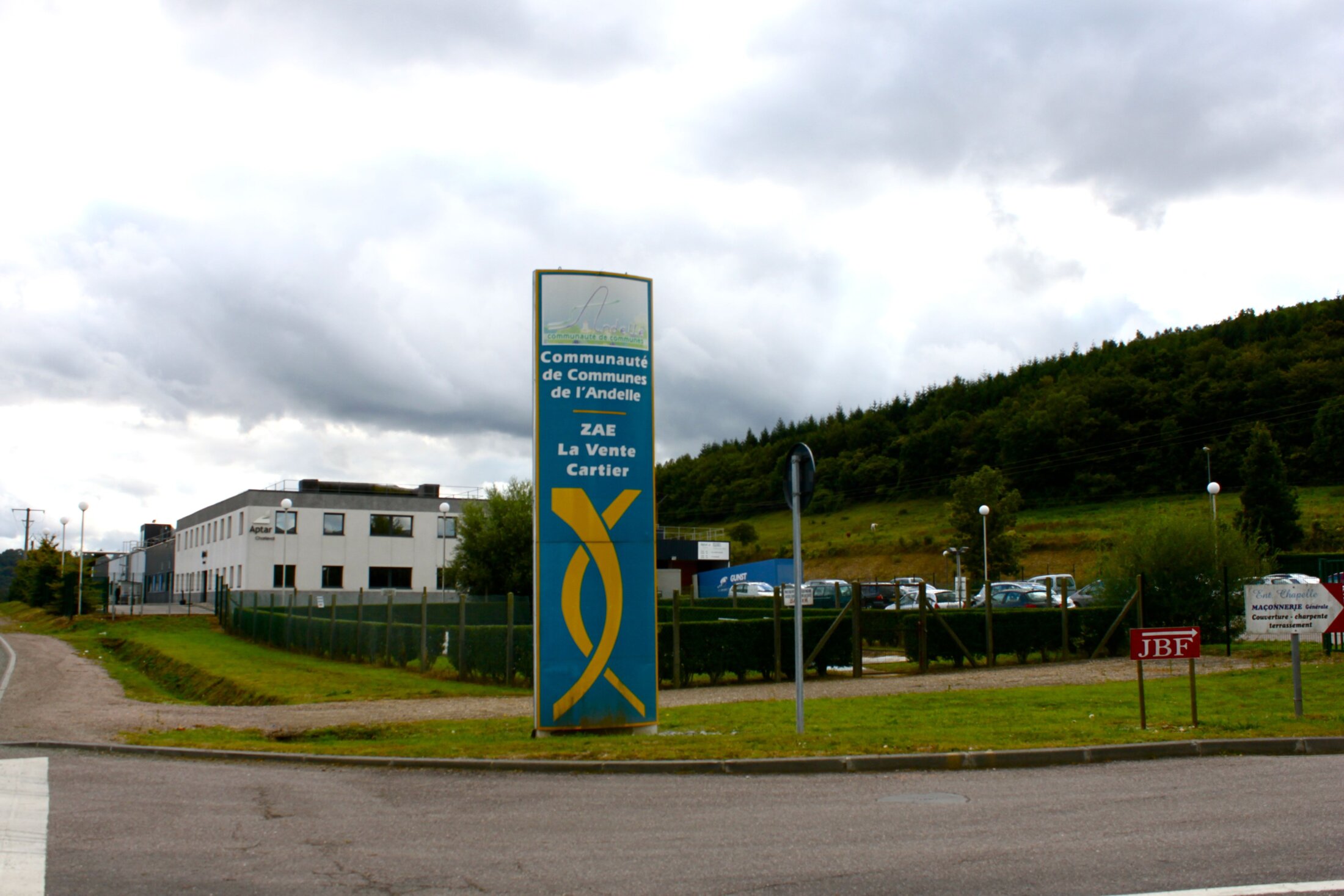
“For about 15 years now, people have been opening up the range of their job search,” says the mayor, who goes on to enumerate measures implemented by the association of local authorities to “run counter to the notion that Andelle Valley is dying”. Municipal land has been freed up to attract businesses and maintain jobs in the sector. In particular, two industrial estates were set up in early 2007 in Charleval and nearby Bourg-Beaudouin, and the road infrastructures in the region are regularly repaired.
But these efforts have not made a significant change. The companies that have just located here often hire skilled workers only. And in Charleval, the unskilled make up 36% of the population (as against 19% on average in France as a whole).
'With or without diplomas, there's no work'
The political will to make a change is coming up against some home-grown difficulties in this part of rural France, which has been hard hit by deindustrialisation. And the mayor admits that there is a “lack of cultural openness” here that further dims the prospects for his constituency. “But seeing as there’s no public transport, it’s hard to open up,” he adds in their defence.
Denis Lebaillif was head of the Salvation Army’s local branch till 1992. “Already back then, the main difficulty for the people we were looking after was getting to the employment agency in Louviers,” he recalls. Charleval’s jobseekers are still 30 km away from the nearest employment office. It’s a 40-minute drive, and there’s no way to get there without a vehicle.

Enlargement : Illustration 4
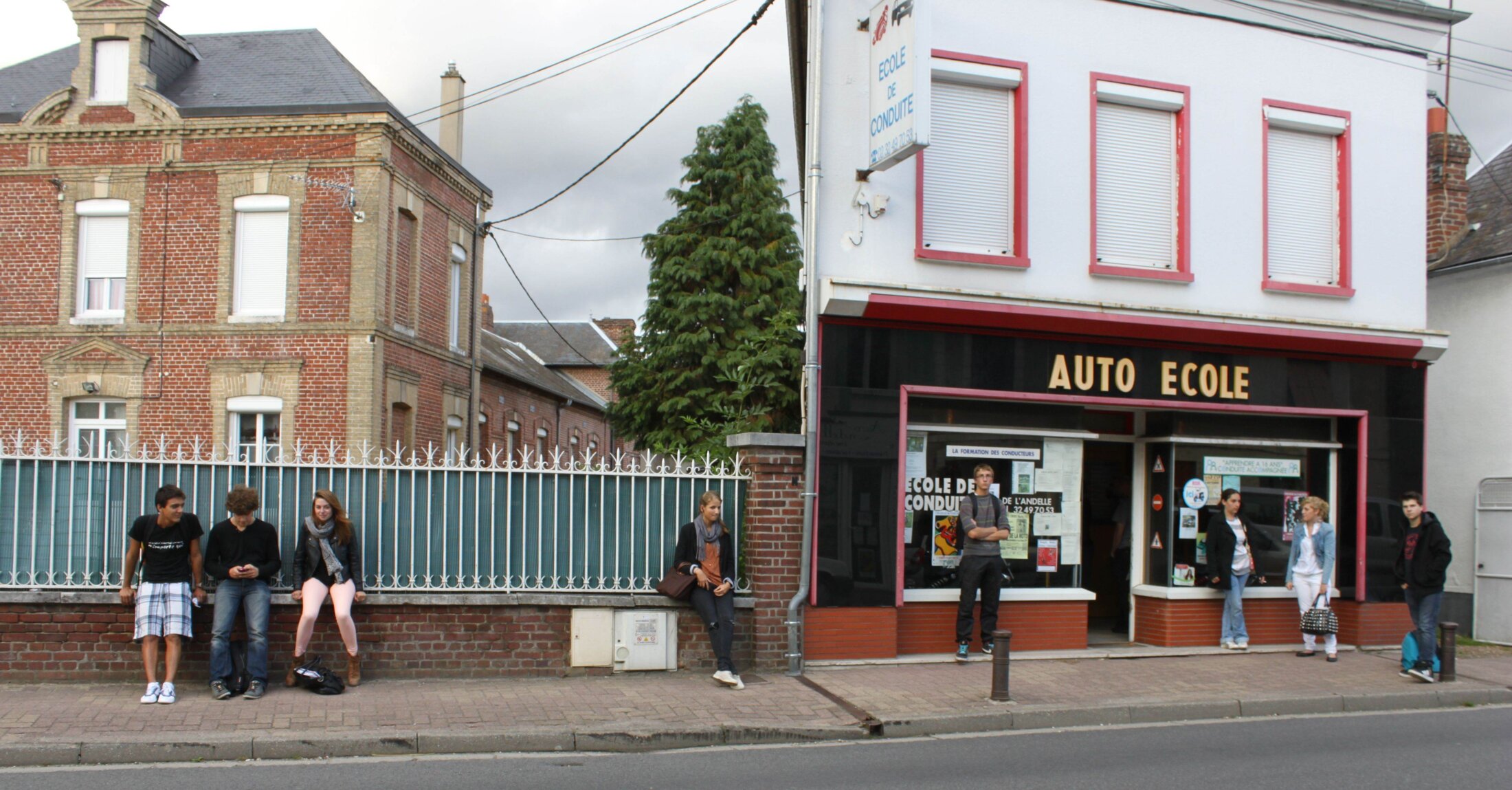
Because he doesn’t have a driver’s licence, Clément, who has just turned 18, won’t be able to make it to his first appointment at the employment office next week. “Normally I manage to catch a lift with my brother or my great-aunt. But no-one can take me that day,” he explains.
As soon as he got his vocational certificate in accounting, Clément signed up at a temporary employment agency. “I wasn’t all that interested in school anymore after I saw there were some job prospects,” he recounts. According to the French national statistics and economic studies institute, INSEE, 33.3% of Charleval’s young population attend university, as against 51% in France as a whole. Sitting beside him is Brandon,19, who dropped out of school a year before graduation for a temp job at the Ondulys cardboard-making mill. Like his father, who has been on the payroll there for years.

Enlargement : Illustration 5

As for Clément, between the cost of getting a driver’s licence and rent, he does not see how he could possibly afford higher education at this point. The only training programmes that interest him are located in Rouen, 25 kilometres away, or Paris, which is 90 kilometres distant. Too far for him. “Nowadays, without qualifications there’s no work, and with too many qualifications there’s none either,” he says with a certain fatalism. “So you might as well stop with a school-leaving certificate.”
To explain his decision, Clément also cites the example of his 22-year-old brother, who has been working at the factory for two years. The latter, with his certificate in electrical engineering, did land a permanent job, but ultimately opted for the insecurity of temp contracts because they’re “a lot better paid”.
Father takes son to work at 3.30 a.m., four hours before his own shift
In her office at the youth welfare service on an industrial estate outside Charleval, Béatrice Courbois receives each year close to 300 young people who are having a hard time landing a job for want of skills and the wheels they need to escape their rural isolation. “It’s also a lack of mobility ingrained in people’s minds,” says her co-worker, who has just walked into the office. “We’re in a working-class area that’s very rural, too. The parents always found work in the nearest factory. Commuting 10 kilometres to work already seems like a big deal to them.”
It’s mainly the tertiary sector that is still hiring in the surrounding area. A course of training in home help is given every other year in Charleval. But there, too, you have to work out your timetable carefully to minimize the cost of making the rounds, as patients often live very far apart.
Enlargement : Illustration 6
Several initiatives have been started up to ease the mobility problem. The social services office offers to pay for driving lessons for young people who, in exchange, work for the local authorities in the summer. In parallel, the association of local authorities and the youth welfare office are putting together a state-funded ‘mobility fleet’. The two scooters and one moped currently available can be rented by locals for a nominal fee: 4.50 euros per week for jobseekers, 12 euros for jobholders whose earnings are below minimum wage and 15 euros for those who make more.
“This is a first access to means of transport, which can make it easier to look for work,” explains Béatrice Courbois, in charge of the project. “Rentals are limited to three months at most. After that we ask the person to make arrangements to find a vehicle of their own.”
Béatrice has just informed Alexandre, 23 that the scooter he’s been hiring for two months has to be passed on to someone else soon, so it’s up to him to find a solution to get to the Sealynx factory, where he’s been working for several months.
In a low, unsteady voice, Alexandre talks about his temporary employment and the series of odd jobs that have somehow kept him going for years now. His more expressive girlfriend, Amandine, 24, repeatedly butts in to provide further detail: “He landed a job for four months. That’s pretty good. Sometimes that can run for up to 18 months. Then again,” she adds pouting, “there’s no permanent openings.”
Initially, Alexandre had made arrangements for a workmate to drive him to work eight kilometres from home. But when the latter changed shifts, Alexandre’s father had to take over. “Except that he had to get up at 3.30 to drive me, though he started work himself at 7.30.,” says Amandine. His father also works at Sealynx.
'Sometimes, for ten minutes, we think of leaving'
Alexandre and Amandine scrape by on temporary contracts, with a little help from the dole when they can get it. “There are times when there’s nothing doing. The trick is to look at the right time,” explains Alexandre. “Over the holidays I knew there’d be openings. Afterwards, you’ve got to try hard to stay on.” For the time being, his weekly contract has been regularly renewed, but he knows the factory might lay him off from one day to the next.

Enlargement : Illustration 7

Amandine frowns: “Actually, the problem is you end up working just to get the dole. You force yourself to do a job you don’t like for six months just to get entitled and not to be up shit creek in the winter.”
A few years ago, Alexandre attended a sandwich course of training in timber framing construction, which he then quit two months before the certificate. “I knocked myself out to get there, it was too complicated without a car,” he recalls with regret. “What’s more, they’d promised me 700 euros’ pay, but in the end they only paid me 300 euros a month.”
His girlfriend, who comesfrom the nearby town of Les Andelys, describes a similarly chaotic career. With only a vocational certificate in secretarial and administrative studies, she has never landed a long-term job. Two years ago, the employment office did offer her a CAE (contrat d’accompagnement à l’emploi), a state-subsidised temporary employment contract for young people. For a year and a half, she worked as an attendant in the employ of the local authority. It was a half-time job at minimum wage, i.e. three days a week for 610 euros a month. The pay was derisory, but she accepted because it was meant “steady work for at least 18 months”, which was better than nothing.
Amandine and Alexandre aren’t making any real plans for the future. They want kids, yes. A flat of their own someday, maybe. But for the time being, they’d rather wait and see. “This whole situation doesn’t really make you feel like giving anything a try,” says Alexandre warily. “If it’s to come up empty when my contract runs out, if it’s only for me not to find any work afterwards . . . .”
Amandine nods. “It’s true that sometimes it crosses our minds, for ten minutes, to leave for Rouen. But when you’re born here, we’re used to it,” she smiles.
It will soon be time for them to say goodbye and go home to Charleval. The town itself is a half-hour away from the youth welfare office, by foot.
-------------------------
English version: Eric Rosencrantz
(Editing by Graham Tearse)