


Six months after the eruption of the “Qatargate” scandal over alleged bribery of European Parliament members by Qatar and Morocco, the European Commission on Thursday and after several delays finally presented its proposed “Ethics Body” aimed at tightening anti-corruption measures within the bloc’s institutions.
But the proposal has been denounced by transparency NGOs and Members of the European Parliament (MEPs) as “toothless” and a “missed opportunity”.
Last December, the European Parliament was rocked by the opening of a Belgian judicial investigation into alleged an alleged cash-for-influence scam involving the bribing of present and past members of the chamber in exchange for promoting the interests of Qatar and Morocco.
Among those arrested in police raids in Brussels, where cash sums totalling more than 1.5 million euros were found, were the vice-president of the parliament, Eva Kaili, her Italian partner Francesco Giorgi, who worked as a parliamentary assistant, and also Pier Antonio Panzeri, a former Italian leftwing MEP who headed a human rights NGO.
Qatar and Morocco have denied any wrongdoing, and the Belgian investigation continues.
The “Ethics Body” presented on Thursday is what the Commission called an “interinstitutional” entity setting "common standards for ethical conduct" that would apply to at least nine institutions of the European Union (EU), including the Commission itself, the European Council, the European Parliament, the European Central Bank and the EU Court of Justice. The standards would relate to matters such as outside work undertaken by members of the institutions, and gifts and hospitality they may be offered by third parties.
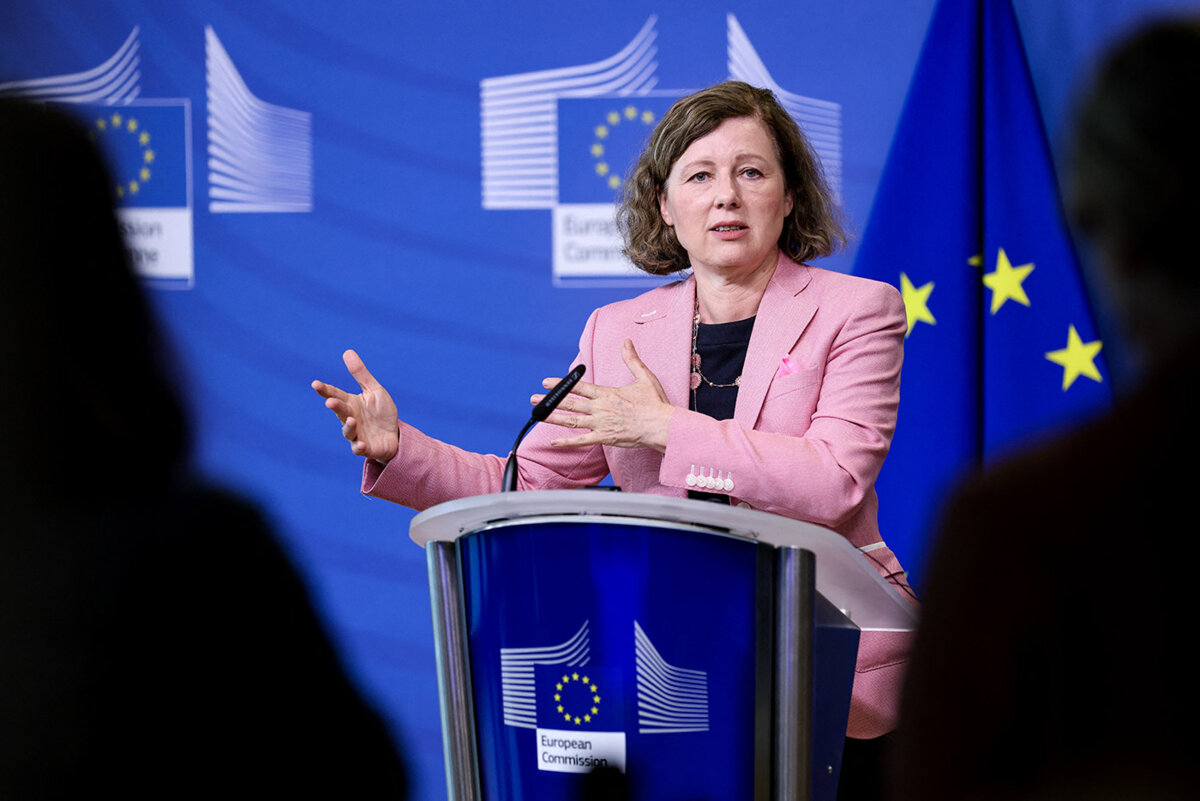
The creation of such a body was already promised by the Commission’s current president, Ursula von der Leyen, in the summer of 2019 in her investiture programme, but it has taken four years and a major scandal, which has hastened its presentation, for the project to be officially detailed. “There are criminal issues, such as corruption, that are already illegal. And there are authorities like the police, or prosecution services and judges to deal with these issues. Qatargate is a good example of this,” said EU commissioner for values and transparency, Vera Jourová, presenting the blueprint on Thursday. “But, as we all know, opportunity makes a thief. There are circumstances that can make certain crimes easier.”
Enlargement : Illustration 1

But the proposed nine-member body has been met with sharp criticism from both leftwing and rightwing MEPs. It will have no ability to launch its own investigations or to ensure the respect of the rules set out. Instead, it will be up to each institution to verify the rules are upheld, and to decide on eventual punishment if they are not, in what NGO Transparency International dismissed as a “a toothless talking shop”.
“This proposed ethics body reinforces the EU’s business-as-usual, self-policing approach to misconduct,” said Transparency International’s deputy director Nicholas Aiossa in a statement issued on Thursday. “If the EU is to be serious about combatting corruption within its own ranks, it must ensure that any independent oversight body has the power and resources to investigate and sanction members engaged in wrongdoing.”
MEP’s have been no less scathing. “The Commission has come up with something that is totally disappointing, not meeting expectations and uninspired, after dragging its feet for years,” said German MEP Daniel Freund, who sits with The Greens group. “We’re not lacking in rules about lobbying in Brussels, but we have an enormous problem with the application of these rules.”
After the Qatargate scandal broke in December, the European Parliament that same month approved, by a vast majority of MEPs, a resolution in which it called for the establishment of an “independent ethics body”, far more ambitious than what was outlined on Thursday. This would not have been made up of members of EU institutions, but instead it would be led by a panel of people from outside of them, and with powers to lead investigations.
The proposals set out by the Commission were “a totally missed opportunity” for Gabrielle Bischoff, a German social-democrat MEP who sits with the European Socialists group. She has called for a debate on the subject during a plenary session of Parliament next week in Strasbourg.
Commissioner Jourová on Thursday argued that under EU rules, there was no “legal basis” for launching in-house investigations into individuals across the institutions, implying that to introduce such powers would require a reform of the bloc’s treaties.
She insisted that the activities of the proposed Ethics Body, if ever it is approved, would be complimentary to those of two existing entities. These are the European Anti-Fraud Office (OLAF), which is empowered to investigate alleged serious breaches of professional duty by EU employees, and the European Public Prosecutor’s Office (EPPO), which has the brief to investigate and prosecute crimes concerning the EU budget.
But her comments failed to convince doubters even within her own political camp. A liberal Czech politician, Jourová belongs to the European Parliament’s Renew Europe group, which is chaired by Stéphane Séjourné, a French MEP from president Emmanuel Macron’s Renaissance party. Speaking to Politico on Wednesday, the day before Jourová’s presentation, Séjourné declared: “Renew will not be part of this mockery. We will not negotiate something that is so far from the position of our Parliament. A real ethics body was a promise of Ursula von der Leyen in 2019 […] How come the Commission can propose something so empty?” Cited on the Renew group’s website, Séjourné also described the proposed measures as a waste of time (literally, in French, “a sword strike at water”).
Beyond the Ethics Body proposals, little has emerged from Brussels since the “Qatargate” scandal in the way of anti-corruption reform. “What has changed since? Not very much,” commented Shari Hinds of Transparency International’s Brussels-based “EU Integrity” team.
While “Qatargate” revealed the role in the corruption scandal of the Brussels-based human rights NGO, Fight Impunity, set up by former MEP Pier Antonio Panzeri, many rightwingers in the European Parliament argued that the urgency was not to reinforce transparency rules in the EU institutions, but rather to better control the activities of NGOs. “We need to talk about NGOs”, thundered the EPP group, the largest conservative alliance in the European Parliament, in a post on Twitter in mid-December.
But the Parliament’s president, the Maltese conservative MEP Roberta Metsola held firm, with the presentation in February of a reform plan of 14 points aimed at tackling corruption in the assembly. "I promised quick and decisive action in response to trust lost […] The reforms are the first steps in rebuilding trust in European decision-making, and I hope will go some way in showing that politics is a force for good", she said then. Following that, a cross-party working group of seven MEPs are studying how to concretise the proposals for a reform of the Parliament’s internal procedures.
However, Transparency International’s Shari Hinds was critical of the fact that the working group’s discussions on reinforcing anti-corruption measures are being held behind closed doors.
“We must all the more reinforce our rules given that the Commission, we see today, has not turned up,” said Gwendoline Delbos-Corfied, a French MEP with The Greens who sits on the working group. For her, the negotiations among the group’s members are arduous but heading in the right direction, notably over the issue of what constitutes a conflict of interests, including in financial matters. “We are, for example, obtaining that MEPs are not only bound to declare their earnings, but also their wealth, like in [the parliament in] France,” she said. The working group is also debating a proposal to fix a ceiling of 5,000 euros per year on what MEPs can earn from outside work, a measure that would represent a major change to parliamentary practices.
The group’s first report outlining their agreed proposals is due to be finalised this summer, with the aim of introducing a reform of the rules ahead of European Parliament elections in June 2024.
Meanwhile, one more immediate and concrete measure following the “Qatargate” scandal is that MEPs are now required to give up their badges allowing access to the chamber as soon as they have ended their term as a member, whereas previously many held on to them to gain access months after leaving.
-------------------------
- The original French version of this report can be found here.
English version by Graham Tearse