


Close to a third of Members of the European Parliament (MEPs) rack up millions of euros in extra income from jobs and positions they occupy outside their parliamentary activities, with French MEPs earning the most from the ‘moonlighting’ jobs, according to a report published this week by the anti-corruption organisation Transparency International.
The report calculated that over the first four years of their five-year mandate, between July 2014 and July 2018, half of the 74 French MEPs present in the Strasbourg-based parliament earned at least 4.5 million euros from extra-parliamentary activities.
But the very top earners from second jobs during that same period were found to be Italian MEP from the S&D socialist group, Renato Soru (more than 1.5 million euros from his directorship of telecommunications firm Tiscali) , Lithuanian MEP Antanas Guoga from the conservative EPP group (more than 1.3 million euros from online businesses and poker playing), and Belgian MEP Guy Verhofstadt, who is calculated to have earned at least 920,000 euros (and possibly as much as 1.425 million euros) as a board member of investment company Sofina and also as a conference speaker.
French conservative MEP Renaud Muselier came fourth, earning at least 816,000 euros and possibly as much as 1.586 million euros between 2014 and 2018 from his activity as a director of a Marseille clinic. He did not respond to Mediapart’s request for an interview. In fifth place of the table of highest outside income earners was former French justice minister Rachida Dati who earned, over the same period, 768,000 euros from her work as a lawyer.
The reason for the broad range of the indicated minimum and maximum amounts earned by MEPs from outside activities is because the self-declared monthly incomes from extra-parliamentary activities are categorised in tranches, beginning with between 1- 499 euros, and ending with that of above 10,000 euros.
MEPs have a yearly gross salary of 101,808 euros (or 8,484 euros per month), not including various allowances. In its report, presented on Tuesday, Transparency International underlined that, while a number of MEPs claim their extra-parliamentary activities bring them closer to outside society, or offer a professional future if they lose their mandate, “having an outside job on top of a full-time activity as an elected member of parliament can also create conflicts of interest or prevent MEPs from devoting sufficient time and attention to their roles as elected representatives”.
Among the eight pan-European political groups present in the European Parliament, it was the far- and hard-right ENF (which includes France’s National Rally party, formerly called the Front National) which had the highest proportion of MEPs with outside activities, with 19 out of the total of 35 group members, or 54%, declaring secondary income. But all of the parliamentary groups include extra income earners, while the least are found among the Greens (23%) and radical-left GUE-NGL (18%).
According to his own declarations, Nigel Farage, the former leader of the British anti-immigration and pro-Brexit party UKIP, was estimated to have earned between 590,000 -790,000 euros over the four years chiefly from broadcasting work, and notably a regular show on London-based radio LBC.
According to her declarations, Luxembourg’s Viviane Reding, who thrice served as an EU commissioner, latterly responsible for justice and fundamental rights, a member of the conservative EPP group, earned between 113,000 - 541,000 euros since 2014 from her various directorships, notably as a board member of the Agfa-Gevaert imaging products company and also the Bertelsman Foundation and Belgian mining group Nyrstar.
In all, 31% of the European Parliament’s 751 members (more than double the number at the start of the current legislature) declare receiving remunerations from outside activities, totalling over the four years since 2014 a minimum of 18 million euros in extra income – and a possible maximum of 41 million euros. Transparency International found that 35 MEPS had earned more than 100,000 euros on top of their parliamentary salaries over this period, and that between nine and 30 MEPS earned more from outside activities than from their activities as parliamentarians.
Enlargement : Illustration 1
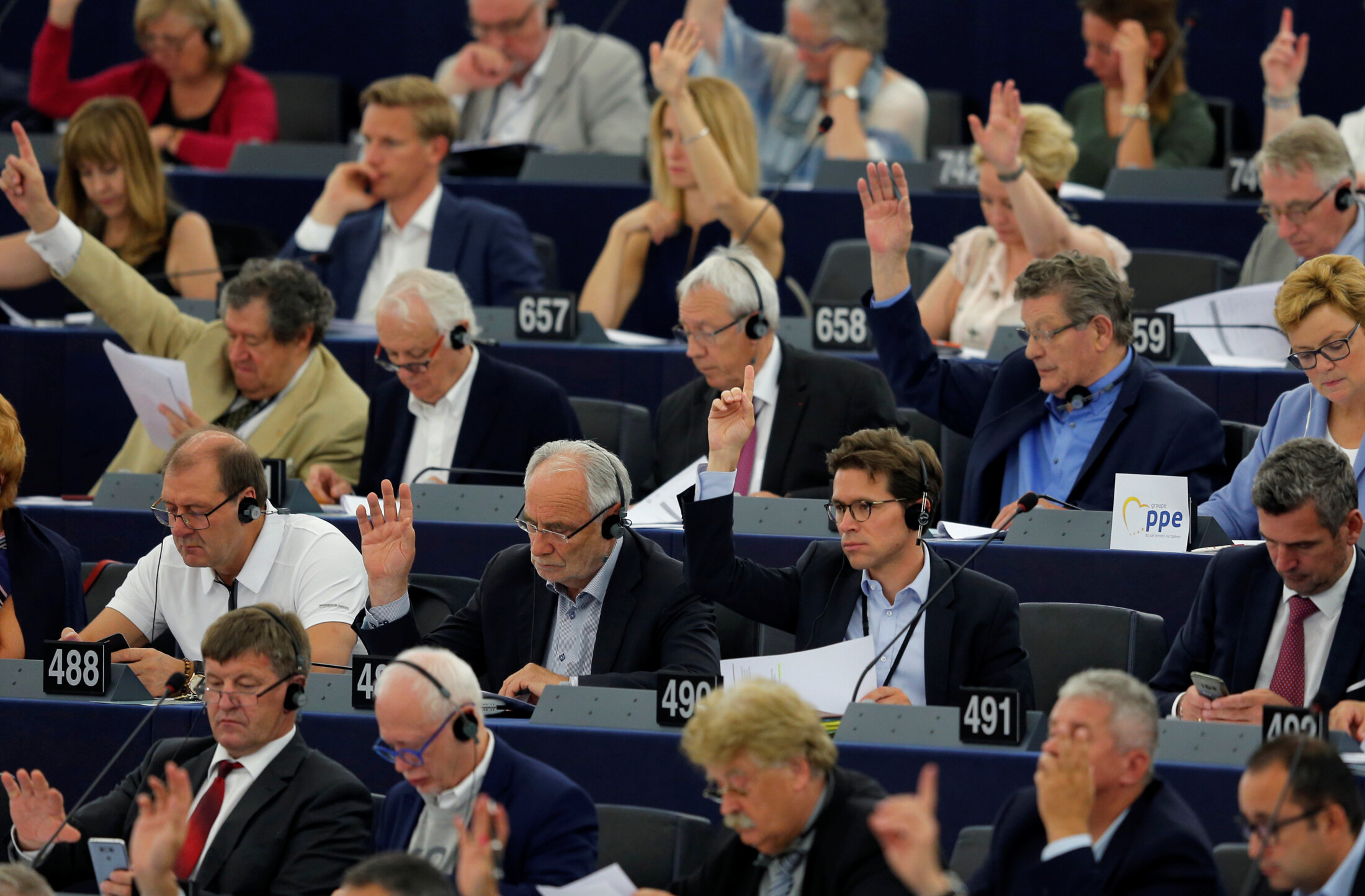
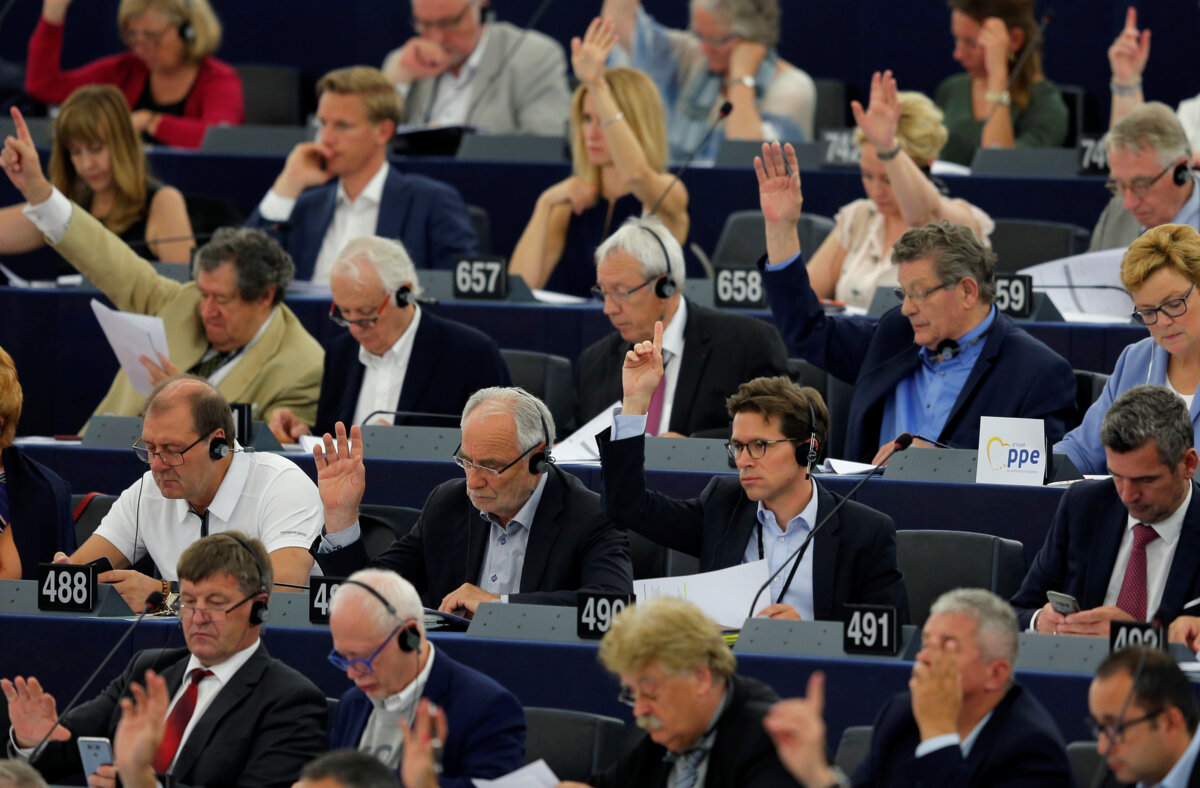
MEPs are among the highest paid elected political representatives in Europe. On top of their monthly gross salary of 8, 484 euros, they receive a gross monthly sum of 4,416 euros in expenses allowances, and which in reality often bumps up their earnings. Added to this, they also receive bonus payments for their presence at certain meetings of parliament, notably plenary sessions, and for transport costs. As a result, most of the 751 MEPs earn, after tax deductions, between 12,000 euros and 14,000 euros per month paid from the public purse.
French conservative MEP Philippe Juvin declared earnings between 2014 and 2018 of at least 170,000 euros from his work as a Paris hospital doctor. “My earnings are known, they are in line with the public services’ grill,” he told Mediapart. “I have always declared having a professional activity in parallel with my role as an elected representative. I manage to organise myself, I work a great deal. For me, what is abnormal is rather being only an elected politician.”
According to Rachida Dati’s declaration of outside earnings, updated in April 2018, she receives a gross monthly sum of 16,000 euros from her fees as a lawyer, an activity that has no apparent link to her role as an MEP. Elected mayor of the 7th arrondissement of Paris in 2008, and reelected to the post in 2014, she has been an MEP since 2009. In 2013, French weekly news magazine Le Point alleged that she was remunerated by French energy group GDF-Suez for secret lobbying of its interests, which she strenuously denied, while also earning more than 512,000 euros as a lawyer in 2012.
Not all outside remunerations of MEPs are of a nature to raise clear questions of conflict of interest. They can include earnings for a double role as a local politician in the MEP’s home country, or for university lecturing. But in every case, involvement in outside activities prompts the question of whether an MEP can devote the necessary time to fulfil their parliamentary duties.
Of particular concern for Transparency International is the increasing trend of MEPs who take on outside roles during their mandate after being approached by private-sector interests, and notably those MEPs who sit on parliamentary commissions of various sorts. “Outside incomes can potentially be used to channel payments to members in return for insider information or legislative action,” warns the anti-corruption NGO.
Among its recommendations is that MEPs must provide “more detailed information on outside activities to allow a meaningful monitoring of conflicts of interests”, adding: “This includes more precise income instead of broad ranges, detailed description of their outside activities and the name of the entities from which they receive payments…MEPs exercising a second job as consultants, lawyers and freelancers should declare their clients and the scope of their activities.”
The report cited the Nigel Farage and French far-right MEP Jean-Luc Schaffhauser as having increased their income by more than 200,000 euros per year from outside payments since beginning their mandates as MEPs. In the case of Schaffhauser, who Mediapart previously revealed had played a key role in Russian financing of his Front National party, Transparency International detailed that his “revenues of now 270,012 euros per year come from a consultancy called ‘MWD Dubai’ for which no information on clients or fields of activity is available online”.
Contacted by Mediapart, Schaffhauser claimed to earn a yearly 180,000 euros from his outside work, “out of which social contribution charges must be deducted, meaning approximately 30%”. He said the outside activities included “studies on ports in Africa, and notably “security funds” for several of them, in connection with a company called Losberger et ICTS which he said was “a world leader in port management”. As an MEP, Schaffhauser sits on the parliament’s foreign affairs committee, and is also a member of its “security and defence” sub-committee, which prompted media speculation that he found himself in a situation of a serious conflict of interest. He told Mediapart that he had provided “all the elements to Transparency International”, which he said “will either tell the truth” or he would bring a legal case against the organisation.
The European Parliament adopted a code of conduct on outside activities by MEPs in 2012, but only the parliament’s president – who is currently Italian conservative Antonio Tajani – has the power to enforce it. “So far not a single MEP has been sanctioned for failing to declare income or for making erroneous declarations,” noted the Transparency International report. “Despite 24 breaches of the Code in the past five years, there has only been one reprimand but no sanctions.”
Violations include six MEPs failing to declare luxury trips to Azerbaijan, paid for by the ruling family during presidential elections. Another was former [Belgian] MEP Louis Michel, who was found to have tabled over 200 amendments to the EU’s data protection rules which had been copied word-for-word from the submissions of lobby organisations. None of these MEPs were sanctioned by the President for breaching the Code of Conduct.”
The NGO recommended the creation of an independent ethics “oversight body” with the power “to make binding recommendations and impose credible sanctions in cases of ethics violations (conflicts of interests, revolving doors)”, and which would “relieve the current Advisory Committee on the Code of Conduct of the duty to pass judgement on the conduct of colleagues”.
-------------------------
- The French version of this article can be found here.
English version by Graham Tearse