


Earlier this month, French luxury goods group LVMH announced that it was pulling out of its agreed acquisition of US jewellers Tiffany & Co after French foreign affairs minister Jean-Yves Le Drian asked for it to be halted.
LVMH, the world’s largest group in the luxury sector, said Le Drian had addressed a letter to its chairman and CEO Bernard Arnault in which the minister argued that because of US plans to slap an increase in tariffs on French goods, the signing of the deal to buy Tiffany, planned for late November, should be called off.
Le Drian’s missive was opportune for Arnault, who had agreed to buy the high-end US jewellers for 16.6 billion dollars in a deal announced last year, months before the economic meltdown caused by the Covid-19 pandemic, but appeared extraordinary intervention by a foreign minister.
On the day of the announcement, September 9th, French government spokesman Gabriel Attal was questioned by reporters about the unprecedented move by Le Drian. “Jean-Yves Le Drian is best placed to talk about a correspondence that he himself signed,” said Attal, adding that the minister would “have the opportunity to return to the subject in detail”. Le Drian, however, then went to ground has still not answered questions from the press.
On three occasions this month, Mediapart addressed a series questions on the subject to the French foreign ministry’s press office, but which have met with no response. It appears that all other media have had the same experience, notably causing surprise among US journalists who are unused to such a lack of accountability. Questioned by Bloomberg about Le Drian’s silence, Attal answered that the minister does a lot of travelling.
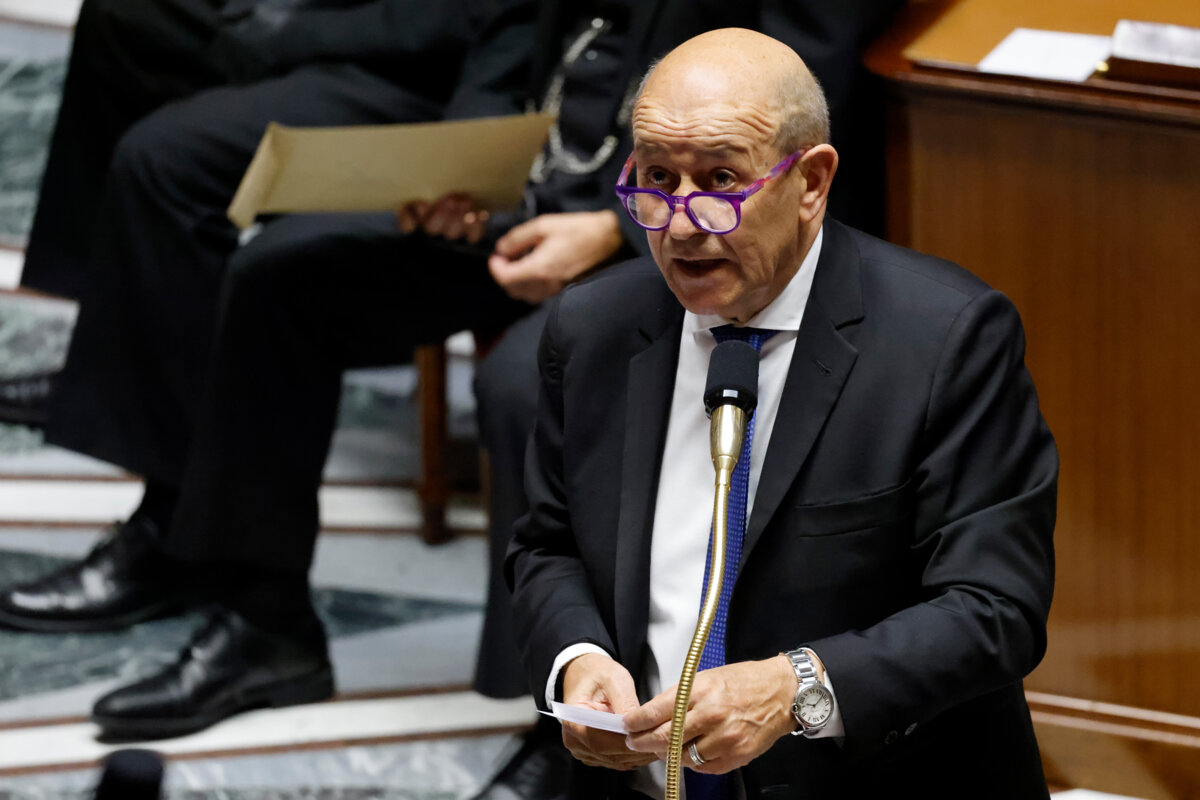
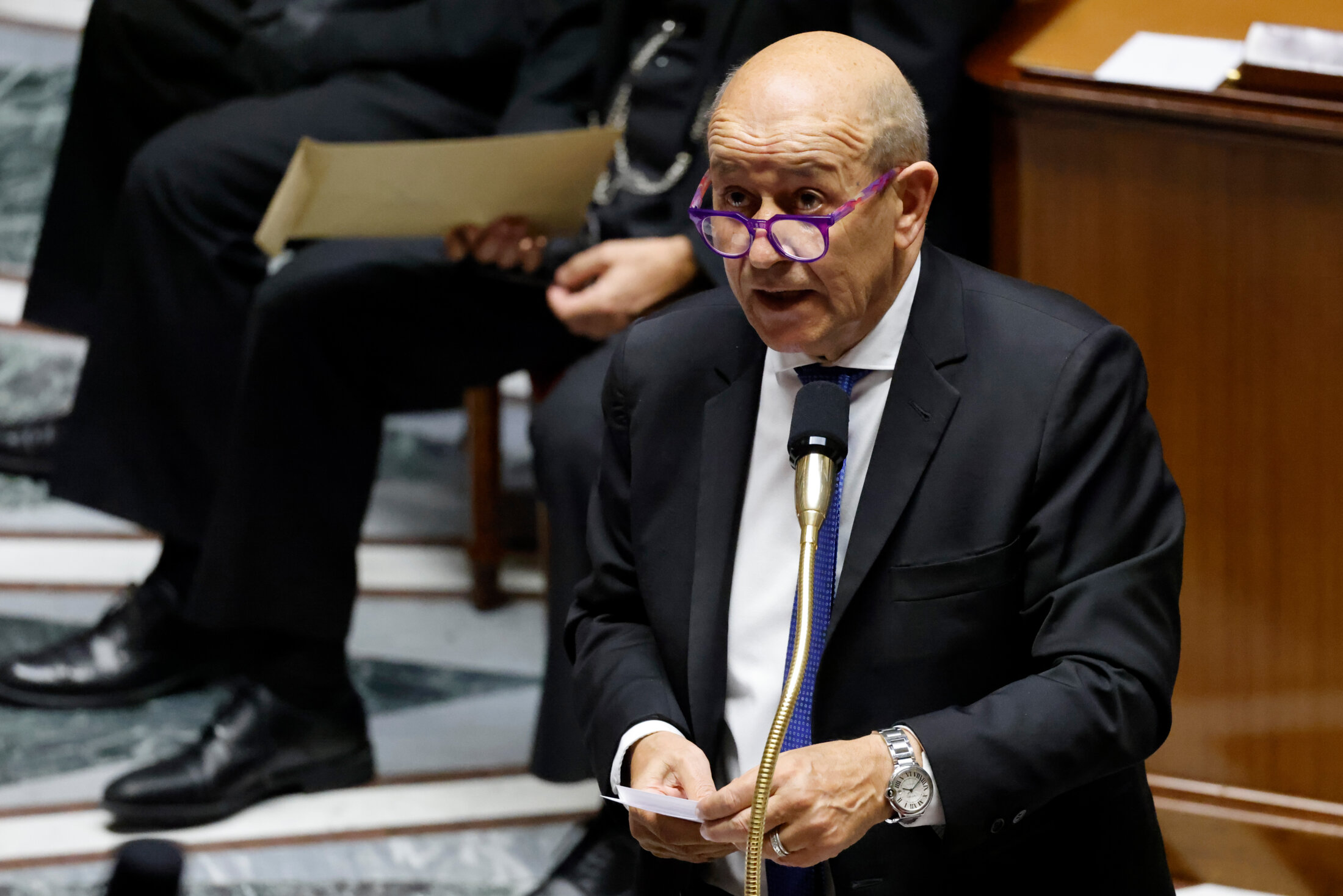
But on Tuesday, Le Drian was finally forced to comment during a session of parliament’s lower house, the National Assembly, devoted to questions addressed to government from Members of Parliament (MPs), when he said he had “responded to a question” from LVMH and that he was “totally in my role” in doing so.
Enlargement : Illustration 1
If the foreign minister and the government believed that the issue of the letter would be soon forgotten, it was a serious error of judgment. The missive now threatens to become a major embarrassment for Le Drian, the French diplomatic service, and the government. For it is now at the heart of a legal battle in the US after Tiffany launched a lawsuit against LVMH for reneging on its 16.6 billion-dollar takeover deal, and which is to go to trial.
LVMH lost the first round of that battle at a hearing at Delaware Chancery Court on Monday this week to decide the date of the trial. Presiding judge Joseph Slights threw out LVMH’s request that the trial should be delayed until March or April 2021 which it argued was necessary because of both the complexity of the case and the difficulties in preparing for it that had been added by the Covid-19 virus pandemic. Judge Slights said he was “not persuaded” by LVMH’s argument, and ordered the trial to open on January 5th.
The French group immediately announced that it had “taken act” of the decision of the Delaware court “which has pronounced in favour of a trial that should begin in January 2021, and not in November 2020 as requested by Tiffany”. That was a reference to the US jeweller’s reported initial aim of securing the opening of the trial before November 24th, the pre-agreed deadline for the acquisition deal to be finalised.
Monday’s ruling was just the beginning of what promises to be a brutal battle. Wall Street financiers will not lightly write off an almost 17 billion-dollar purchase which the world’s largest luxury goods group signed up to.
The letter from Le Drian which LVMH Chairman and CEO Bernard Arnault has advanced as the reason for abandoning the acquisition of Tiffany has still not been made public. The letter is also missing from the otherwise detailed legal papers filed by LVMH’s lawyers on September 16th (see here) opposing Tiffany’s request for "expedited proceedings" (an early trial date).
Its only known contents are extracts translated into English in the possession of Tiffany’s lawyers who, Mediapart understands, were allowed only to consult the original missive in French and were not provided with a copy. Questioned by Mediapart as to whether the translated extracts were true to the words written in French by Le Drian, a spokesman for LVMH replied that the English version was “a rapid translation”.
Asked why LVMH refuses to publicly release the original letter in French from Le Drian, the spokesman answered that this was, “Because it is for the minister of foreign affairs to do so”. Asked what were Le Drian’s intentions over this, Mediapart received no reply.
According to the English translation obtained by Tiffany, Le Drian’s letter, addressed to Bernard Arnault and dated August 31st, states:
“As you are aware, the American government has decided to implement an additional customs duty on the import of certain French goods, in particular goods in the luxury sector, in reaction to France adopting a digital services tax, with the U.S. deferring the application thereof until January 6, 2021.
France considers these measures legally objectionable, in view of the rules of the World Trade Organization, in particular the General Agreement on Trade in Services, and intends, together with its European partners, to take measures in order to dissuade the American authorities from putting these tariff sanctions into effect.
Consequently, and because the implementation of these tariffs may affect France’s external relations, for which my department is responsible, proposed investments by French companies in sectors that could be subject to such sanctions must be reevaluated in light of this new context. My attention was drawn to the most important current investment, which is your Group’s pending acquisition of Tiffany.
In order to support the steps taken vis-a-vis the American government, you should defer the closing of the pending Tiffany transaction until January 6, 2021.
I am sure that you will understand the need to take part in our country’s efforts to defend its national interests.”
Just why the foreign affairs minister intervened in a field which, to all appearances, does not concern him remains a mystery. LVMH is not one of France’s major strategic interests, unless one considers that the luxury goods group is part of the country’s national heritage.
Previous delays to sealing a deal
The US threat to raise customs tariffs by as much as 25% on the imports of certain French goods stems from a dispute over France’s decision to impose a digital services tax to counter tax dodging by big tech companies (such as Google, Amazon, Facebook and Apple) which Washington claims unfairly targets US firms. But that is an issue that concerns the French economy and finance minister, Bruno Le Maire, as confirmed to Mediapart by a ministry spokesman. “Bruno Le Maire has been following this affair [the dispute over the digital tax] since August 2017,” the spokesman said. “He is the French interlocutor at a European level, because it is the Commission which is negotiating with the United States on behalf of all the [EU] member states. The minister also works with the OECD on these matters.”
Asked whether Le Drian was in possession of the necessary information about the tariffs dispute in order to intervene in the matter, the foreign affairs ministry did not respond. The economy and finance ministry spokesman pointed out that as part of his ministerial brief, “Jean-Yves Le Drian is also responsible for foreign trade”, but he also insisted that “the finance minister had not been informed about this letter which was written on the sole initiative of Jean-Yves Le Drian”.
Le Drian’s letter was providential for LVMH, allowing Bernard Arnault to cancel an acquisition that he no longer wanted to see through – at least not for the amount he proposed in November 2019. That was before the Covid-19 pandemic erupted, and the ensuing economic chaos that has also hit the luxury goods market. Arnault attempted to renegotiate the terms of the acquisition, but soon found itself with little room for manoeuvre.
Without the agreement of Tiffany, it was almost impossible for LVMH to extract itself from the terms of the deal except for one clause, which allowed for the sale to be cancelled in the case that a “government entity” intervenes with an injunction or other such legal move to impede the acquisition.
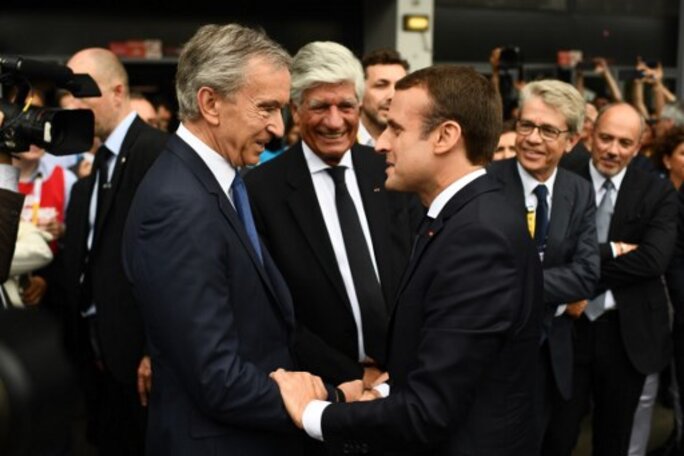
On September 9th, Bloomberg reported that “LVMH Chairman Bernard Arnault asked for help from the French government in an effort to pull out of a deal to buy Tiffany, according to a person familiar with the government’s thinking”. The report said Arnault had initially sought the help of the economy and finance ministry, but when that was refused he turned to that of foreign affairs. Since that report was published several sources have confirmed that the group first approached Le Maire before going to Le Drian. Mediapart has also received unconfirmed reports from sources that the foreign minister’s intervention was on instruction from President Emmanuel Macron's office, the Élysée Palace, which takes a close intertest in LVMH, and Bernard Arnault, France’s wealthiest individual, in particular.
Meanwhile, the economy and finance ministry denies having been approached by LVMH or Arnault, while the foreign ministry remains silent over the matter. LVMH has dismissed the reports as “unfounded and malevolent rumours”.
In its legal action against LVMH in the US, Tiffany accuses the French group of using stalling tactics since the spring, aimed at scuppering the deal, and notably cites the French group's delay in notifying the acquisition to the European Commission competition regulator, a process only finally completed in September. Because the necessary authorisations for the deal had not been delivered earlier, Tiffany was forced to postpone finalisation of the acquisition by three months, to November.
With a trial date now set for January 5th, LVMH and the French foreign ministry will not be able to fudge for much longer the presentation of Le Drian’s missive, and to offer a clear explanation of how it came about. That threatens to be more problematic for Le Drian than for Arnault, a man used to getting what he wants and for whom it would appear normal that the apparatus of the state is placed at his disposition. But for the minister, and the government, this unprecedented state intervention in a private deal, and to the benefit alone of Bernard Arnault, is bound to lead to further speculation over whether return favours were envisaged, and for who.
-------------------------
If you have information of public interest you would like to pass on to Mediapart for investigation you can contact us at this email address: enquete@mediapart.fr. If you wish to send us documents for our scrutiny via our highly secure platform please go to https://www.frenchleaks.fr/ which is presented in both English and French.
-------------------------
- The original French version of this report can be found here.
English version by Graham Tearse