


For thirty days, France has been without a fully-functioning government. The resignation of prime minister Gabriel Attal on July 16th, following the defeat of the Macronist camp in the snap parliamentary elections triggered by the dissolution of the National Assembly, has led to a state of inertia. In defiance of the institutions of the Fifth Republic, Emmanuel Macron has used the pretext of an alleged Olympic 'truce' to delay appointing Lucie Castets as the new prime minister. She is the candidate proposed by the leftwing alliance Nouveau Front Populaire (NFP), which came out on top in the second round of the elections on July 7th. The current caretaker government is just supposed to handle “day to day business”, but this has not stopped Emmanuel Macron and caretaker premier Gabriel Attal from governing almost as if nothing has changed, and with aspirations to continue doing so.
The president is currently said to be “consulting”, ready to employ any manoeuvre to avoid appointing the candidate proposed by the leading group in the parliamentary elections to the office of prime minster. According to Le Monde, Emmanuel Macron is instead reportedly seeking to choose a name that gives the “impression of cohabitation” - the practice under which the president and the prime minister and government come from different political persuasions - without altering policy. Essentially, he wants to remain at the centre of power and build a coalition around himself - despite the electoral defeat and the balance of power in the National Assembly - and to disregard leftwing political groups.
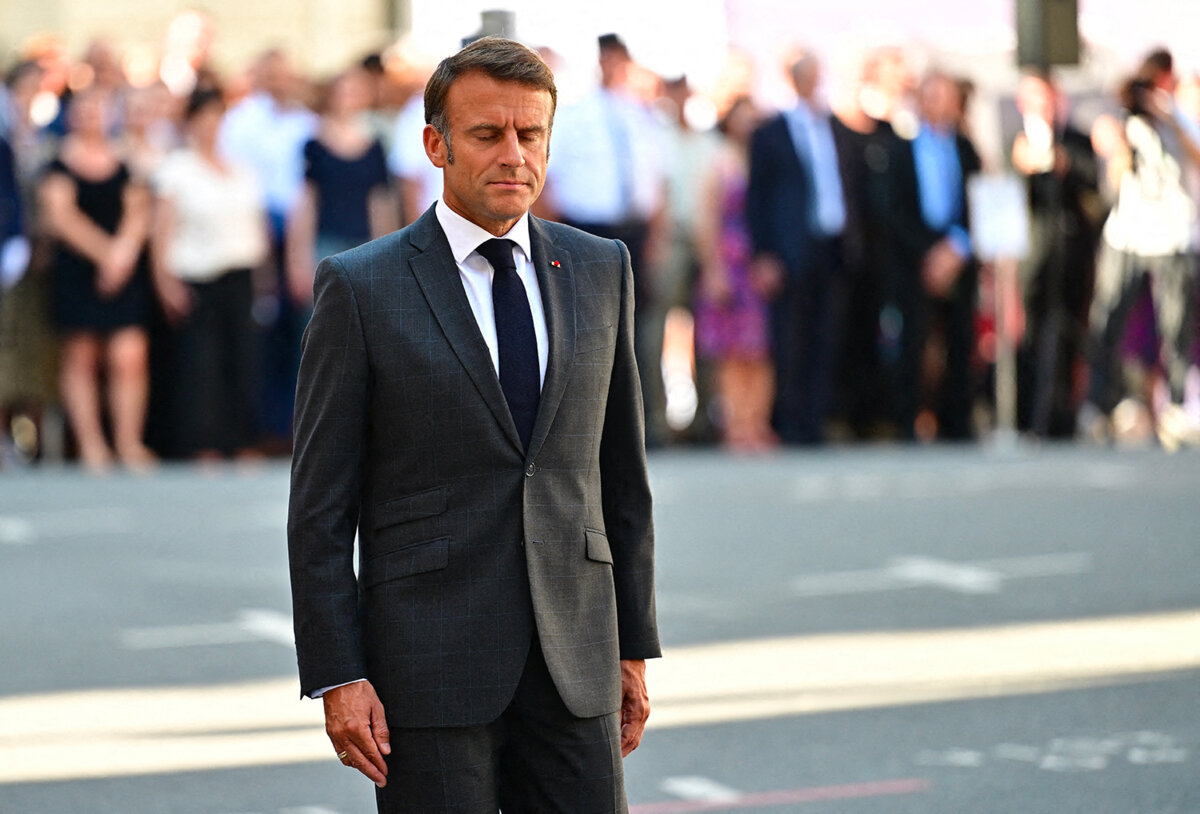
Enlargement : Illustration 1
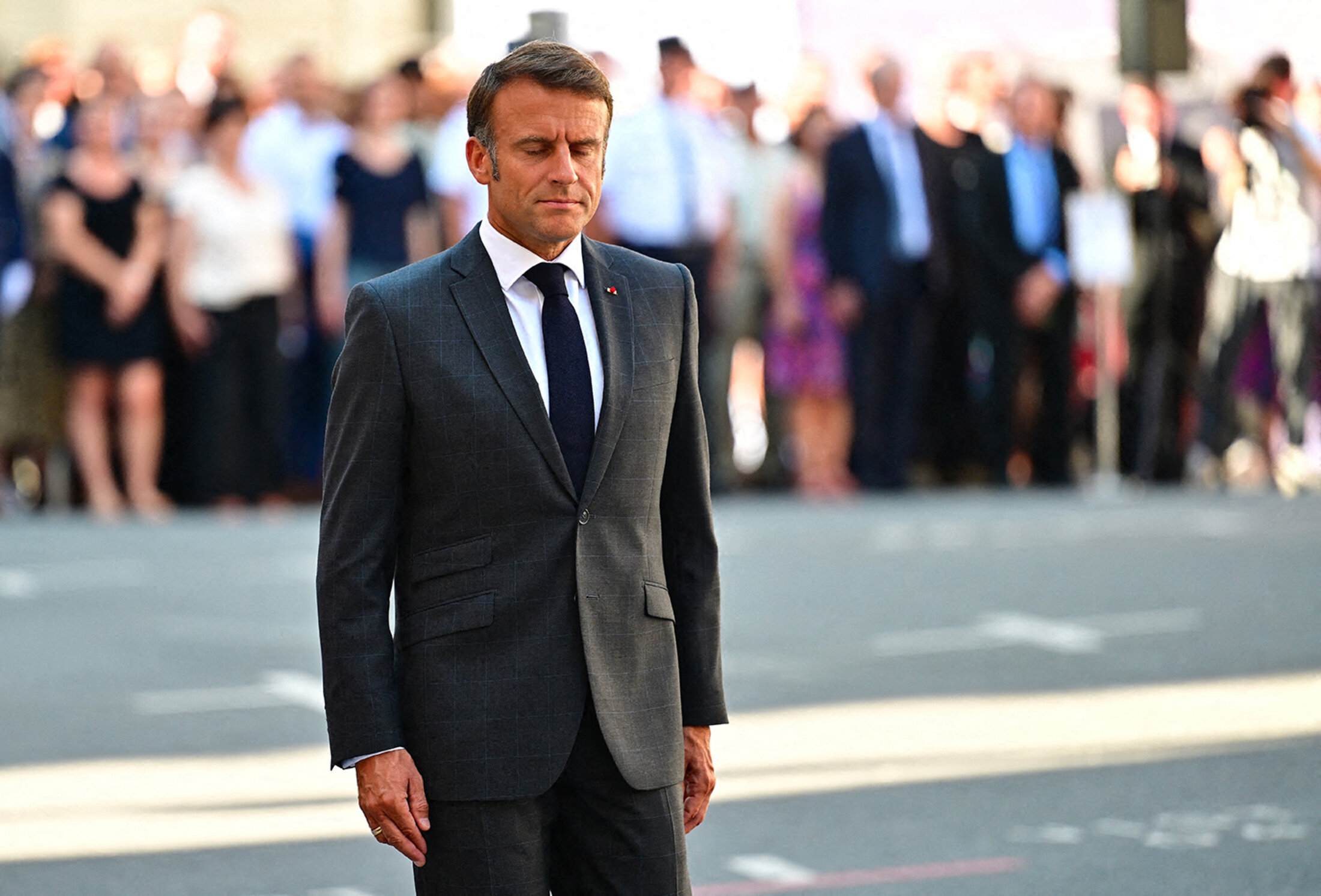
“Over and above the political situation and our fight to govern, there's a real issue over the state of democracy,” says Benjamin Lucas, a green Member of Parliament and member of the leftwing Génération·s party. “There’s a form of Trumpism here. You replace Mar-a-Lago [editor's note, Donald Trump’s holiday residence] with Brégançon [editor's note, the French president's holiday residence in the south of the country] and ‘Stop the Count’ with ‘No one has won,’ and you have the same recipe for a denial of reality.”
This concern is shared by the socialist MP Arthur Delaporte, who tells Mediapart that “we're moving from the president’s institutional role as a guarantor of the balance of power to a president who abuses his position, distorts the spirit of the Constitution, and who's attempting a power grab”.
Letters to MPs
After spending part of the summer travelling the country to raise her public profile and hammer home the NFP’s proposals, Lucie Castets, the alliance's candidate for Matignon – the prime minister's official residence – has sought to regain the political initiative after end of the Paris Olympics. In a letter addressed to parliamentarians – excluding the far-right – and co-signed by all the group leaders of the leftwing coalition, the senior civil servant reaffirms the priorities of her potential government and reaches out to other political groupings. In the letter she states that it will be “necessary to convince those beyond the ranks of the Nouveau Front Populaire in order to construct parliamentary majorities”.
This is a formal shift from the line taken by leaders of the radical-left La France Insoumise (LFI), the biggest party within the NFP, who have been insisting since July 7th that a new leftwing government would implement “the manifesto, the whole manifesto and nothing but the manifesto”. LFI MP Éric Coquerel, who is chair of the Assembly's finance committee, insists the two approaches are not contradictory. “The manifesto has a rationale that we will not renegotiate. It’s a rationale that contradicts everything done over the past seven years, a rationale of wealth sharing, of taxation targeting capital income to transfer it to income from work, of wage increases. In turn, not doing what Emmanuel Macron did for two years, but rather suggesting compromises with MPs in the Assembly, that's something different, and I'm in favour of that.”
It's detached from reality, Emmanuel Macron wants cohabitation with himself.
“We're realistic; we know we don’t have an absolute majority,” adds Benjamin Lucas. “It's the normal experience of a Parliament; when you propose a bill, it’s never the original version that gets voted through unchanged. But the objective of implementing the manifesto remains the same.” Lucie Castets herself explains to Mediapart: “The approach in Parliament has to be a constructive one text-by-text, but it's the responsibility of the political side that came top to lead this, not the side that came second, and which for seven years has shown contempt for Parliament and the other political groups.”
Rather than responding to the NFP's letter, the presidential coalition – which now only has 166 MPs in total in the Assembly – has also chosen to send letters. Gabriel Attal, the resigning prime minister and also leader of Macron's Ensemble pour la République (EPR) group within that coalition, wrote to fellow MPs, excluding, as Macron's camp now routinely does, both the far-right and La France Insoumise.
In his letter the prime minister, whose own group has just 99 MPs – down from 169 before the dissolution – proposes a “pact of action for the French people”, as if nothing has changed. He then sets out his priorities for developing the “basis on which we are ready to engage in discussions”.
“This letter indicates a denial of the election results, which signalled that the voters demand change,” responds Lucie Castets. “The Macronists have failed on the priorities they list for the French people (public services, cost of living, public finances). How, then, can they be trusted?” she asks.
A coalition of the defeated?
At the same time another group leader from the centrist coalition that was defeated in the parliamentary elections has also tried to take the initiative. Laurent Marcangeli, leader of the centre-right Horizons group, set up by Macron's first prime minister Édouard Philippe, on Monday called for the “organisation of a meeting as soon as possible to stabilise the political life of our country”, a meeting which would exclude both the far-right Rassemblement National (RN) and LFI. “They're looking for whoever they can gather around them; it’s what a movement with a relative majority does, but they don’t even have that,” asserts Éric Coquerel. “It’s detached from reality; it goes beyond everything shown by the election result. Emmanuel Macron wants a cohabitation with himself,” adds the MP.
This is a view shared by other members of the NFP, who decry what they see as a “denial of reality" within the ranks of Macron's camp. “They're in a minority position and shut the door on any discussion with the NFP, trying to buy us off piecemeal to create a majority bloc still centred around the president. It can't work,” warns Arthur Delaporte. “The institutional logic is that the president appoints the prime minister based on the parliamentary majority, not that the president picks an employee hoping they will continue implementing his policies,” is the view of Lucie Castets.
Meanwhile there have been growing overtures from the executive towards the conservative Les Républicains (LR) party, despite the LR also emerging weakened from the parliamentary elections; it now has 47 MPs compared to 61 before the dissolution. While Laurent Wauquiez has forged alliances with Macron supporters to secure key positions in the National Assembly, the LR leader also insisted in July that there would be “no governmental coalition” with Emmanuel Macron. This does not preclude the possible appointment of Xavier Bertrand, a centre-right politician who is president of the Hauts-de-France region in northern France and who was once a minister under President Nicolas Sarkozy, with the active support of former colleagues. Foremost among these ex-colleagues is outgoing interior minister Gérald Darmanin who, speaking on France 2 television on July 29th, described Bertrand as a “highly competent politician” who could perform “great service for France”.
In an interview with Le Figaro newspaper, prominent centrist MP and current minister Aurore Bergé has also praised Xavier Bertrand, ex-European Commissioner Michel Barnier, and Gérard Larcher, the LR president of the French Senate, while insisting that Laurent Wauquiez's proposals were “not irreconcilable with those of the central bloc”, in other words the centre and centre-right grouping around Macron. “It's surreal,” Benjamin Lucas tells Mediapart. “They tell us there aren't enough of us, then go and seek out Xavier Bertrand, who isn't even supported by his own party [editor's note, the LR], and Bernard Cazeneuve [editor's note, prime minister under socialist president François Hollande], who isn't even in the Socialist Party any more. I respect him, even though we have political disagreements, but who does he represent?”
Meanwhile, politics has become bogged down. The voting process on the government's budget, which must be completed by the end of the year, begins with the dispatch of letters to ministries in August detailing spending limits, but for now nothing is happening. “No one wants to take the responsibility of sending out [these] letters in the name of an outgoing government,” explains finance committee chairman Éric Coquerel, who outlines the likely scenario for the coming weeks. “They'll propose a budget with a policy of competitiveness, supply-side measures, and austerity, which will be deeply amended by my committee, where a majority is opposed to this. They will attempt to use Article 49.3 [editor's note, an article in the French Constitution which allows a government to pass a measure without a vote] which could end in a [vote of] censure. They're heading towards a dead end.”
--------------------------------------------------------------------------------
- The original French version of this article can be found here.
English version by Michael Streeter