


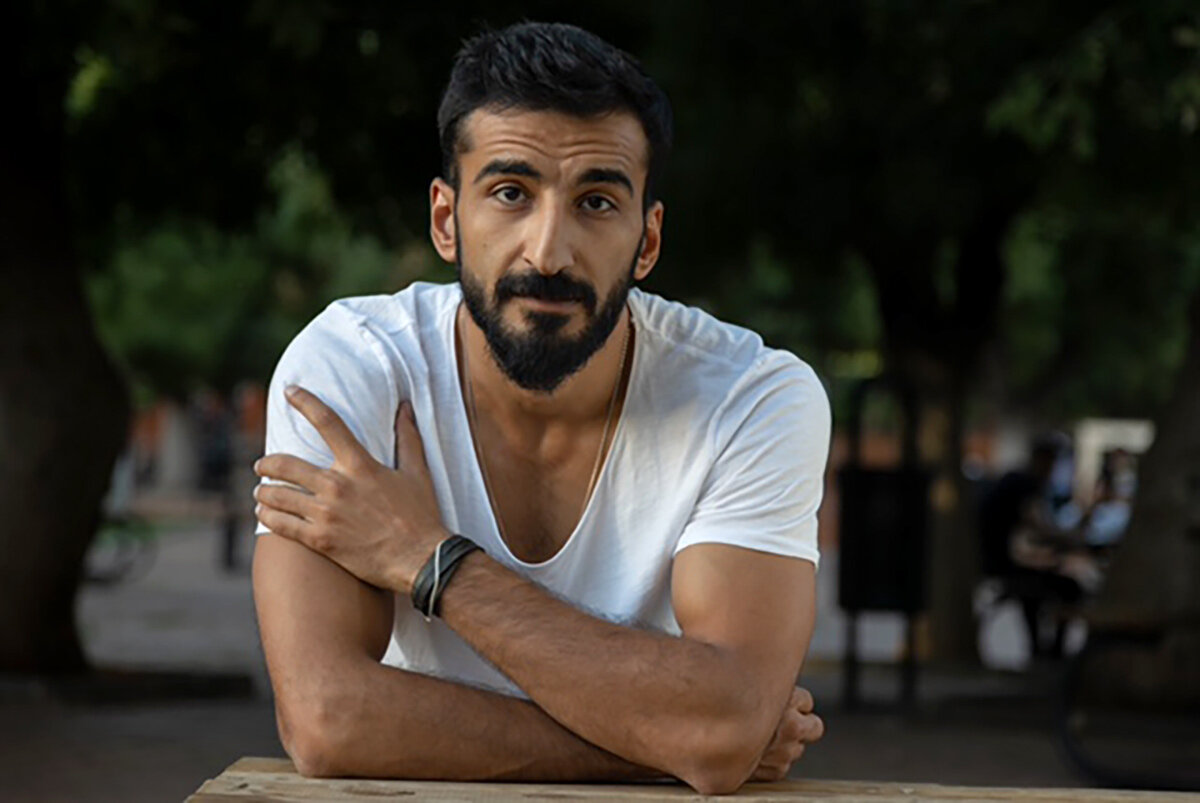
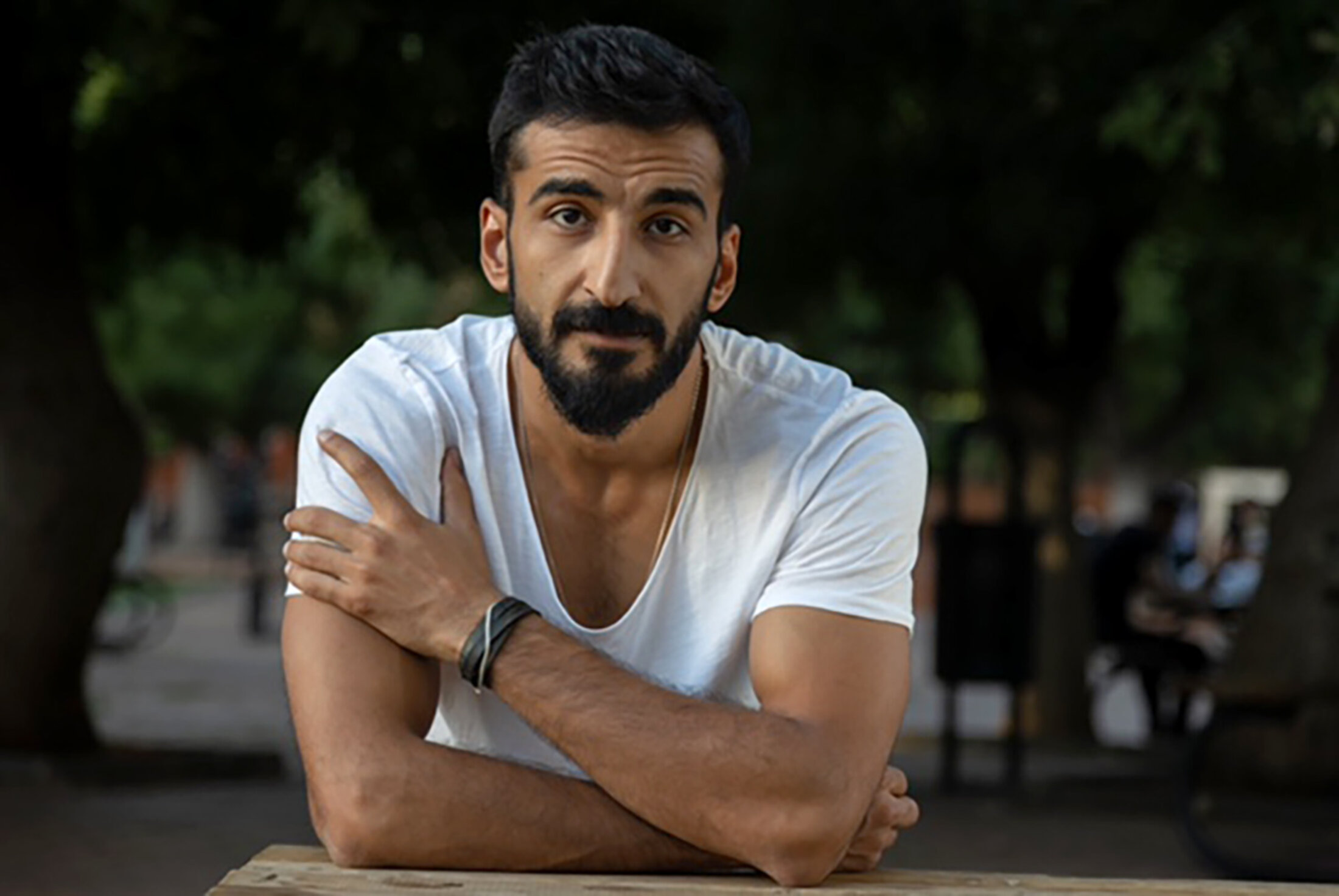
Wednesday October 5th was a red letter day for Syrian journalist and Mediapart contributor Hussam Hammoud, who is currently living in exile in Turkey. For two reasons. First, because it saw the publication of his book about the former Islamic State stronghold of Raqqa in Syria. Co-authored by journalist Céline Martelet and published by Denoël, the work is called 'L’Asphyxie. Raqqa, chronique d’une apocalypse' ('Suffocation. Raqqa, story of an apocalypse').
Then, on the same day, judges heard an appeal from his lawyers following France's refusal to issue the Syrian journalist a humanitarian visa on September 5th. Despite the threats he has faced because of his detailed investigations into Islamic State, some published by Mediapart, the authorities in Paris turned down his application for a visa to allow him, his wife Fairouz and their two children to come to France in order to seek asylum. No justification was given for this refusal, which sparked widespread criticism and the creation of a solidarity campaign to support the journalist, who currently lives with his family at Gaziantep in southern Turkey.
Enlargement : Illustration 1
The hearing on Wednesday morning at the administrative court at Nantes in the west of France took place behind closed doors for security reasons, because of the sensitive nature of some of the information that was to be discussed. For the first time, however, we learnt of the Ministry of the Interior's arguments for rejecting the visa application. These were read out rapidly in court by the person who had drawn them up, the head of the ministry's legal department. These arguments were very thin indeed, and in some cases simply wrong. For example, the ministry gave the date of the visa request as 2019 when in fact it was 2022.
The document also insisted that the Syrian journalist enjoys a tranquil life in exile in Turkey (read his article here on the conditions for Syrian refugees residing in Turkey to get the true picture) and that the threats which he has faced have not been corroborated. It also stated that Hussam Hammoud returned to Syria, without also pointing out that this was in his capacity as a journalist and that he visited areas that are not controlled by the Bashar al-Assad regime.
Facing 'grave danger' in Turkey
Hussam Hammoud's defence team – lawyers Loïc Bourgeois, Fleur Pollono, Ludovic Rivière and Flor Tercero – quickly highlighted these errors and vague approximations. “A bureaucratic statement written by people who don't know what's happening on the ground,” was the verdict of lawyer Ludovic Rivière as he left the hearing, which lasted for one hour and forty-five minutes.
Speaking to the judge overseeing the interim proceedings, the lawyer had laid out his argument, in particular talking about the risks run by Hussam Hammoud who he said was “threatened at one and the same time by Daesh [editor's note, Islamic State], the regime and by other armed groups who are operating in Syria”.
“We really got the impression that we were listened to,” said Ludovic Rivière afterwards. “We discussed it for a long time, the judge listened to my plea, but not only that, he also listened to the voluntary participants, the National Union of Journalists, the International Federation of Journalists and also Céline Martelet.”
Journalist Céline Martelet said she had told the court about Hussam Hammoud's current circumstances in Turkey, where he and his family live in constant fear because of the “real danger that they face”. For example, she explained how the family had to keep moving to foil potential attacks, and how they cannot go to places such as cafés through fear of a trap.
Calling for the humanitarian visa application to be reconsidered, Ludovic Rivière highlighted issues that went further than simply Hussam Hammoud's case. “The Constitution affords protection for freedom fighters, those who fight not only for themselves but also beyond that. What he's defending is the freedom of the press,” said the lawyer. “That's why we don't understand the Ministry of the Interior's position, which flies in the face of what are fundamental values of our democracy.”
Ludovic Rivière said that, were it to be upheld, refusing the humanitarian visa would “gift Daesh a small win ”. He said: “Though this is not what the ministry intended, we have to be careful, it sends a message to that organisation which is then able to say: 'When you work with French journalists, France will drop you at the first opportunity and then we can kill you.'”
Appearing on behalf of the National Union of Journalists and the International Federation of Journalists, Dominique Pradalié underlined the extent to which Hussam was in “serious danger in Turkey” which was the “biggest jail for journalists in the world”. She said: “He annoys too many people. The response of the Ministry of the Interior is a empty one, lacking any context, it's clear they don't know the situation on the ground.” According to the court the verdict will be delivered “as soon as possible”.
-------------------------------------------------------------------------
- The original French version of this article can be found here.
English version by Michael Streeter