


The Alliance Française foundation or Fondation Alliance Française is in crisis. This organisation, set up in 2007 as a body in the public interest to coordinate the 834 branches of Alliance Française which promote France, its language and culture around the world, is now on the edge of collapse.
According to Mediapart's information, the crisis came to a head late in 2017 when teams of inspectors from three senior government ministries – Foreign Affairs, Interior and Education – compiled a report highlighting the institution's deep financial difficulties.
This confidential 47-page report – of which the final version was given to ministers in January and a copy of which Mediapart has seen – underlines several serious errors in the way the foundation's business has been managed (see 'right of reply' published bottom of page). These include having service deals with no written contracts, “risky” property investments, an “uncontrolled” rise in costs and an economic model that has reached an “impasse”. The report concludes that in the short term the “very legal existence of the foundation” is “in peril”.
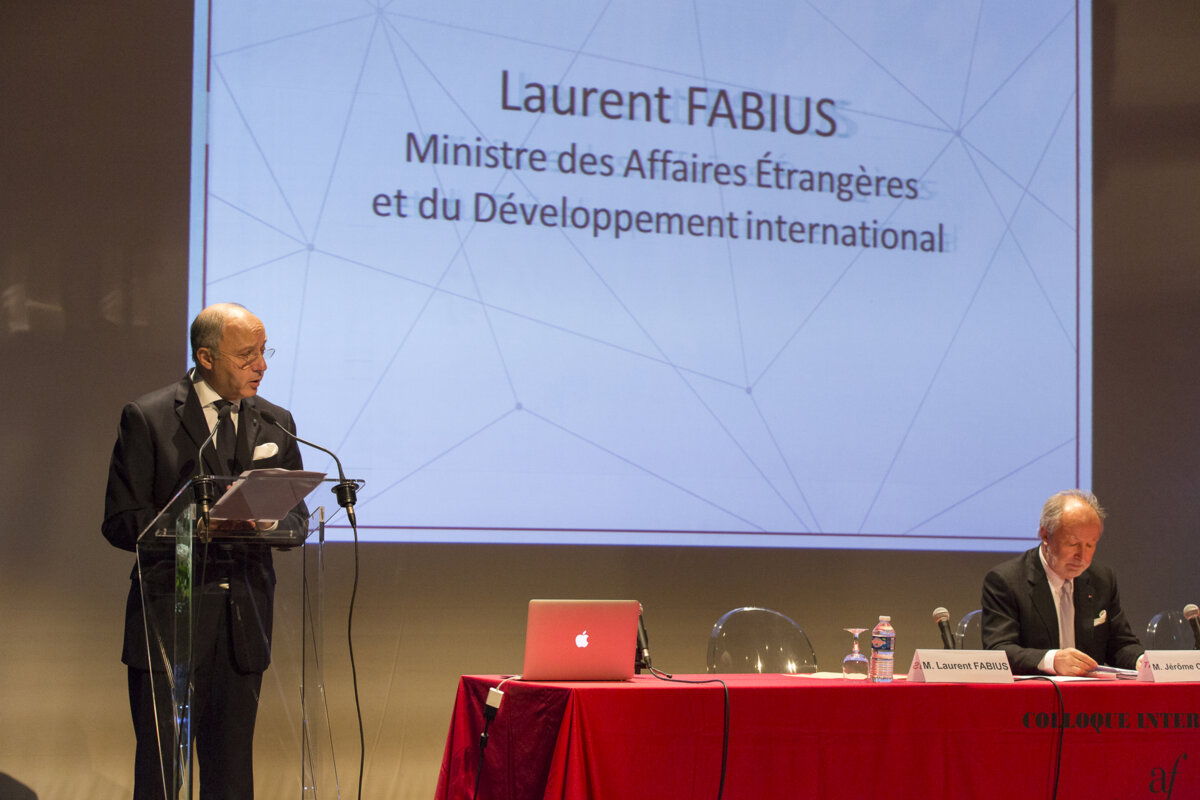
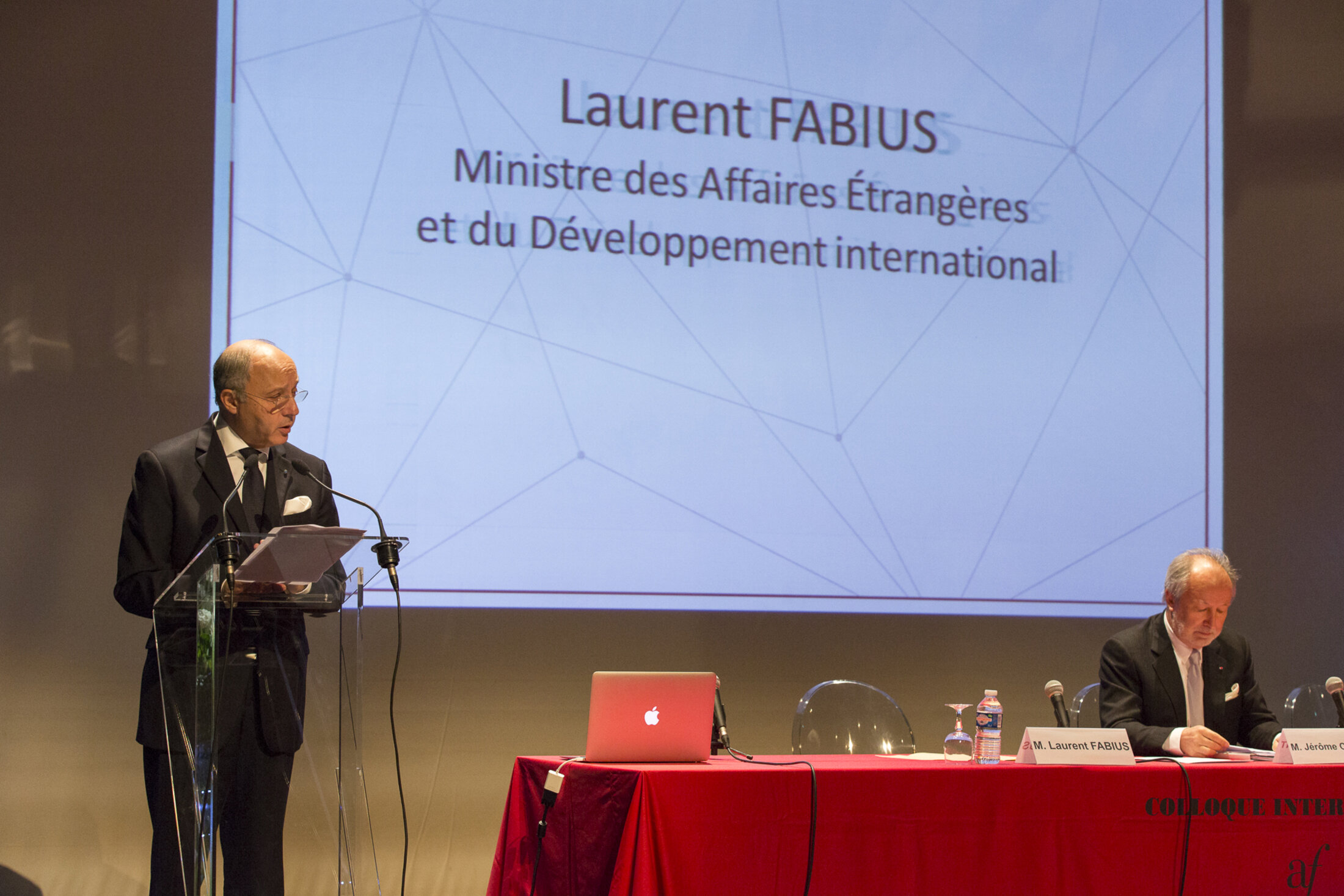
The situation led to the resignation of the foundation's president, Jérôme Clémont, on January 18th, a week after he had responded to the inspection by the three ministries. Clémont, a former president of the arts TV channel Arte and an ally of former foreign minister Laurent Fabius, had been head of the foundation since June 2014. Five members of the board of directors have also left. The best-known of these is former prime minister and current mayor of Bordeaux Alain Juppé, said to have been a friend of Clémont since they were both in college preparing to go to the elite École Nationale d'Administration together at the start of the 1970s.
Enlargement : Illustration 1
“Noting that the Foundation's financial situation does not allow it to set a budget for 2018 to give it the means to carry out its activities, the president, Jérôme Clément, as well as five other directors, have handed in their resignations,” was the sober press statement made by the Foundation in mid-January. In an internal document to staff which provided “talking points”, the Foundation sought to play down the seriousness of the situation. In particular it pointed to the problems caused by its property dispute with one of the cultural network's branches, the Alliance Française de Paris (AFPIF).
These two organisations, the Foundation and the AFPIF, have been involved in judicial guerilla warfare with each other since 2016. That was when the latter body, headed by Jean-Jacques Augier who was treasurer for François Hollande's presidential campaign, refused to hand over the money for renting a section of the Foundation's offices; the AFPIF dispute the amount they owe. The disagreement over the 2017 payments left a 700,000 euro hole in the Foundation's accounts, and also incurred some major legal bills – 60,000 euros for the first two quarters of 2017 – for an organisation that has a relatively modest annual budget of around four million euros a year.
- PR expenditure up tenfold
However, the Foundation's problems are not just down to these temporary snags but also due to issues of managements and governance at the organisation.
First of all, the organisation's running costs seems excessive in relation to its modest means. Since 2014 its operating costs have grown significantly and have exceeded the operating income, which has automatically increased its budget deficit. The wage bill leapt by 47% between 2014 and 2015, while spending on receptions, travel and other travel expenses has “almost tripled” in three years, going from 79,000 euros in 2013 to 237,000 euros in 2016, according to the inspectors.
In the same period the expenditure on publicity and public relations rose tenfold, from 34,500 euros in 2013 to 392,000 euros in 2016. This spending included 196,000 euros on trying to attract sponsorship, a project handed to two companies from the same group, Philanthrôpia and Optimus. In their report the inspectors were astonished to find that there was neither a written contract for these services nor a results-related clause, linking payments to how much the sponsorship project raised.
Another surprise for the inspectors was that the sponsorship project produced “no tangible result …. for this loss-making expenditure of nearly 200,000 euros”. According to other documents seen by Mediapart the provisional budget for the project forecast it would bring in 212,500 euros in 2016.
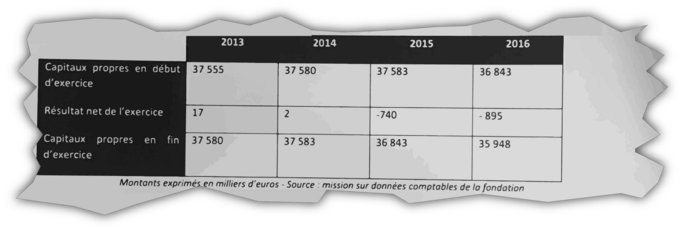
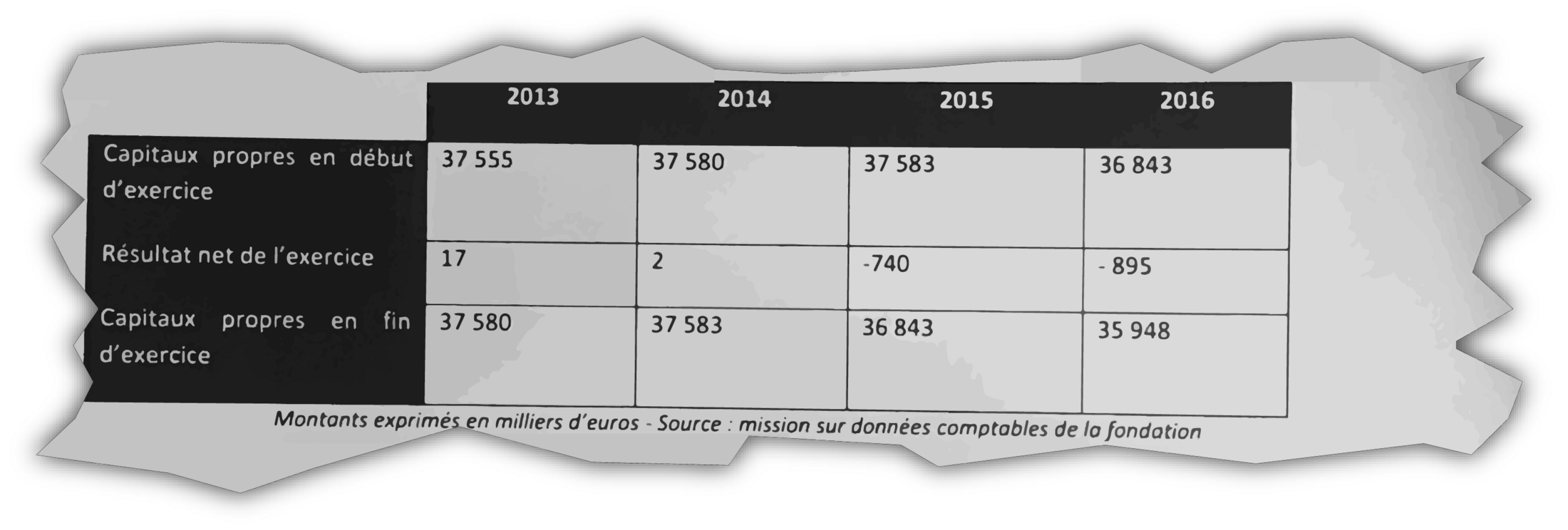
This loss helped contribute to a deficit of 740,000 euros in 2015 and of 895,000 euros in 2016. The financial problems did not end there. The inspectors' report says that members of the board of directors were informed on November 29th, 2017, that the accounts showed a “deficit of more than 2 million euros”. Yet the Foundation itself had forecast a surplus of 433,000 euros for that period.
- Unpredictable property investments
This discrepancy between forecasts and results alone shows deficiencies in the Foundation's management. The inspectors say that “given the observed slippage in the implementation of the 2016 budget, with some very major disparities between the forecasts presented to the [Board] and the figures achieved at the end of the year” it was possible to question the “reliability and the honesty of the budget documents submitted to the directors”. In a lengthy response to the inspectors running to 29 pages, the Foundation's managers rejected any suggestion that figures had been manipulated. Instead they attributed the situation to the “lack of stability in the administrative and and financial team” and to the “identified incompetence of some”.
The inspectors from the three government ministries also noted that the most important management documents were not distributed in advance of the board meetings or “even at the meeting”. The report says: “In most cases just a summary note from the Foundation's administrative services, or even a simple verbal report is given to the directors.”
This way of working inevitably led to some of the controversial decisions the organisation made. For instance, the creation of a new digital teaching platform for French lessons – which has been piloted since September 2017 – was not supported unanimously, while the “viability of the project seems very weak” and the commitment to it among the network of 834 Alliance Française branches seems unclear, say the inspectors.
There are also question marks raised over the renovation of the theatre on boulevard Raspail in Paris's sixth arrondissement or district which the Foundation owns. Though the report does not question the overall value of the renovation scheme, it does raise questions over the details of a project in which there had been “no study … to reconcile … the expected net receipts and the repayment of the loan [editor's note, to carry out the work] over a reasonable period”.
Enlargement : Illustration 2
Another property investment – which dates back to before 2014 – has hit the organisation's finances during recent years. Having bought a building in rue de Musset in the 16th arrondissement, with the aid of a four million euro loan, the Foundation undertook major renovation work despite not having followed “official procedures in concluding the contracts”, nor even requesting from contractors the standard ten-year guarantee on the work carried out. Unfortunately some defects were later detected which prevented the offices from being rented out and bringing in income. Today the planned sale of the property may not even cover the cost of the initial purchase and the two million euros spent on the renovation.
- Inspectors call for the Foundation to be dissolved
These management errors “in all likelihood” forced the Foundation to draw on its own initial start-up endowment funds in 2015 and 2016, say the inspectors, though in their response to the report the Foundation's managers deny this. Yet, the inspectors point out, the statutory endowment funds of a foundation set up as a public utility “cannot in principle be used”; to do so risks that body being dissolved by the authorities. The inspectors say that they hope that these “unusable funds” have not been made use of since 2017 as this would “put in peril the very legal existence of the Foundation”.
On the eve of the board meeting on November 29th, the external auditor also issued a warning that the Foundation may potentially become insolvent. And the inspectors' report considers that the Foundation's economic viability is “no longer demonstrated, other than through banking on hypothetical public funding” in addition to the current 1.5million euro annual grant it receives from the Foreign Ministry, which is around 35% of the body's total budget. Yet under rules governing foundations, public contributions cannot exceed the level of 50% of revenue. That is a major limit on the state's room for manoeuvre here.
“Taking account of the inadequacy of its donations and the inability to guarantee the preservation of the unusable endowment, the question arises as to the maintenance of the [Foundation's] current legal status,” concludes the inspectors' report, which looks at three possible scenarios. The first of these, maintaining its status quo as an autonomous foundation, “seems scarcely conceivable” given the legal and financial situation. “It's too late for the Foundation to show its legitimacy both in raising funds and in carrying out its mission of helping, advising and supporting the network of Alliances,” say the inspectors.
As a result the report recommends either that the Alliance Française de Paris (AFPIF) be dissolved into the Foundation or on the contrary – and this is the possibility the inspectors favour – that the Foundation is dissolved into the AFPIF. This radical recommendation is due to be supplemented in the coming weeks by a report by diplomat Pierre Vimont, which will be submitted before President Emmanuel Macron makes a keynote speech on the French-speaking world and cultural diplomacy on March 20th.
Neither the current secretary general of the Fondation Alliance Française, Bertrand Commelin, nor its former president Jérome Clémont responded to Mediapart's request to answer a series of questions on the organisation's situation. Alain Juppé's office said he was not available to comment before the publication of this investigation.
-------------------------
See 'Boîte Noire' below for a response to the issues raised in this article, received after its publication, from the secretary general of the Fondation Alliance Française, Bertrand Commelin.
- The French version of this article can be found here.
English version by Michael Streeter