


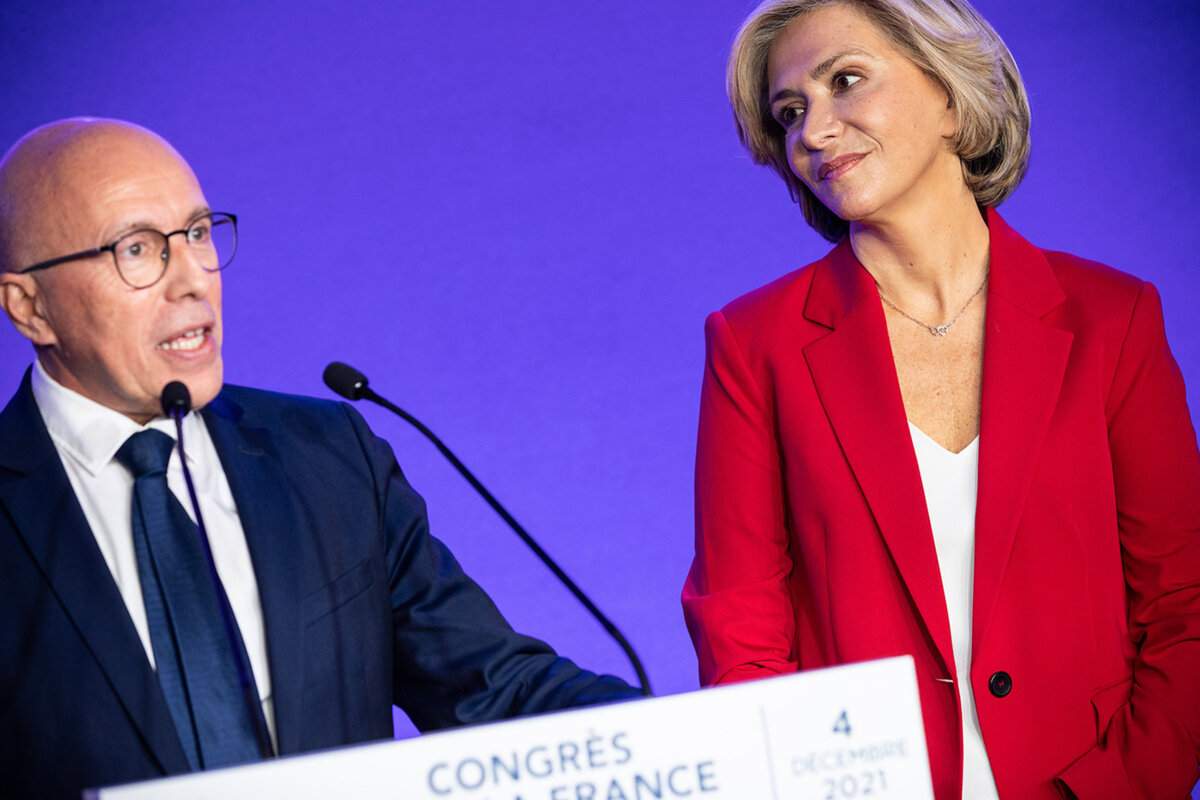
“Today is the start of hope, with a key figure, Éric Ciotti!” Rather in the manner of a referee at the end of the boxing match, Valérie Pécresse lifted the arm of “dear Éric” for the audience to applaud him. The image was captured, the worst had been avoided.
For her first trip since being chosen as the right-wing Les Républicains (LR) presidential candidate for 2022, the president of the Paris region opted to go on Monday December 6th to visit Ciotti's own political heartland. The round trip to the Alpes-Maritime département or county in the far south-east corner of France had one simple aim: to calm the first signs of a storm brewing in her campaign.
Enlargement : Illustration 1

It was a few words uttered on the main 8pm news bulletin of TF1 television station that had sparked Éric Ciotti's ire in the first place. When Valérie Pécresse was asked if she would adopt some of the right-wing hardliner's proposals, such as a “French version of Guantánamo”, she replied: “No, not those. It was my manifesto, my line that was chosen by the activists.” The next day, talking to his loyal supporters in Nice, Éric Ciotti made clear his displeasure. “The message that was put out yesterday was not the right message. I support [Valérie Pécresse] but I intend for my ideas to be vigorously represented.”
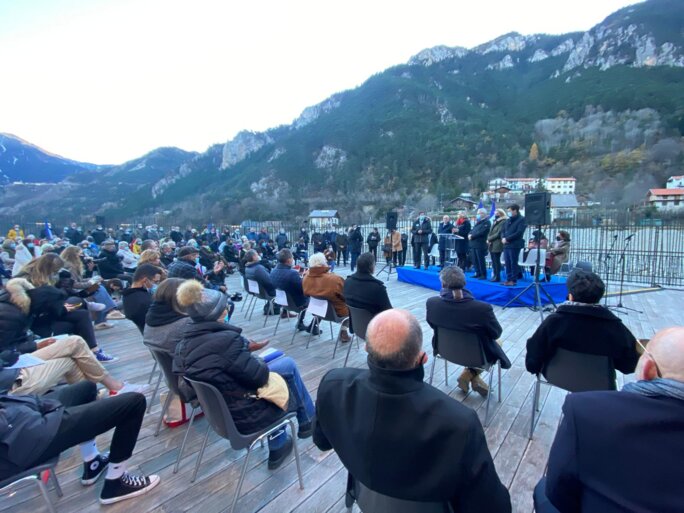
That led to Monday's trip, which was arranged after a 45-minute phonecall, the existence of which was carefully revealed to journalists. The two finalists in the LR contest to be presidential candidate had breakfast together in the Alpes-Maritimes, followed by a public meeting together in the town of Saint-Martin-Vésubie. Everything was sweetness and light. In his speech Éric Ciotti spoke of his “total and full support for Valérie Pécresse”, who in turn promised the MP from Nice a “very special place” in her campaign. Sources close to both insisted that the episode was closed.
Sunday's storm was, on the face of it, a clever gambit by the MP from Nice. He had come top in the first round of voting at the LR conference to choose a candidate. And though he lost the run-off to Valérie Pécresse, he still retains the authority that comes from attracting the votes of 44,000 party members. “It positions him as the leader of the right wing of the party,” said one of his allies. This leapfrogs him over other contenders for this role, such as Bruno Retailleau, the head of the LR group in the French Senate, and Laurent Wauquiez, president of the Auvergne-Rhône-Alpes region. By applying pressure on Sunday Éric Ciotti forced Valérie Pécresse to negotiate on three points: his place in the campaign set-up, his post in case she wins and becomes president in April, and the contents of her final campaign manifesto.
On the first issue, the MP from Nice aimed high. Speaking last Monday he suggested a campaign in which he would be “side by side with Valérie”; behind the scenes his team spoke about a joint ticket, perhaps with him lined up as her future prime minister. That got a knock-back from the presidential candidate herself. “In the Gaullist party [editor's note, Les Républicains is the latest incarnation of the right-wing party or movement that goes back to the days of General Charles de Gaulle] there is a leader and there are figures around them,” she said. Instead, she offered him the role that former interior minister Charles Pasqua had had “at the side of Jacques Chirac”, referring to the late president. This was a clever move given Ciotti's known liking for Pasqua's performance as interior minister in the 1980s.
That leaves the most interesting issue, that of the presidential campaign manifesto and Ciotti's influence on it. “We need to have a strong message, from a Right which does not apologise for being itself,” the Nice MP said at Saint-Martin-Vésubie. He told the media: “You need strength to win.” He then added: “The country's never been so far to the right” and “That's what the French people are waiting for.” After spending his internal party campaign picking off policies favoured by the far right – from the need for “national priority” or putting French business and organisations and people first, to fighting against the so-called “great replacement” by migrants – Éric Ciotti now wants to have a major impact on the campaign manifesto.
This is the first strategic decision – and perhaps the most important – that Valérie Pécresse has to take as the party's presidential candidate. On what line should she base her campaign? Which electorate should she target? Should it be the moderate Right, centrists and supporters of the former mayor of Bordeaux and prime minister Alain Juppé? Or should she target the conservative and nationalistic Right which is attracted by the far right? From this decision will flow how she organises the campaign team, the manifesto proposals and the themes to highlight, as well as the general tone of the campaign over the next four months.
Keeping the 39% pro-Ciotti vote happy
This dilemma has been a dominant theme for the Right in recent days. On Monday the right-wing daily Le Figaro dedicated its main editorial to the issue, with its headline standing as a warning to the new candidate: “If Pécresse holds firm on the right...” Written by editorial director Alexis Brézet – who had not written an editorial for three months – it stated that “the campaign will be won on the right” and insisted that Valérie Pécresse had to resist the “supporters of moving back to the centre”. The newspaper wrote: “To tone down her speech would be the best way to cut herself off for good from the electors who have to be brought back.”
That is basically the message that the president of the Paris region got last Monday in the Alpes-Maritimes. “This is not the time to be cautious,” warned Éric Ciotti at the time. He said the risk was losing the 39% of the party voters who had backed him and, more widely, losing that section of the Right who no longer want to be told that there is a fixed dividing line between the Right and the far right. “Those people should be with us,” Ciotti said. “They're expecting a strong message, that's what they are telling us everywhere.”
Enlargement : Illustration 2
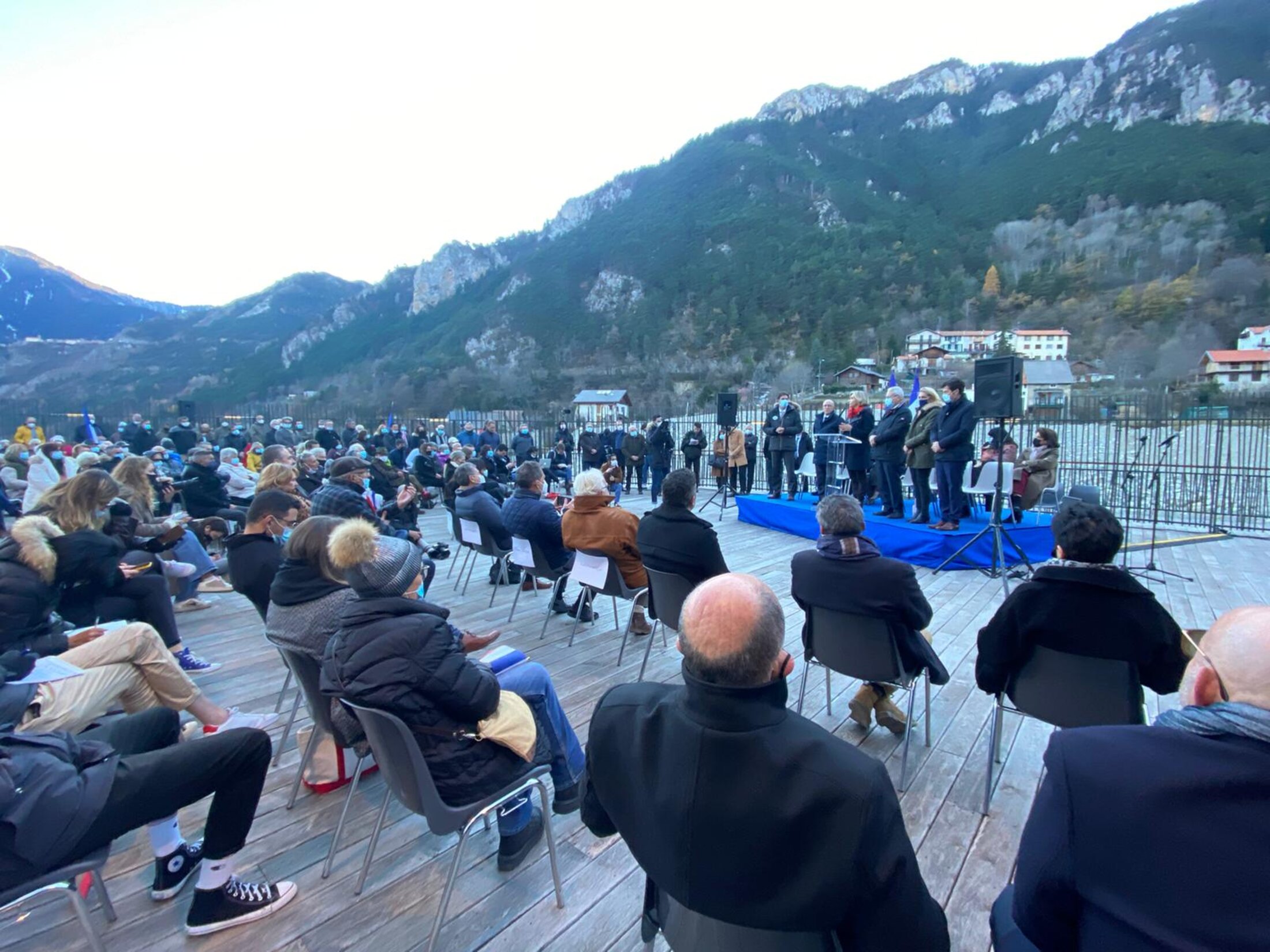
Later, two activists, Alice and Olga, reflected on the day's events. Both members of the LR and Éric Ciotti supporters for many years, the pair said they were “quite convinced” but remained wary. “We'll see the position that she gives him and the measures that she adopts,” said Alice. “We're waiting for her to be very clear in her positions.” Olga said: “If Éric doesn't have an important role in the campaign we'll go elsewhere.” When Mediapart suggested this could mean backing the far-right candidate Éric Zemmour, she replied: “Exactly.”
The LR senator Alexandra Borchio Fontimp, who ran Éric Ciotti's campaign, also seemed satisfied with the outcome of the Nice gathering. “Valérie Pécresse already has a manifesto that's clearly to the right and today she's made some reassuring declarations,” said the senator. “That shows a certain openness.” In her comments in Saint-Martin-Vésubie the presidential candidate promised that she was going to “look” at how she could “spice up” her manifesto with some proposals from her rival in the LR contest. One example she gave was inheritance tax, which she wants to reduce while Éric Ciotti wants to abolish it entirely.
“There is absolutely no moving back to the centre,” said Alexandra Borchio Fontimp. On Sunday Valérie Pécresse's campaign director also promised in Le Figaro that they would not succumb to any temptation to make a strategic shift. “I don't have the feeling that she is in the least bit ready to farm out her views,” said Patrick Stefanini, who promised the presidential candidate would be “extremely firm”. It is hard to disagree with him; both before the LR conference and ahead of the regional elections in June this year the former minister under President Nicolas Sarkozy showed she was more than capable of doing that.
Her challenge is to get back everyone who voted for Macron, out of disappointment or who rejected too far a slide to the right
Valérie Pécresse's political challenge is a bit like doing the splits. She has to hold on to the hard right while at the same time being open to the more moderate section of her camp, which is coveted not just by Emmanuel Macron but also by the new party Horizons, set up by former LR member and former prime minister under President Macron, Édouard Philippe. Already Valérie Pécresse has been in contact with Jean-Christophe Lagarde, president of the centre-right UDI, and with Hervé Morin, who runs Les Centristes party.
However, Lagarde, an MP from the Seine-Saint-Denis département north of central Paris, has no intention of signing a blank cheque for his allies Les Républicains. “It's about writing a plan together, we won't be happy just to come and applaud at her rallies,” he warned. “We have a list of 53 policy points that are important to us, on education, digital sovereignty, climate transformation … it isn't an informal discussion that you can complete in quarter of an hour.”
On top of these detailed measures, Jean-Christophe Lagarde also has a firm view on the strategic dilemma that Valérie Pécresse faces. “She's no longer just talking to the LR base support, she must now build a majority,” he said. “All those on the right who, for years, have thought that you have to run after far right votes to win have failed. Valérie Pécresse knows this perfectly well. Her challenge is to get back everyone who voted for Macron, out of disappointment or who have rejected too far a slide to the right. Sarkozy and Chirac won by succeeding in getting the correct blend between the right and the centre.”
Observers will now be keeping a close eye on the concrete signs of how Valérie Pécresse approaches the issue. This includes the campaign team she picks, the venues for her coming trips and the themes of her early speeches. Those around Valérie Pécresse do not think there will be any rowing back on core issues such as law and order. On the other hand, she might start to give more place to social, health, education and environmental issues. She recently told a close ally: “It annoys me that we let ourselves get confined to law and order and immigration.”
----------------------------------------------------------------------
- The original French version of this article can be found here.
English version by Michael Streeter