


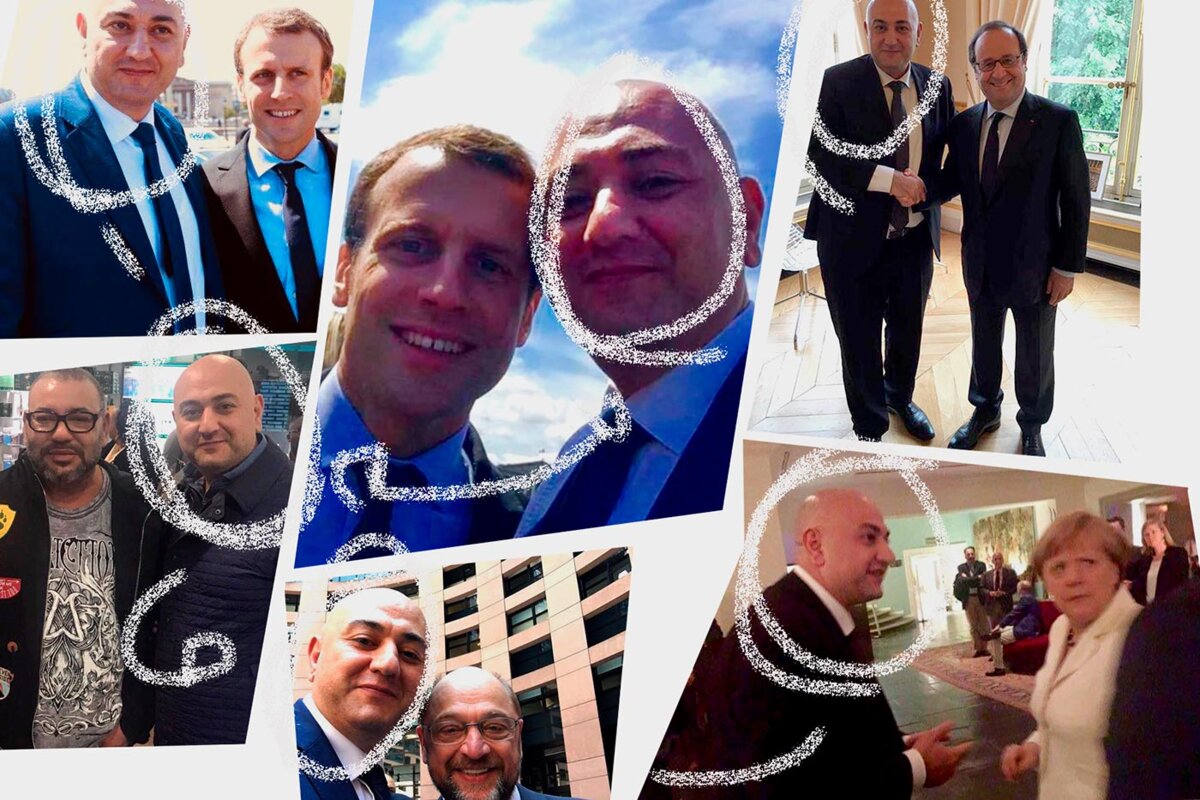
From the photos, nothing could be clearer: Mohamad Izzat Khatab rubs shoulders with powerful people. The Syrian businessman's selfies with heads of state are proof; he has even used them for his business card.
Here he is with Emmanuel Macron, with Macron's predecessor as French president François Hollande, German leader Angela Merkel, ex-Israeli prime minister Benjamin Netanyahu, Moroccan king Mohamed VI and the president of the Congo, Denis Sassou Nguesso. He is also pictured with religious leaders (imams, priests and rabbis), ambassadors, singers, lawyers, police officers, sports personalities and doctors. Leading diplomatic figures, the great and the good of Paris; all have been brought together in hundreds of photographs that he displays everywhere: on the walls of his office, on his eight Twitter accounts, his three Instagram profiles and his nine Facebook pages. Every opportunity is used to make the most of his remarkable selfie tally.
Enlargement : Illustration 1

Izzat Khatab is portrayed as a billionaire with a high-rolling lifestyle complete with Bentleys and Mercedes, offices at one of the best addresses in the French capital and a round-the-clock bodyguard. He is also depicted as a promoter of inter-faith dialogue in France who has gained the trust of several institutions, and also as a “peacemaker in Syria” whose actions are watched closely by intelligence services.
He is seen as a trusted figure even though few searching questions are asked about this man with halting French who has maintained a cloak of mystery over his past.
Yet behind the image of 'Dr' Mohamad Izzat Khatab – no one is quite clear where this title comes from – his life is not exactly as it appears. Some have found this out the hard way, such as Dominique E., an investor in the hotel sector, to whom the Syrian businessman promised the earth just after meeting him in April 2018.
The promised millions for their joint project never materialised. Mediapart understands that this is why on June 24th 2021 Mohamad Izzat Khatab was placed under formal investigation for a series of alleged offences – breach of confidence, fraud, misuse of corporate assets, money laundering and use of false instruments – in an investigation launched by Paris prosecutors.
The Syrian businessman did not respond to Mediapart's questions about the investigation. His lawyer Martine Malinbaum said it was “better that he reserves his responses for the judge”, and made clear that her client benefited from the presumption of innocence.
The story began in April 2018 when Dominique E. paid a deposit, in the form of a loan, of 1.5 million euros to kickstart a project to which Mohamad Izzat Khatab was later supposed to contribute a total of 250 million euros, with an upfront investment of 100 million euros. Unfortunately, and despite many promises, the second part of the deal never happened. In July 2018 lawyers acting on behalf of investor Dominique E., Jean-Pierre Versini-Campinchi and Anaïs Benfedda, started legal action, as the magazine Marianne revealed at the time.
In the meantime, on June 22nd 2018, one of Izzat Khatab's lawyers had sent three “payment orders” which were supposed to be executed before July 12th 2018 from the UBS bank account of a Swiss company in order to repay the 1.5 million euro deposit. Yet this Swiss company had no link to the Syrian businessman.
Moreover, the head of that company, Fawaz S., who had met Izzat Khatab several years earlier in relation to humanitarian projects connected to Syria, told Mediapart that while he had indeed agreed to pay the money, he thought it related to a humanitarian campaign. “It was to buy equipment for Syria, such as pens for school pupils. The payment could only be made when funds arrived in my company's account,” he explained.
According to Fawaz S. his business account was simply serving as a relay point, to provide payment guarantees to suppliers of the humanitarian operation, before the money was released by Izzat Khatab himself. “But I never received anything,” said the boss of the Swiss company.
This was clearly not an isolated case. Another “payment order” from the same company run by Fawaz S. had been sent by Izzat Khatab to another investor, who resides in Belgium. According to Mediapart's information, this was to repay a sum of 130,000 euros that had been advanced in cash in Paris. Once again the payment order from the Swiss company was never executed. “It was a transfer that never took place,” said Fawaz S.

Enlargement : Illustration 2
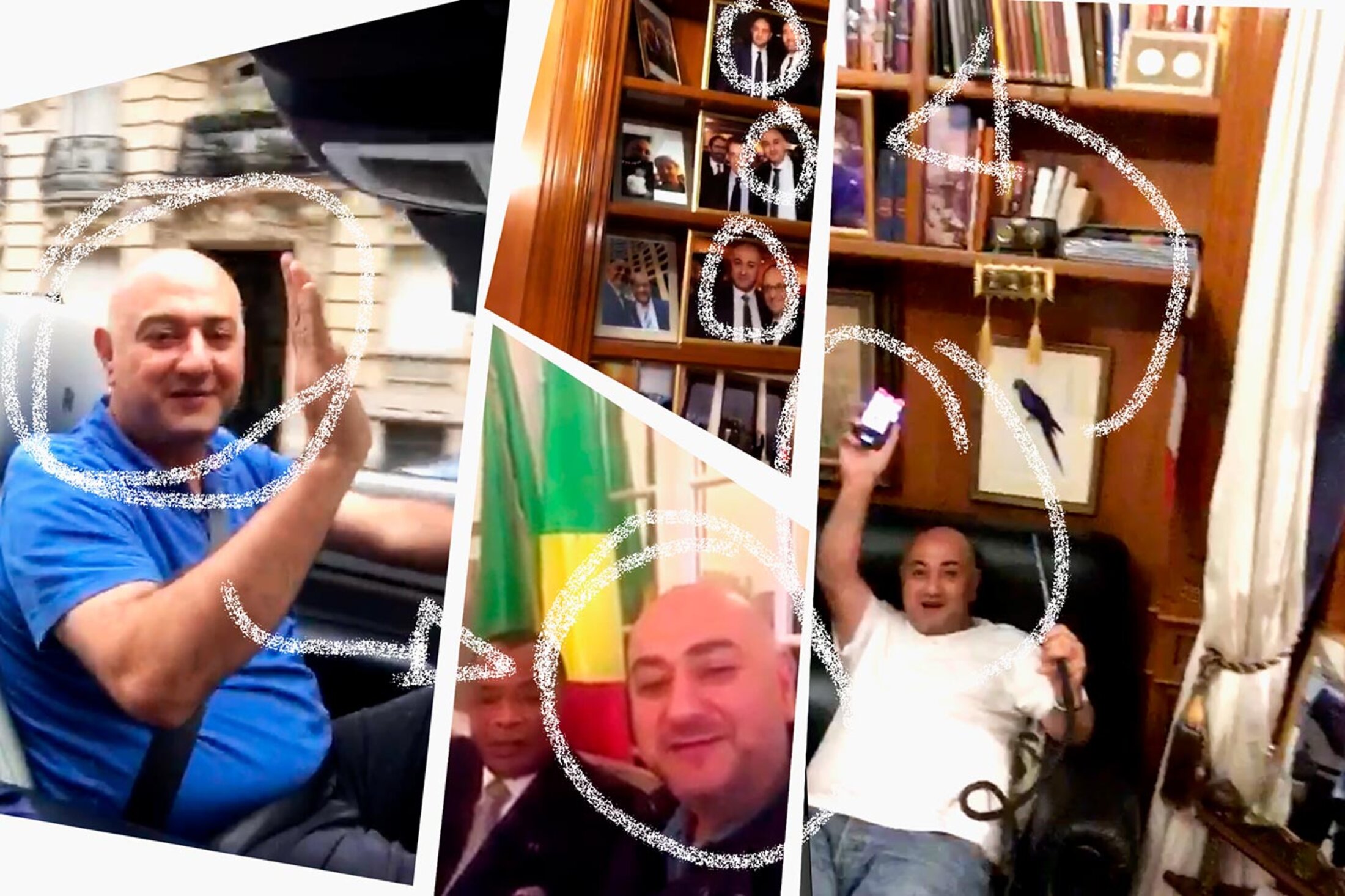
Dominique E. had rushed into the hotel project, reassured by Izzat Khatab's contacts and standing – both financial and media. On his website the Syrian businessman explains that he has “made a fortune” in “oil, property, the phosphate industry and tourism development”.
Other people involved in the case did not bad an eyelid either. “When you see this person, who has a public position and has met the entire planet, he's not just anyone, and you give him some credibility,” recalls a French notary involved. Nonetheless, this notary did contact TRACFIN, the money laundering tracking unit based at the French treasury, to see if this 'personne politiquement exposée' (PPE) – a person with a high-profile public role who might therefore potentially be vulnerable to corruption – had already been flagged to the authorities. “I had no feedback at all,” said the notary.
In public Izzat Khatab reassures those he deals with by portraying himself as the “secretary general” of a respectable non-governmental organisation, La Syrie Pour Tous ('Syria for all') which he used several years ago to work on a “peace plan” for a post-Bashar al-Assad era in Syria. Though few specialists lent it much credence, this plan was backed publicly by several prominent people. One was the high-profile socialist regional councillor in Paris Julien Dray, who even promoted the plan on public broadcaster France Info radio on September 23rd 2016.
At the end of a political interview with the politician, the journalist Jean-Michel Aphatie moved the discussion onto an unexpected subject: “There's a serious and humbling issue, Syria … you wanted to say a word, Julien Dray...”
The councillor then seized the opportunity to announce the importance of the “Khatab plan” that no one knew about. “There are NGOs, one NGO in particular, which is called La Syrie Pour Tous, which has come up with a plan, that I can show you; the 'Khatab Plan', which introduces a new approach,” said Julien Dray. This plan, the councillor added, raised the “issue” of “reconstructing Syria straight away, without waiting”. Dray, who was then an unofficial adviser to President François Hollande, declared: “There's some money ready.”
It is hard to know what lay behind this sudden support for an unknown plan. Julien Dray himself has declined to respond to Mediapart's questions. In Dray's book 'C’est toujours moi qui fais le sale boulot' ('It's always me who does the dirty work'), published in 2019 by Fayard, Izzat Khatab gets a brief mention as someone whom he “rubbed shoulders with over the reconstruction of Kobanî”, a city in Syrian Kurdistan which was besieged by Islamic State and over which Dray sought the support of François Hollande.
Enlargement : Illustration 3
In the world of politics Izzat Khatab, whose financial capabilities attracted attention, was increasingly seen as being close to Julien Dray, who opened the doors of the Élysée to him at the end of Hollande's presidency.
When Emmanuel Macron came across the Syrian businessman during Israeli premier Benjamin Netanyahu's visit to Paris in July 2017, the newly-elected French president recognised him immediately. “How are you again? Say hello to our friend Julien,” the new president said in a familiar tone. Macron had also been close to Dray at the end of the Hollande presidency.
A year earlier, when he had been economy minister, Emmanuel Macron had agreed to pose for a photograph with the Syrian businessman during a Bastille Day ceremony. This provided yet another selfie for Khatab to print out, frame and display in his office.
He had a certain wealth but I wouldn't say the inverse. I noticed that the Bentleys, which were registered in Germany, didn't belong to him but were hired. He may have had more money than he knew what to do with … but tell me one bit of business he was involved in?
Curiously, no one questioned what La Syrie Pour Tous, an association that had been set up in Geneva in 2009, really did. The businessman explained online that the movement brought together “figures from civil society from inside Syria”. It was funded with his own money, he said.
Yet “this association never carried out any activity nor even had a bank account”, the association's secretary – none other than Fawaz S. - told Mediapart. He said that he had initially trusted Izzat Khatab, before “seeing his lack of seriousness”.
The NGO's treasurer, Lewis D., who runs a trust company in Geneva, noted: “We undertook the steps to create the association but nothing happened afterwards.” He said that his trust company was never paid for its work. “There are around 10,000 [Swiss] francs in unpaid administrative fees and rent,” he said. Fawaz S. himself added: “I often asked Mr Khatab to pay. I went to Paris in 2020, he kept on postponing our meeting and I just gave up.”
Izzat Khatab has left behind some bad memories in Switzerland..“He comes to you with the best of intentions and lots of promises but there's not much behind it,” said one of the people who used to run another association, called Amitié Suisse-Syrie, which Khatab set up in 2006.
The association officially folded in 2012, like two others, the Conseil syro-helvétique des entreprises and the Chambre du commerce et de l’industrie Suisse-Syrie, as reported in La Tribune de Genève. The newspaper also stated that Izzat Khatab had been given a 15-month suspended prison sentence in 2009 for “fraud”, “breach of confidence” and causing “actual bodily harm”.
“He didn't have much money,” said someone who used to be close to him, and who was “surprised” to discover the Syrian businessman's lifestyle in Paris. “He had a certain wealth but I wouldn't say the inverse [editor's note, that he was wealthy for certain],” he said. “I noticed that the Bentleys [that he used], which were registered in Germany, didn't belong to him but were hired.” The former friend added: “He might have had more money than he knew what to do with … but tell me one bit of business he was involved in?” Khatab's import-export business Arabian International Trade, which was based in Annemasse in the French Alps after it was set up in 2003, was closed in 2008 because of a lack of assets.
“With his cars, his four or five bodyboards, he created quite an image to impress the crowd,” said another witness familiar with Khatab's time in Geneva. A third witness said that Izzat Khatab used to travel with lots of cash on him, often in large denomination notes.
The Syrian businessman did not respond to these claims.
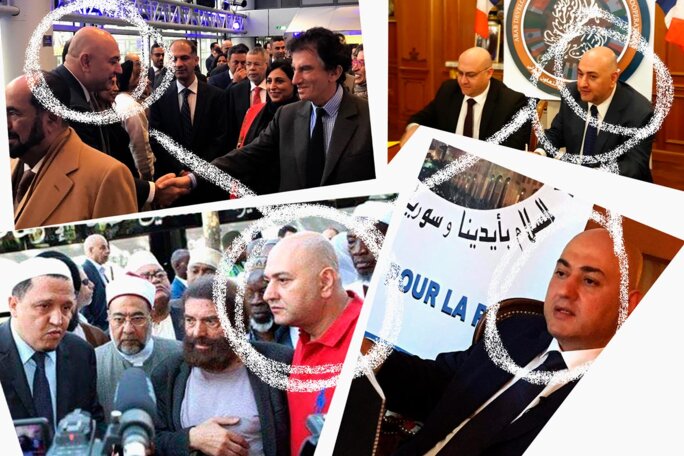
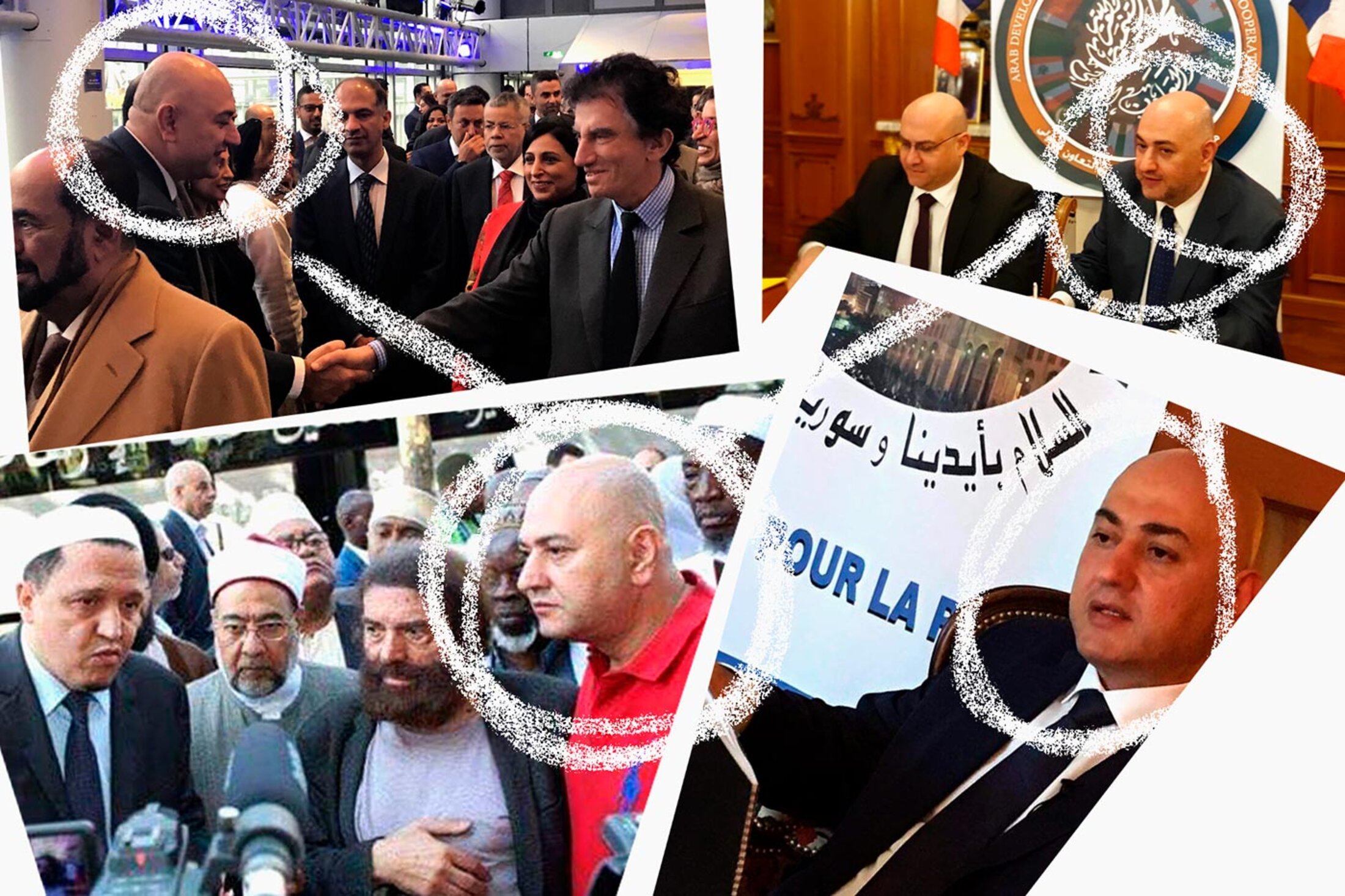
The businessman's mishaps in Switzerland did not dampen the enthusiasm of several supporters in France. In addition to Julien Dray, the high-profile imam Hassen Chalghoumi from Drancy in the north-eastern suburbs of Paris, stuck by him for years.
One thing Izzat Khatab did do was to finance the 'Muslims' march against terrorism' in 2017 co-organised by Hassen Chalghoumi with numerous leading figures, including the writer Marek Halter. These took place in several European cities and towns that had been hit by Islamist attacks; Berlin, Brussels, Saint-Étienne-du Rouvray, Paris, Toulouse and Nice.
According to the daily newspaper Libération the Syrian businessman also provided refuge for the imam in 2015 when the latter faced death threats.
The two men later remained close. They went to together to the Bataclan the day after the Islamist terrorist attacks at the music hall and elsewhere in the Paris region on November 13th 2015, and attended meetings with representatives from Jewish and Catholic institutions. “I haven't been in touch with him for a long time. I don't want to speak about him, nor go back over his past,” Hassen Chalghoumi told Mediapart before cutting short the conversation.
However, on February 20th 2021 Izzat Khatab and Hassen Chalghoumi gave evidence to the French Senate's law committee as part of its assessment of the government's planned law on 'separatism'. The businessman and the religious leader answered questions from senators on behalf of the Conférence des Imams de France, an organisation of no great standing of which Hassen Chalghoumi is president. The Syrian was described before the Senate simply as an “association leader ”.
When he turned up in from of the Bois-d’Aulne middle school in the Parisian suburb of Conflans-Sainte-Honorine after the murder of teacher Samuel Paty on October 16th 2020, Hassen Chalghoumi was once again accompanied by Izzat Khatab, who held a bunch of flowers in his hand. “I saw him there, I had put out an appeal on my Twitter account, I said hello to him,” Hassen Chalghoumi told Mediapart on October 20th 2020. Referring to Izzat Khatab, the imam said: “I am friendly towards him but nothing else.”
However, the relationship between the two men was once the subject of a report from the Service de la Protection (SDLP), the French police unit in charge of protecting prominent figures – including Hassen Chalghoumi. Dated June 1st 2016 and revealed by Libération, the document indicated that the religious leader was seemingly “mesmerised by the new financial godsend from his benefactor, leading to an ambiguous even problematic relationship with money”.
The report then referred to the SDLP officers assigned to protect Hassen Chalghoumi, noting that “Izzat Khatab pays great attention to our team, trying to pick up the cost of our meals. He consistently and with great persistence asks us to eat what we want and when one of us doesn't want to sit down at the table, he strongly insists.”
The report continued: “We regularly decline politely and firmly but we regularly have to give way to his requests to avoid offending sensibilities which could directly harm the mission.” In images viewed by Mediapart SDLP officers can be seen carrying out a task for Izzat Khatab. However, Hassen Chalghoumi insisted no officer had “worked” for the Syrian businessman. “He's perhaps using photos and videos, you know how he is...” the imam added.
The closeness of other police officers to Khatab has meanwhile raised questions. According to Le Point magazine, General Lionel Lavergne, the former head of the Groupe de Sécurité de la Présidence de la République (GSPR), the unit in charge of protecting the President of the French Republic, once reproached one of his officers in charge of Brigitte Macron's security who had been seen at Izzat Khatab's home in the company of Hassen Chalghoumi.
After his enforced departure from the Élysée in July 2018, President Macron's former personal security adviser Alexandre Benalla also visited the Syrian businessman's home, as the website Mondafrique reported several months later.

Enlargement : Illustration 4
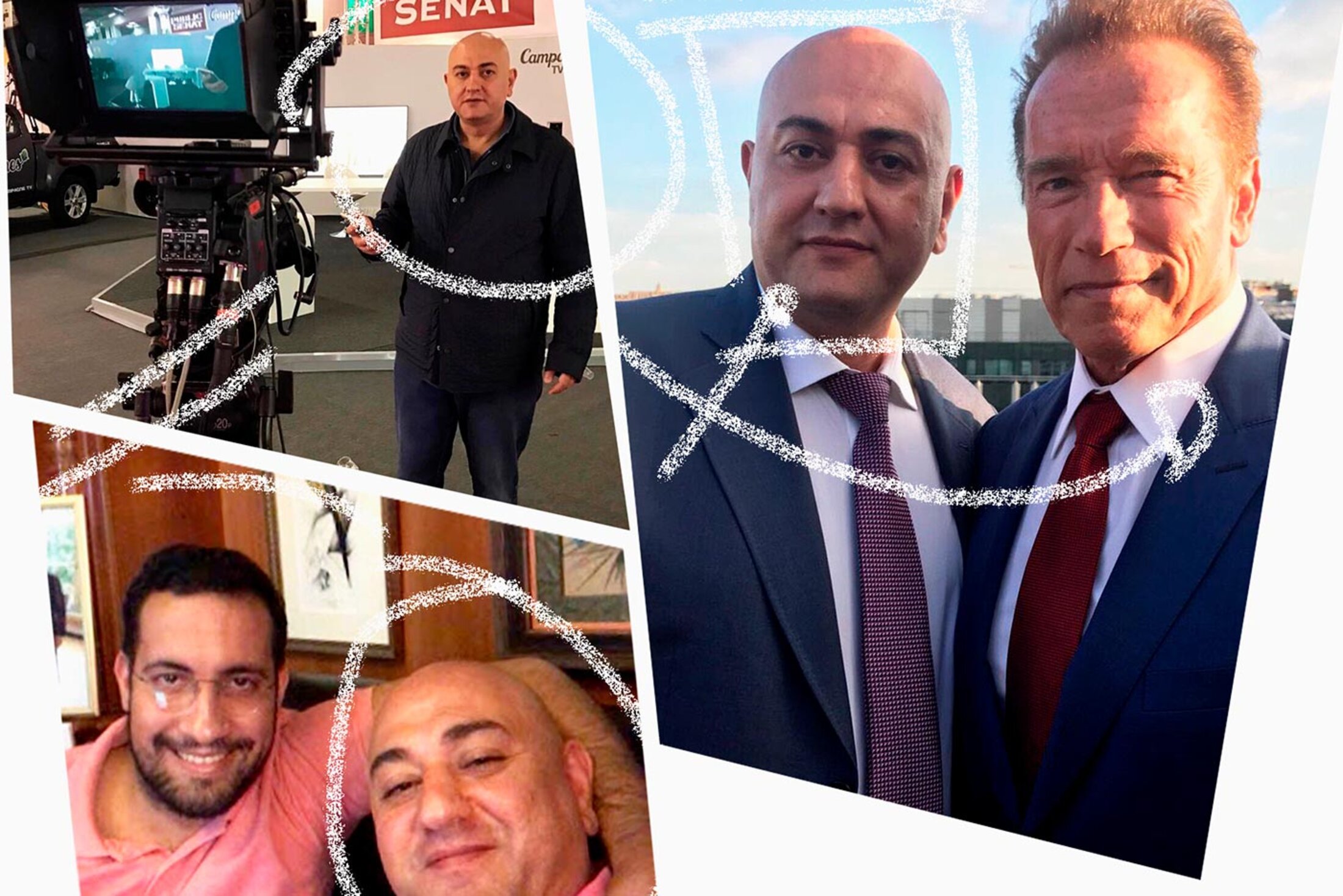
Benalla had known Khatab “since 2012, when I was looking after François Hollande's security during the [2012] presidential election”, he wrote in his book 'Ce qu’ils ne veulent pas que je dise' ('What they don't want me to say') published by Plon in 2019. Benalla says in the book that the Syrian businessman is “very noticeable with his round face and smooth head. His thing is selfies. He wants to be in a photo with all the great – and not so great – people in the world. He has an impressive technique in approaching personalities.”
When he was working for Emmanuel Macron, Alexandre Benalla had decided to block Khatab's access to the Élysée. “I quickly understood that it was better to keep him at a distance,” he writes in his book. According to Le Point, in 2017 the Syrian businessman was banned from entry to an iftar – a meal in the evening to break the daily fast during Ramadan – that was organised in Paris's VIIIth arrondissement or district and attended by the president.
After Benalla had to leave the Élysée, Izzat Khatab got back in touch with him, convinced that the the former personal security adviser, who had maintained good relations with Emmanuel Macron, could open the doors of the Élysée for him.
Several meetings took place. One evening at the end of August 2018 Benella even got the Syrian businessman to come to the house of his former colleague, Christian Guedon, who was still involved in security for the French president, as Mediapart has reported.
In his book Macron's former security adviser says that Izzat Khatab was ready to pay him “200,000 euros a year” to look after his security, but that he turned this offer down. “There was no question of working with him. He's a nice guy but I prefer to leave it at that,” he writes.
In fact, Alexandre Benalla increasingly kept his distance from the Syrian, in particular following a weekend organised at Fleurac in the Dordogne in south-west France at the château home of businessman Vincent Miclet. The event, also attended by Jean-Louis Haguenauer, the man behind the Russian security contract negotiated by Benalla while the latter was still working as a key aide at the Élysée (read full story here), had been arranged to assess the opportunity for joint projects.
The trip down to Fleurac from the capital gave rise to a curious episode. Alexandre Benalla went there by car with Izzat Khatab – he would return to Paris by plane – and their convoy, which was clocked doing 150 km/h (about 93 mph), was pursued by gendarmes who stopped them at a motorway service station. The officers then checked the papers of those in the convoy. At this point Khatab's bodyguards got out their professional identity cards and the gendarmes let them all carry on their way, with no action being taken against them.
On the way back from Fleurac some of those taking part in the event still harboured doubts about Khabat's true financial muscle and his intentions, but one thing had become clear: at that time this elusive Syrian benefited from some curious protection.
-------------------------
If you have information of public interest you would like to pass on to Mediapart for investigation you can contact us at this email address: enquete@mediapart.fr. If you wish to send us documents for our scrutiny via our highly secure platform please go to https://www.frenchleaks.fr/ which is presented in both English and French.
-------------------------
- The original French version of this article can be found here.
English version by Michael Streeter