


Laurent Lassimouillas and Patrick Picque, the two French tourists who were kidnapped on May 1st while exploring the Pendjari national park in northern Benin, arrived back in France early Saturday evening after they and two women hostages, an American and South Korean, were freed by French special forces on Friday.
Two French marines were killed in the operation targeting a hideout where the four were being held at a location in the north of neighbouring Burkina Faso, and which also involved the Burkinabè army and support from US military intelligence.
According to a source within the Burkinabè security services, their captors appear to have been travelling through the country en-route for neighbouring Mali, where are based numerous armed jihadist groups affiliated to Nusrat al-Islam (whose name translated into English means “group to support Islam and Muslims”), and the so-called Islamic State in the Greater Sahara.
Over the past three years, one of these armed groups, Ansar ul Islam, has occupied parts of northern Burkina Faso, which shares a common border with Mali. First coming to wider notice after an attack on a Burkinabè army contingent in December 2016, in the province of Soum, in the northern Sahel region of the country, Ansar ul Islam operates on both sides of the border with Mali, and has close links to the jihadist Macina Liberation Front which is based in the central Malian region of Mopti.
Since 2016, Ansar ul Islam has carried out numerous further attacks against Burkinabè army personnel, but also civilians, taking control over areas where it notably closed down schools. Subsequent counter-terrorism operations by Burkinabè security forces also led to reported atrocities against civilian populations.
Before the French hostages were freed in this northern region on Friday, they had apparently been held in another part of the country situated several hundred kilometres from the border with Mali.
Four days after the two French men were taken hostage in the Pendjari National Park in north-west Benin on May 1st, the mutilated bullet-ridden body of their guide, Fiacre Gbédji, was found in the park. The vehicle the three had been travelling in was discovered, burnt out, on the Burkinabè side of the border. Parts of that region of south-east Burkina Faso have also now become, according to some specialist observers, potential new strongholds for jihadists from the Sahel.
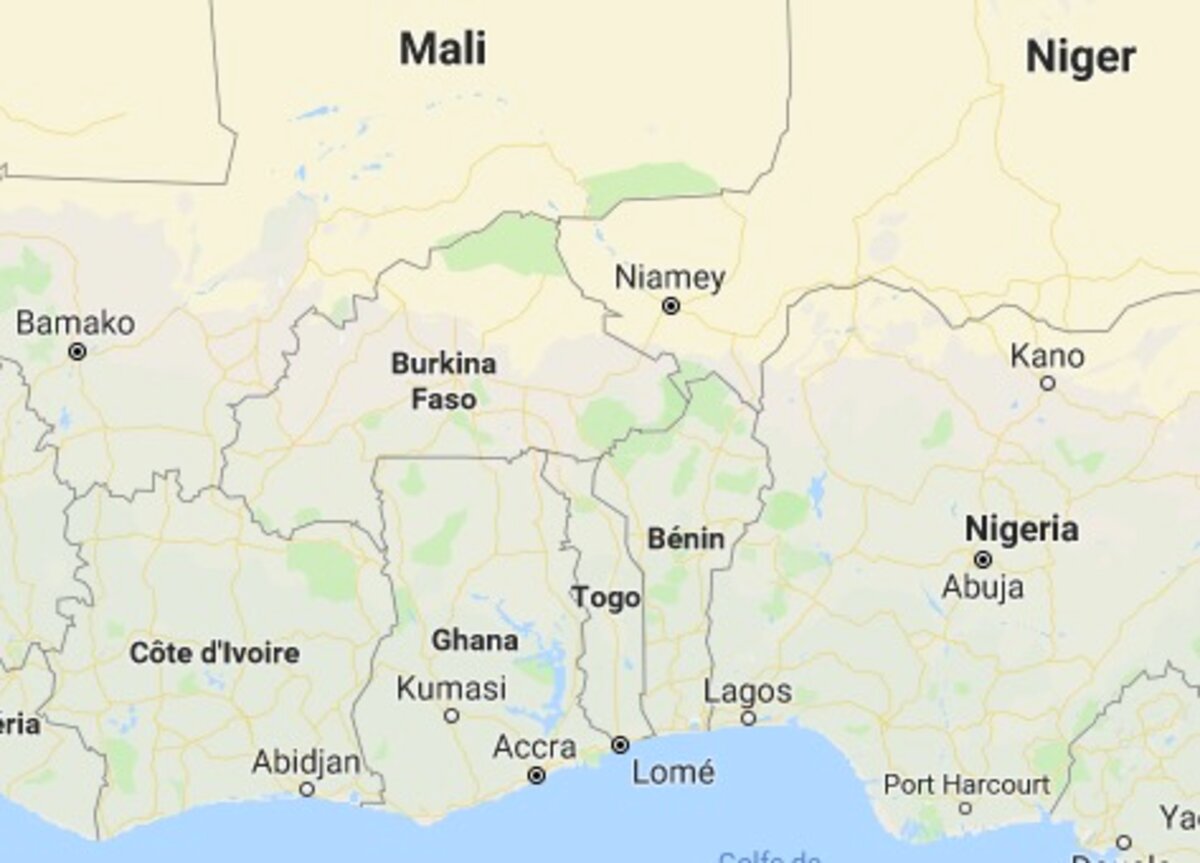
Little more than a year ago, groups apparently linked to the so-called Islamic State in the Greater Sahara began infiltrating the region. They are composed of jihadists from Niger and Mali, some of them battle-hardened from fighting in northern Mali. They have gone about recruiting young men from local communities, notably among the Gurma and Fula, who are the largest ethnic groups of eastern Burkina Faso.
The first armed attack was on February 14th 2018, against a patrol of Burkina Faso’s Defence and Security Forces, which took place at Natiaboani, on the road that links the regional capital of Fada N’Gourma with the town of Pama, close to the border with Benin. The attack left one of the patrol dead and another two wounded. More attacks followed, and in September last year, Burkina Faso Prime Minister Paul Kaba Thieba detailed the list before parliament. They included; four attacks against Burkinabè gendarmerie brigades, another against a police station, four which targeted forestry guard posts, another four against hunters’ camps and three against public edifices. Unofficial sources estimate that more than 20 Burkinabè security personnel have been killed in the attacks over the past 15 months.
The jihadists in Burkina Faso have adopted the same strategy as that employed by the Macina Liberation Front in the centre of Mali, with a slow but steady implantation, imposing their own laws but also measures they hope will gain them popularity among a section of the local population. Their attacks target various groups representing the state; the police and gendarmeries, forestry wardens, and even schoolteachers. But they have also targeted civilian representatives opposed to their arrival, including elected politicians, and religious and traditional ommuntiy leaders.
One village elder from Tawal Bougou, situated about 50 kilometres from Fada N’Gourma, was forced to flee his home after speaking out against the jihadists at a local meeting. “The first time that I heard mention of the jihadists was on April 6th 2018,” he told Mediapart, requesting that his name was withheld. “It was a friend who spoke to me of them. Then, one day, they came into my village. There were six of them, riding two each on motorbikes. I was absent at the time. They brought everyone together at the mosque and told them not to place themselves between them [editor’s note: the jihadists] and the authorities. That was a message to me. In their preaching, they said that all the Burkina ethnic groups were with them, the Fula, the Mossi and the Gurma. They didn’t set up regulations, but they proposed that we collaborate with them. In other villages, they said that certain practices must end.”
In a village close to Kompienbiga, in the region of Pama, near the border with Benin, the jihadists targeted a marabout who had been established there for 29 years, and who ran a school for disciples who came from Burkina Faso and also Benin, Togo and Ghana. Speaking in the Burkina capital Ouagadougou, to where he fled with his principal assistant, he told Mediapart (asking for his name to be withheld) how armed men arrived in his village in January 2018, looking for him. He said they murdered two people who refused to say where he was, while one of the imams from his mosque was also murdered several weeks later.
“They come into the villages, spend a few hours there, bringing local inhabitants together and telling them what they must, and must not do,” said a ranking member of a local community in the region, who also requested that his name was withheld. “During long speeches at the mosque, they explain what they want from the inhabitants. They say that their firearms are for the army, but that their machetes are for us if we oppose them.”
Social inequities exploited by jihadists
Just as in the Macina region in Mali, the jihadists’ regime of terror is accompanied by measures aimed at pleasing certain sections of the population they rule over, and their choice of infiltrating this south-east part of Burkina Faso was at least in part because of the latent frustration and anger of local inhabitants towards the authorities.
The government in Ouagadougou has long abandoned interest and investment in the eastern region of Burkina Faso. There are few practicable roads, and basic public services are largely deficient. In 2014, the literacy rate in the region was 23.8%, compared with a national average of 34.5%, and while it has mineral resources, fertile land and the potential for tourism development, its inhabitants are amongst the poorest in the country, according to data from Burkina Faso’s National Statistics and Demography Institute (INSD). “The majority of young folk have no employment and no perspectives,” said a politician from the region. “For the bandits, they are very easy to recruit.”
On a general level, the area has become one of the country’s most unruly since the early 2000s, with various criminal gangs notably involved in wildlife poaching, black market gold mining and robbery targeting the many travellers who cross through it to and from neighbouring countries.
Resentment of the national authorities is heightened by the prohibitions they have imposed. Because of the rich local wildlife, numerous private hunting zones have been established in recent decades, which exclude the local population while attracting wealthy tourists from Europe and the Middle East. Added to this, all human activity is banned in two protected national parks, those of Arly and W, which border the Pendjari national park in northern Benin. This has meant that villagers located between these conservation zones are limited in their previous practices of hunting, fishing or farming.
“Traditionally, the populations in this zone live from hunting and fishing,” said Mahamoudou Sawadogo, of Burkina Faso’s Research Centre for International Development. “But because of the private concessions to private operators, often foreign, of hunting zones and protected areas, they are banned. Those who poach are arrested, sometimes even killed. It provokes a sentiment of frustration.”
The jihadists have put an end to such prohibitions in the areas they control. They have allowed farmers to grow crops where they like, and the herds of cattle farmers to roam freely, while also letting gold diggers to resume their (often clandestine) activities. “When they go into villages, the jihadists tell people they can hunt wherever they like, even in protected areas,” said the mayor of a village close to the border with Benin. “That’s possible because the forestry wardens are no longer there. Such measures are pleasing for people.”
The mayor also asked for his name to be withheld, fearing for his security. According to him, the jihadists “won’t manage to convince everyone”, notably because a section of the local population are animist. But, said the mayor, “in an area like this, full of forestland where it’s easy to hide, and where the state is not well regarded, it just takes a few sympathisers in order to prosper”.
According to one source from the Burkinabè security forces, the jihadists can also count on the help of criminal gangs which occupied the area before them, and which took advantage of their arrival to continue with their activities. The area is notorious for trafficking in arms, gold and drugs.
Several sources gave credit to the idea that the French hostages were first kidnapped by a criminal gang and sold on to a jihadist group.
-------------------------
- The French version of this report can be found here.