


At the end of his trial on August 18th 2017, a court in the Malian capital Bamako found Aliou Mahamane Touré guilty of charges of threatening State security, illegal possession of weapons, associating with a criminal gang and grievous bodily harm. ten-year jail sentence. Touré was handed a ten-year prison sentence.
The former shopkeeper had been arrested in December 2013, after a French-led military intervention in Mali had driven back jihadist forces which had taken over vast swathes of the north, and which threatened to overrun the capital in the south. In 2012, the jihadist offensive took control of several towns in the north, including Touré’s hometown of Goa.
Goa was controlled by a group called the Movement for Oneness and Jihad in West Africa (MOJWA), a breakaway group from Al-Qaeda in the Islamic Maghreb (AQIM), and during that occupation Touré was appointed as “commissaire” for the local Islamic police.
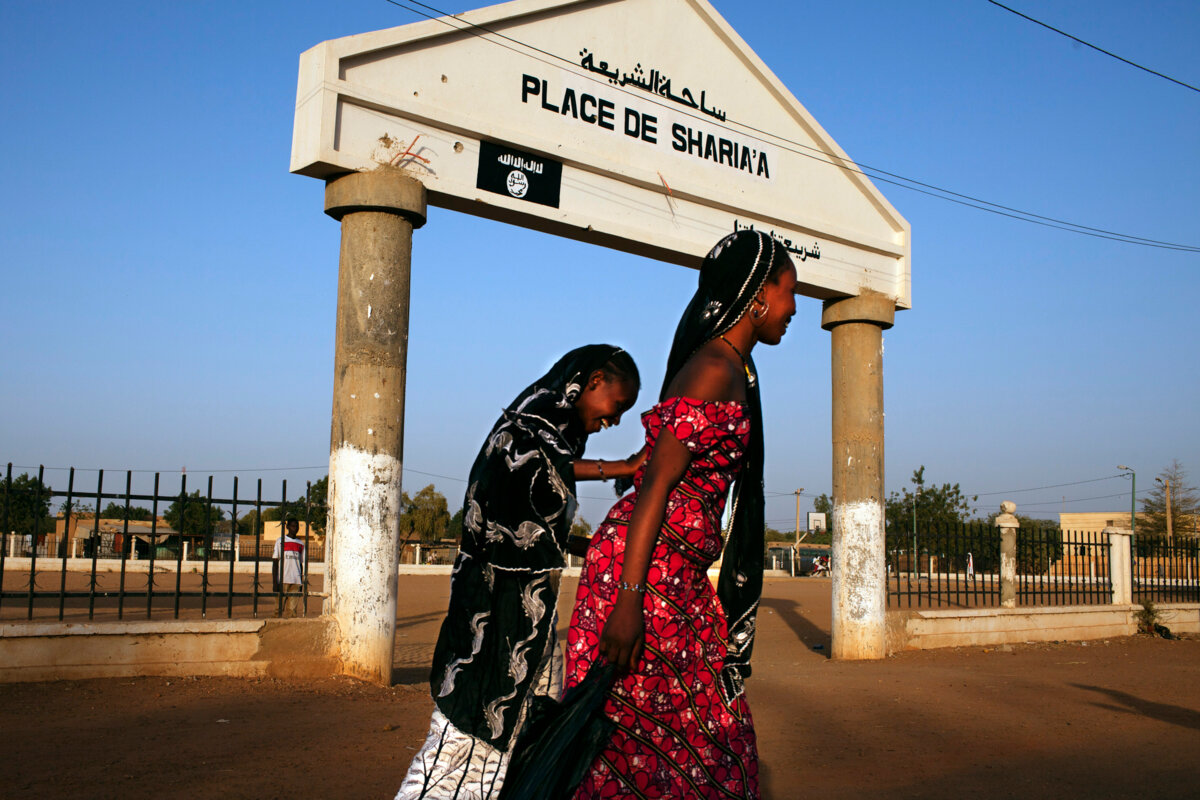
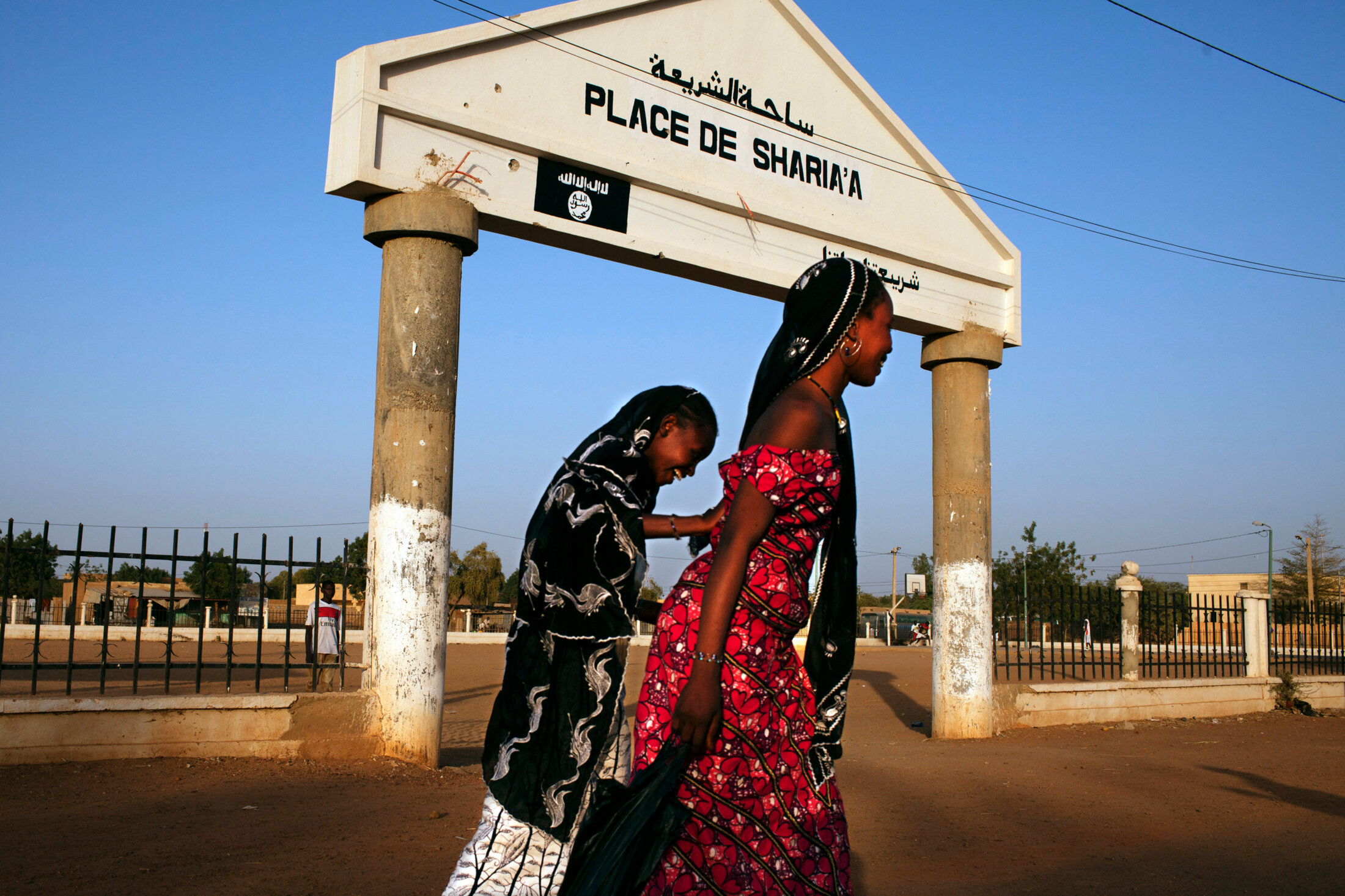
In that role he established a reign of terror in the name of Sharia law, becoming notorious for both ordering and himself carrying out amputations on people accused of robbery, and for organising public flogging of women who were not covered by the Islamic veil.
Following Touré’s trial in August 2017, the Malian Association for Human Rights (AMDH) and the International Federation for Human Rights (FIDH), which had supported complainants in the case, welcomed the verdict even though the jury had dismissed a charge against Touré of war crimes. At the time, the FIDH described the case as “a first step in dealing with the crimes committed by Islamist groups against populations in the north of the country between 2012 and 2013”.
But two years after the Touré case was heard there has been no other trial of jihadists, and the investigations into alleged crimes committed in their occupation of northern Mali have foundered. Meanwhile, Aliou Mahamane Touré has disappeared without trace; according to several sources, he was discretely freed from a Bamako prison by agents of Mali’s State Security (SE) agency on February 17th this year.
Enlargement : Illustration 1
Touré was reportedly freed along with another man, Mamadou Sangaré, aka Tchambel, who had only shortly beforehand been placed in detention in the Bamako prison after his transferal from other jails run by the SE.
Not long after, 15 other prisoners from the jail in the capital, some of who were linked with Islamic groups, have also been released. Like Touré and Sangaré, their whereabouts today are apparently unknown to the prison authorities.
The Malian justice ministry also claims to have no knowledge of where the former prisoners are, and said it had no part in their release. “The ministry was not involved, nor even informed,” said a spokesman for justice minister Tiéna Coulibaly, adding: “The decision was taken at a higher level.” Neither Malian Prime Minister Soumeylou Boubèye Maïga, nor the office of President Ibrahim Boubacar Keita responded to a request for comment on the cases. Diplomatic sources meanwhile, speaking off the record, suggested that the release of the men was probably part of a prisoner exchange deal between the government and jihadist groups.
Two days after the release of Touré and Sangaré, two hostages held in central Mali by the Macina Liberation Front (also known as Katiba Macina), linked to AQIM, were freed by the group. One was Makan Doumbia, the prefect of the town of Tenenkou, who was captured in May 2018, the other a journalist, Issaka Tamboura, kidnapped in December 2018. Following their release, the Malian government issued a somewhat guarded statement on Twitter in which it explained their release was the result of “a long process initiated to preserve their lives”.
Touré is not the first person among those detained for crimes committed in the north of the country in 2012 and 2013 to benefit from such clemency. A number of senior jihadists arrested over recent years were subsequently released after what appear to have been secret negotiations. In March 2015, the FIDH and AMDH filed complaints in the names of 33 people against 15 individuals for “crimes against humanity”.
Apart from Ahmad al-Faqi al-Mahdi, an alleged member of a group closely linked to AQIM who was sentenced to nine years in jail by the International Criminal Court in September 2016 for his role in attacks on religious and historic buildings in the north-central Malian town of Timbuktu in 2012, no other senior jihadists are today behind bars.
Some even live openly and enjoy their notoriety. A number of human rights activists consider the most emblematic example of this to be Houka Ag Alhousseini, also known as “Houka Houka”. A cadi (magistrate of Sharia court), he comes from a village called Ariaw in the Goundam area, about 100 kilometres from Timbuktu. He gained a notorious reputation in 2012 after Iyad ag Ghaly, the Tuareg leader of the extremist Islamic group Ansar Dine (which also has links with AQIM), placed him in charge of the application of Sharia law in Timbuktu during the town’s occupation by the jihadists.
“Houka Houka” was arrested in January 2014, but despite the serious accusations levelled against him, he was released barely eight months later following peace negotiations between the Malian government and armed groups in the north. During the Ansar Dine occupation of Timbuktu, the Islamic court that he presided over ordered a number of lapidations and public floggings. Women were beaten for not wearing a veil, while others were subject to sexual assaults and yet others to forced marriages with Islamic militants.
Following his release in August 2014, “Houka Houka” returned to his native village, where he eventually resumed his activity as a cadi. According to one local inhabitant, whose name is withheld, he applied the “same very strict rules” as he had in Timbuktu. Some Muslims, impressed by his strictness, even came from distant locations to settle disputes before him. Over time, he has become a senior member of the Islamic community in a region that remains insecure and where the Malian army and administrative authorities have little hold.
As an influential member of the Kel Ansar tribe, “Houka Houka” was even asked, in 2017, by the Malian government to help restore order in the region. “He accepted, but he imposed his conditions,” said one local source who did not want to be named.
Today, on top of his role as a dispenser of “justice” in Ariaw (with the agreement of the Malian authorities), he runs a French-Arabic school in the village, with a monthly salary paid to him by the education ministry. He is also regularly invited to take part in public forums (the last meeting took place in February, organised by the government prefect of Goundam), despite his well-established links with jihadist groups and the accusations of past brutal crimes.
His alleged victims who continue to live in Timbuktu regard his increasing public influence as both a threat and an insult. “Not only has the state never taken our status as victims into account, but on top of that it has rehabilitated our executioner,” said one, who asked for her name to be withheld. “It’s as if what we lived through had never existed.”
-------------------------
- The French version of this report can be found here.
English version by Graham Tearse