


An estimated 25,000 North African migrants have landed in Italy this year following the popular upheavals and strife in countries along the southern Mediterranean, notably Tunisia and Libya. Italy's decision to hand temporary visas to many of the immigrants, allowing them to travel within the EU, and notably to France, led to a fierce dispute between Paris and Rome. It appeared settled this week after a meeting between French President Nicolas Sarkozy and Italian Prime Minister Silvio Berlusconi who have now jointly called for restrictive modifications to be made to the Schengen Agreement, a treaty that allows passport-free movement among many EU countries and which represents one of the Union's founding principles. Carine Fouteau reports on why such a move is unnecessary and more of a nod to domestic electoral considerations than a considered response to a growing humanitarian crisis. .
-------------------------
During the press conference that followed their meeting in Rome on April 26th, French President Nicolas Sarkozy and Italian Prime Minister Silvio Berlusconi discussed the military intervention in Libya, the replacement for outgoing president of the European Central Bank Jean-Claude Trichet and business matters. But, above all, the main subject on the agenda was their call for a reform of Europe's open-border Schengen Agreement.
Sarkozy and Berlusconi expressed their concerns over "a flux" of migration to Europe from North African countries which this year became the scene of popular uprisings, notably Tunisia and Libya. In a joint text released Tuesday, the two leaders called on European Commission President José Manuel Barroso and European Council President Herman Van Rompuy "to examine the possibility of temporarily re-establishing controls within [Schengen zone] borders in the case of exceptional difficulties." They added that they intended to put the issue up for debate at the next European leaders' summit in June.
The French president, more outspoken on the subject than Berlusconi, initially described their call as an attempt "to reinforce" the treaty. He went on to add: "But who manages Schengen? Interior ministers? Well, let them truly manage it."
"We have the euro, we have reformed the European economy. We would like to see the same thing done to Schengen," he said.
Enlargement : Illustration 1
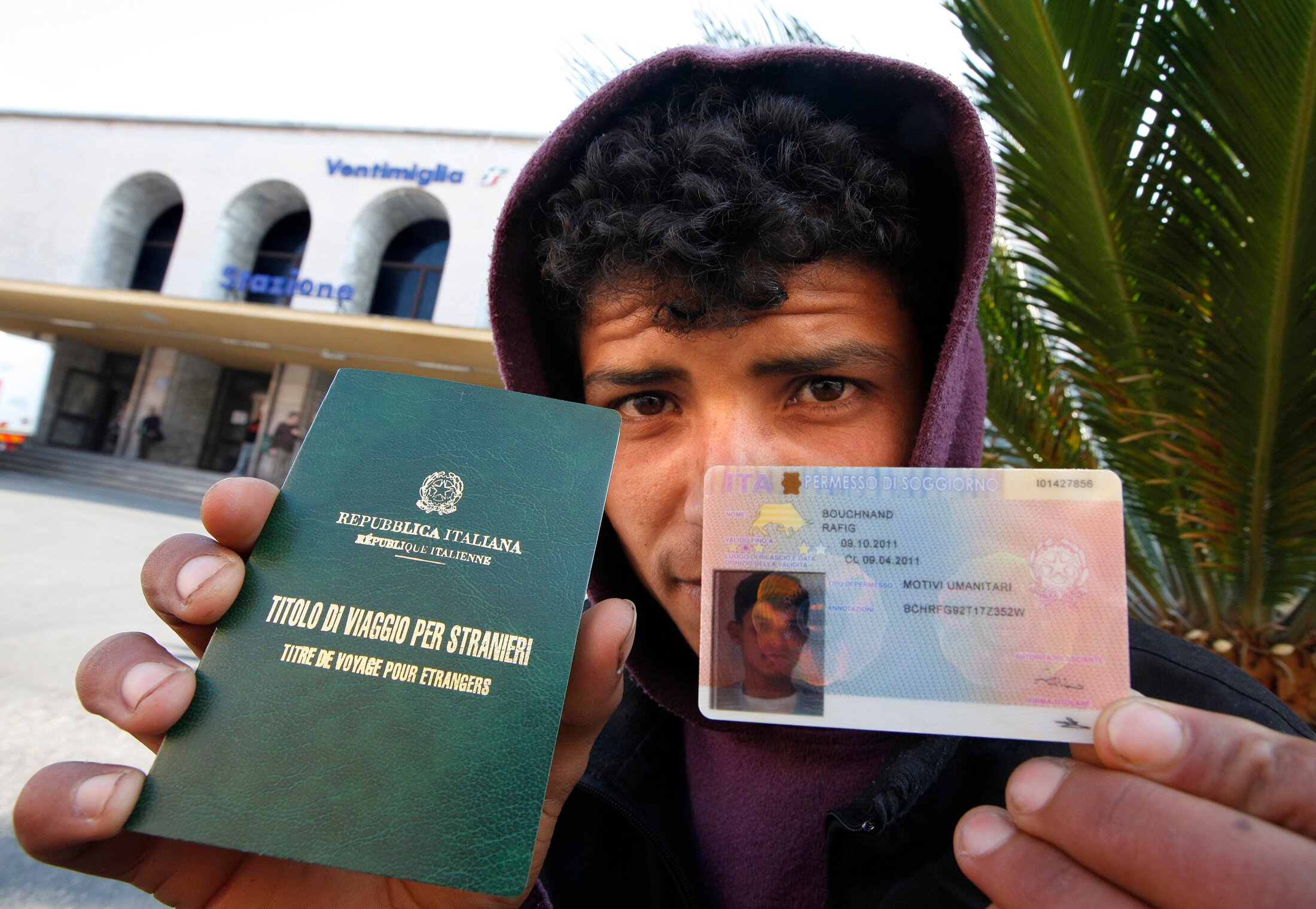
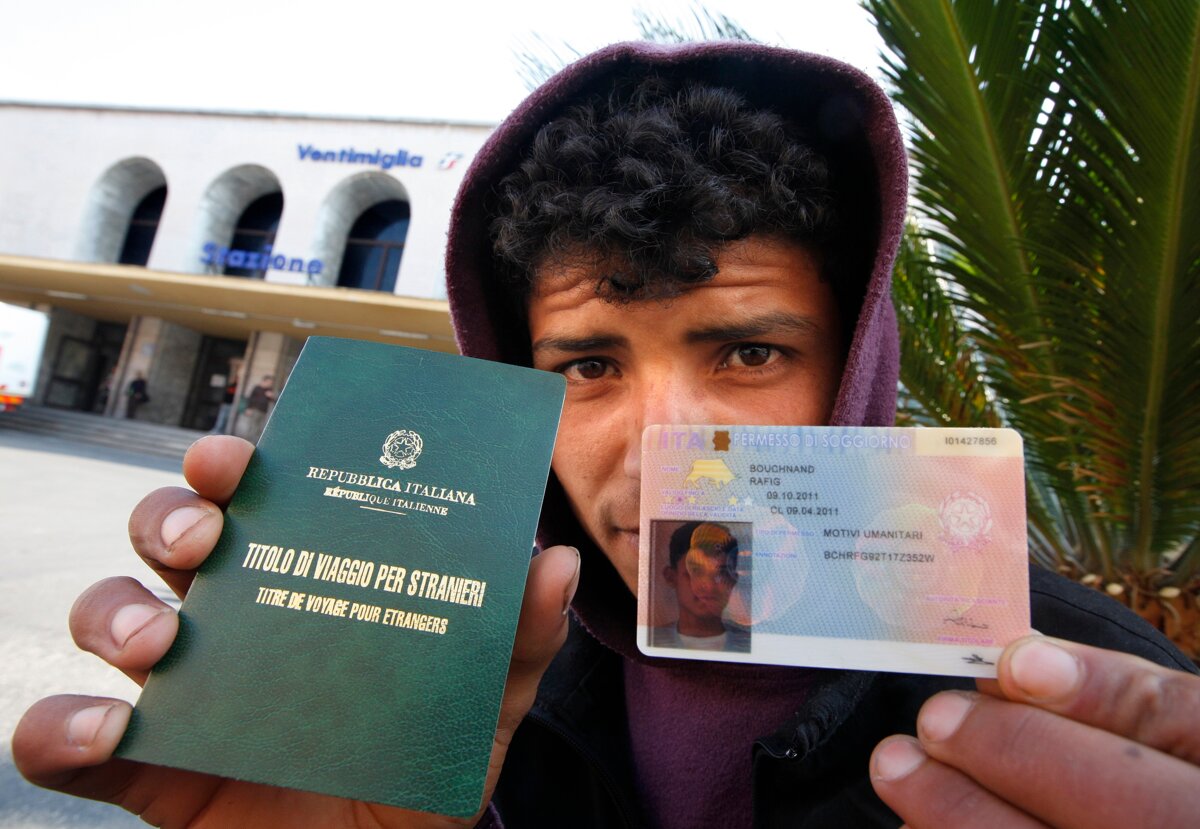
An estimated 25,000 migrants from North Africa, mostly Tunisians, have landed in southern Italy so far this year, the majority on the island of Lampedusa, some 113 kilometres from the Tunisian coastline. In a move to spread the migration elsewhere, the Italian authorities recently supplied those who arrived between January 1st and April 5th with temporary, six-month residency permits, therefore allowing them to travel in most of the EU member countries, and notably France, where many have family and relations.
Before Tuesday's press conference, which followed weeks of dispute over the issue between Paris and Rome, the French government had said the situation required a "safeguard" to be added to the open-border treaty in order to allow occasional periods when full border controls could be re-established. Recently increased policing of areas around France's south-eastern border with Italy, in an effort to identify and turn back immigrants, were denounced by migrant support associations ANAFE and GISTI as "manifestly discriminating" and in violation of French and European law.
Hundreds of Tunisian migrants have nevertheless succeeded in reaching Paris, where some have been welcomed by relatives, while others have settled in precarious conditions in public parks or wasteland beside the capital's ring-road.
A measure to bar football hooligans and demonstrators
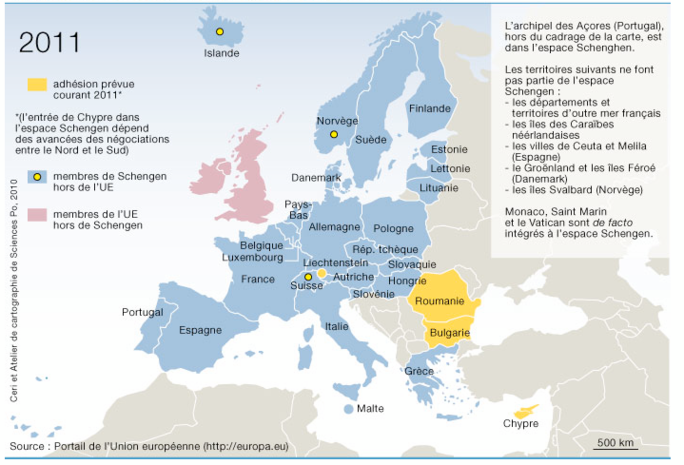
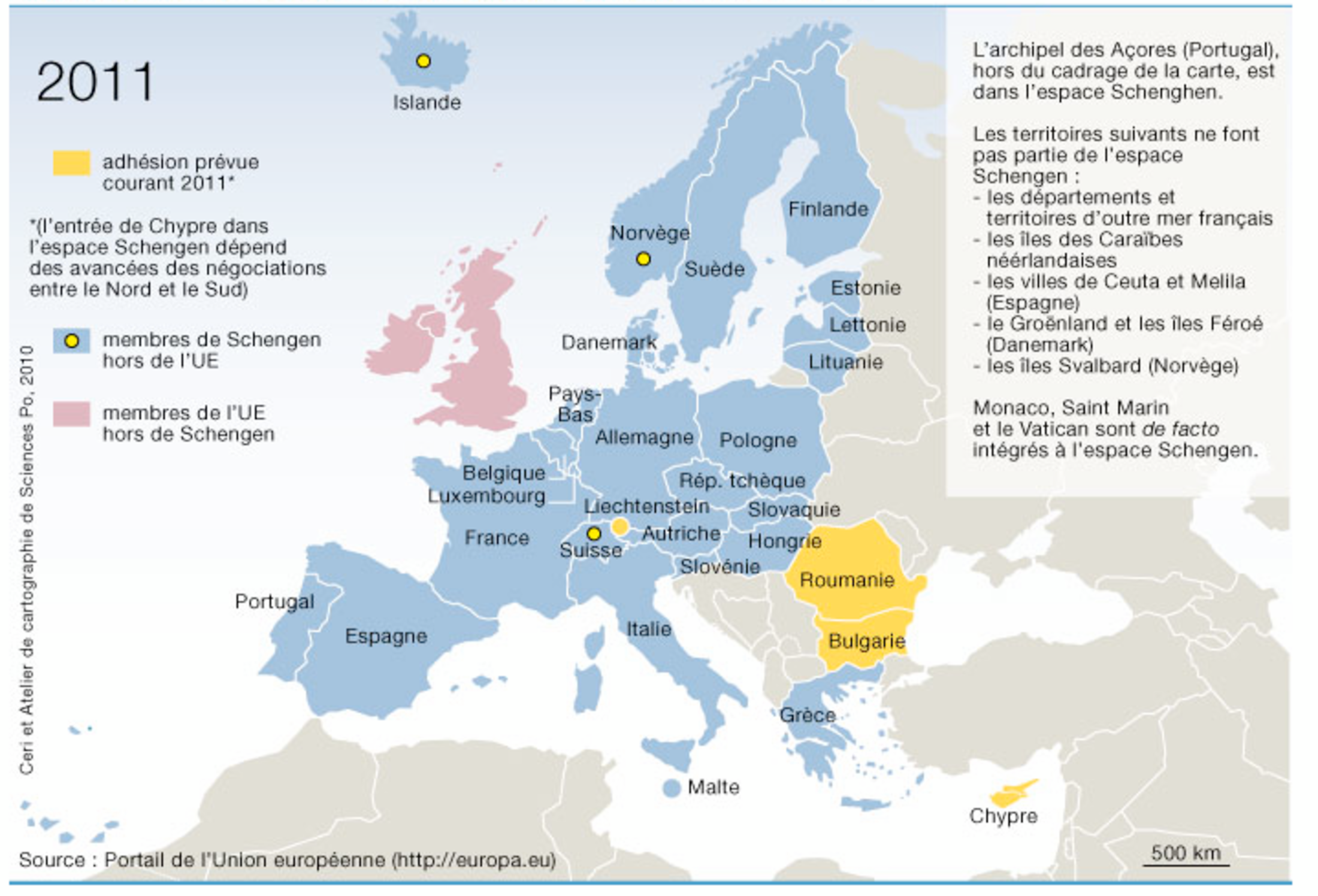
However determined they may be, The French and Italian authorities cannot alone succeed in modifying the Schengen Agreement, which is an integral part of all European treaties since 1997. The first free-border agreement, signed between France, Germany, Belgium, the Netherlands and Luxembourg, dates from 1985. It was gradually introduced and later expanded to most EU countries (but excluding the United Kingdom, Ireland, Bulgaria, Romania and Cyprus) as well as Switzerland, Norway and Iceland.
In its swift reaction this week, the EU Commission suggested that the subject had already been given careful consideration. "It is already possible to temporarily re-establish national border controls," commented Commission spokesman Olivier Bailly. "What we are seraching for is the definition of the conditions in which this would be possible. He announced that the EU's Home Affairs' commissioner, Cecilia Malmström would present a number of propositions on the subject on May 4th and which will be the subject of preliminary discussions by the interior ministers of member-states on May 12th. "We won't be revolutionizing anything at all," Bailly added.
Enlargement : Illustration 2
The Schengen Agreement treaty cannot be "suspended", as suggested by the French presidency last week. Its article 23 stipulates that only a "grave threat to public order or to internal security" could "exceptionally" justify the re-introduction of border controls, and this for a maximum period of 30 days, renewable if such a threat continued.
This was initially designed to deal with situations of football hooliganism and demonstrations targeting international conferences. It was used by France on April 17th in its decision to block rail services between Ventimiglia and the French Riviera city of Nice, when activists from migrant-supporting associations had planned to accompany a group of Tunisian migrants on a France-bound train.
But the treaty makes clear that the re-introduction of border controls must be proportionate to the gravity of the threat, and cannot target individual persons on the basis of their nationality.
'Schengen maintains a thousand intangible borders'
In its current form, the treaty is hardly a lax one. Of its 126 clauses, only one is on the subject of free circulation; the others are dedicated to guaranteeing a response in cases of "security deficits", such as the establishment of a 20-kilometre border zone in which control operations are authorized, or the "Schengen information system" which collects and shares between signatory states information about people wanted for detention by authorities or those considered undesirable for entry.
Beyond a prevailing attitude of caution towards immigration from non-EU states, the treaty signatories have, at every moment of its enlargement, displayed fears about significant migratory movements that in fact never materialized. This was the case in 1986 when Spain and Portugal joined the European Union (then called the EEC), again in 2004 when the EU opened up membership to East European states, and in 2007 when Romania and Bulgaria entered the EU. The latter two countries were recently blocked from joining the Schengen treaty by France and Germany, a move that kept Romanian and Bulgarian nationals, in particular the Rom gypsy community, with lesser rights than other EU nationals, notably concerning the right to work.
Migreurope is a French-based organization that brings together associations concerned with migrant welfare and the defence of their rights working across 13 countries. In 2009, it produced a study called 'Atlas des migrants en Europe, Géographie critique des politiques migratoires' ('Atlas of migrants in Europe, the critical geography of migratory policies'), which was harshly critical of what it called the "variable geometry" of mobility under Schengen. "Conceived as a means of facilitating the circulation of people, Schengen in reality maintains a thousand intangible borders aimed at ranking internal mobility according to [one's] status (a European citizen, a foreign resident, a visitor tec.)," the study claimed. "The controls in border zones or across the whole of the territory remain a necessity of this deceitful "freedom" to circulate. Far from disappearing, police cooperation between member states becomes a major objective of the EU, where each [state] is wary of a possible lax approach by its neighbor."
In December 2007, EU Commission President José Manuel Barroso hailed the expansion of the Schengen zone to include nine new states1. "From now on, almost 400 million Europeans will be able to fully benefit from one of their dearest liberties, that of free circulation," he said. Little more than three years on, this grand opening has given way to inward-looking policies and closure.
-------------------------
1: Estonia, Latvia, Lithuania, Czech Republic, Slovakia, Slovenia, Hungary, Malta and Poland.
English version: Graham Tearse