Carine Fouteau

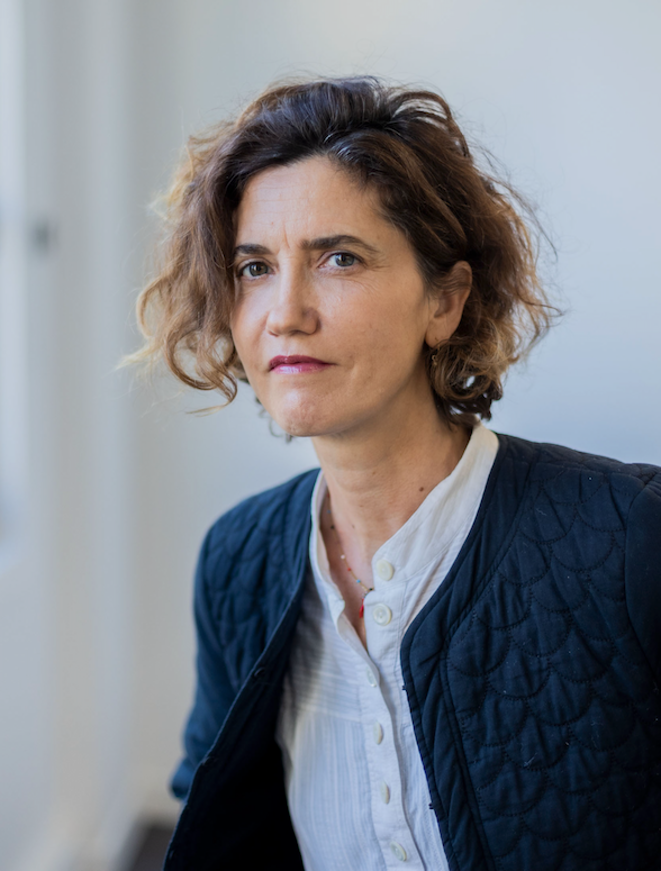
Nommée présidente et directrice de la publication de Mediapart en mars 2024.

Carine Fouteau est née en 1974. Licenciée d’histoire à l’Université Paris I, diplômée de Sciences Po Paris, titulaire d’un master de journalisme à New York University, elle est embauchée en 1999 sur le site internet des Échos et rejoint quelques mois plus tard le quotidien papier pour suivre les conditions de travail. En 2003, elle ouvre un nouveau poste consacré aux enjeux de société : laïcité, démographie et immigration. Sur son temps libre, elle écrit pour la revue culturelle, politique et sociale Vacarme.

Elle quitte les Échos à la suite du rachat du titre par le groupe LVMH et rejoint Mediapart en 2008 dès sa création pour suivre les questions migratoires. Pendant dix ans, elle enquête sur les morts aux frontières de l’Europe, les méfaits de Frontex, le durcissement continu des politiques d’accueil européenne, la torture en Libye, la fabrique de l’illégalité et les violences administratives et policières subies en France par les migrants et les demandeurs d’asile.

En mars 2018, elle succède à François Bonnet, cofondateur de Mediapart, à la direction éditoriale de Mediapart, poste qu’elle occupe aux côtés de Stéphane Alliès jusqu’à octobre 2023.

Co-auteure d'Immigrés sous contrôle (Le Cavalier bleu, 2008), avec Danièle Lochak, elle a également publié en février 2014 Roms & riverains, Une politique municipale de la race (La Fabrique), avec Éric Fassin, Serge Guichard et Aurélie Windels.

Declaration of interest

In the interest of transparency towards its readers, Mediapart’s journalists fill out and make public since 2018 a declaration of interests on the model of the one filled out by members of parliament and senior civil servants with the High Authority for Transparency and Public Life (HATVP), a body created in 2014 after Mediapart’s revelations on the Cahuzac affair.

Consult my declaration of interests

All his articles

  • Élections: les Français d'origine étrangère votent autant que les autres

    France

    Dans une étude publiée ce jeudi, l'Insee révèle que les Français d'origine étrangère s'inscrivent moins souvent que les autres sur les listes électorales, mais qu'une fois accomplies les démarches ils se prononcent tout autant. 

  • Roma evictions: more than 2,000 removed from camps this summer

    France

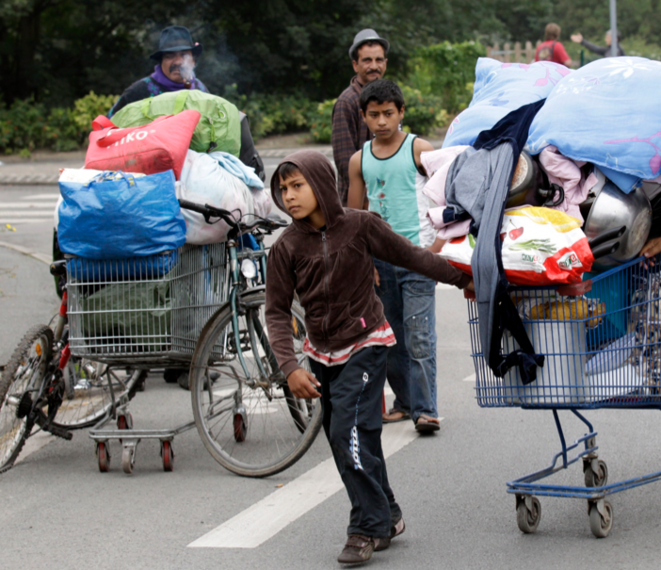
    In terms of figures, if not official rhetoric, the current government’s track record for dismantling Roma camps in France already matches that of the previous administration. According to headcounts collected by Mediapart, more than two thousand people were evicted in July and August 2012. A number of them were put on two charter flights back to Romania. Despite that, as Carine Fouteau reports, some activists insist the current situation cannot be compared to the Sarkozy era.

  • The Mediterranean boat people's guardian angel

    International — Link

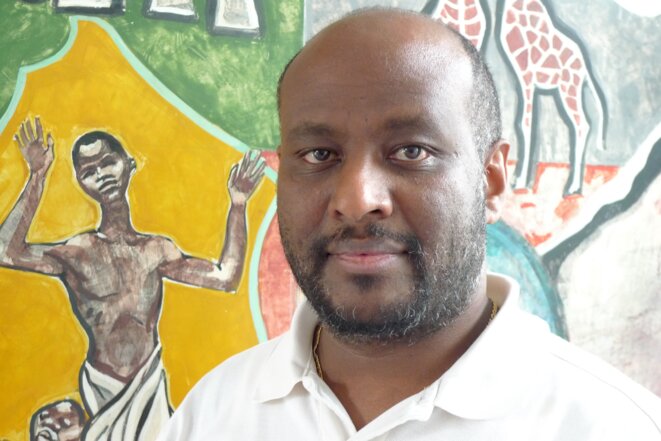
    He's a priest with a difference. Many of the immigrants fleeing Africa across the Mediterranean have Mussie Zerai's mobile phone number to call when in need. The Eritrean priest is now also getting calls from the Sinai Desert where many of his fellow countrymen are being taken hostage. Carine Fouteau went to meet this remarkable man.

  • Mussie Zerai, l’ange gardien de ceux qui tentent de traverser la Méditerranée

    International — Investigation

    Mussie Zerai est un prêtre érythréen hors du commun. Les migrants qui traversent la Méditerranée ont son numéro de téléphone portable. En cas de naufrage, c'est lui qu'ils appellent au secours et qui alerte les garde-côtes italiens ou maltais. Ces dernières semaines, il reçoit aussi des SOS du désert du Sinaï où ses compatriotes sont pris en otages.

  • French government stalls Interpol call for arrest of Gaddafi funding chief

    International

    French President Nicolas Sarkozy and his Prime Minister François Fillon were under increasing pressure Tuesday to explain the extraordinary protection they have afforded to a former senior Libyan official, Bashir Saleh, identified in a document published by Mediapart as a principal figure involved in the secret funding of Sarkozy’s 2007 election campaign by the late dictator Muammar Gaddafi. Saleh is the subject of an Interpol request for his arrest for extradition to Libya where he is wanted on fraud charges. Despite the Interpol ‘red notice', Saleh continues to live comfortably in France where he was issued with a residency permit after fleeing Libya following the toppling of the Gaddafi regime. Sarkozy claims there is confusion over the identity of the fugitive, while Fillon said he was unaware of the Interpol notice, which is posted to the general public on its website. Louise Fessard and Carine Fouteau report.

  • 'Removing the word race won't end racism'

    France — Interview

    In a bid to help stamp out racism, Socialist Party presidential candidate François Hollande wants to make a small but significant amendment to article 1 of the French Constitution – the removal of the word “race”. But would that make any difference? Academic and human rights campaigner Danièle Lochak thinks not, dismissing the idea as merely “for show”. Here, in an interview with Mediapart's Carine Fouteau, she explains her reasoning.

  • Expanding French population to match that of Germany by 2055

    International

    In 2055, the population of France is forecast to match and subsequently overtake that of Germany, currently the largest in western Europe, reports the French National Institute of Demographic Studies, INED.  Its study, published March 29th, examines the reasons behind this latest development in what has been a long history of reversing demographic trends between the two countries. It notably finds that while immigration has played but a minor role in the increase of the population in France, the fastest-growing in Europe, it represents a vital element for countering the continued aging and decrease of the population in Germany. Carine Fouteau reports.

  • France eases foreign student work and residency permits crackdown

    International

    French interior minister Claude Guéant has finally issued official instructions loosening his crackdown on the number of residency and work permits granted to non-European Union foreign students in France. The backtrack followed vigorous opposition to the measures, announced last May, from the country’s academic and business organizations. Carine Fouteau reports.

  • French charities sound alarm over boom in social exclusion

    France

    A group of 70 French charitable organizations, all involved in helping people in situations of social exclusion, from the homeless to the handicapped, launched a public appeal Thursday warning against the dramatic effects of economy-driven social policies and budget cuts which they say are only creating greater financial problems for the future. Carine Fouteau reports.

  • French government climb-down over foreign student restrictions

    International

    Following six months of protests, the French government this week appeared ready to accept at least a partial climb-down over its contentious move to restrict the granting of work permits to foreign, non-EU students, many of whom are graduates who have been offered employment after their studies in the country. The restrictions, which the government said were prompted by "one of the most severe economic crises in history" and which critics denounced as pandering to the electorate of the far-right, caused an outcry from French academics and the business world. Carine Fouteau reports.

  • Nationality, citizenship and a foreigner's right to vote in France

    France — Report

    Early December, the Left majority in the French Senate passed a bill to give non-EU nationals the right to vote and to stand as candidates for the position of councilor in local, municipal elections. The bill stands no chance of becoming law before the 2012 presidential and legislative elections, as it would require adoption by the current Right-majority in parliament's lower house, and the approval of President Nicolas Sarkozy. But a Socialist Party victory in next year's polls could see the bill finally introduced as law, ending several decades of campaigning, notably by representatives of France's large North African immigrant community. Carine Fouteau met with Hocine Taleb, a 32 year-old Algerian who runs a youth association in a Paris suburb, who explains his anger and frustration at being excluded from local decision-making.

  • The plight of Greeks who fell overnight through the social floor

    International — Interview

    French NGO Médecins du Monde (MdM), which provides healthcare to the needy across the globe, originally opened its clinic in Athens to provide help for destitute immigrants and asylum seekers. But now the debt crisis has changed all that. Suddenly, its free-of-charges medical centre has seen a dramatic influx of Greek patients, who include public sector workers, former small business owners, young mothers, the elderly and rising numbers of the homeless, all unable to pay standard medical fees. "Some are so ashamed that they speak in English to pass off as migrants," explains Christina Samartzi, head of MdM's programme in Greece, in this interview with Carine Fouteau. "They are desperate, without hope," adds Samartzi, "they think that things are only going to get worse."

All his blog posts

Mediapart’s journalists also use their blogs, and participate in their own name to this space of debates, by confiding behind the scenes of investigations or reports, doubts or personal reactions to the news.

Carine Fouteau (avatar)

Carine Fouteau

Mediapart Journalist

33 Posts

5 Editions