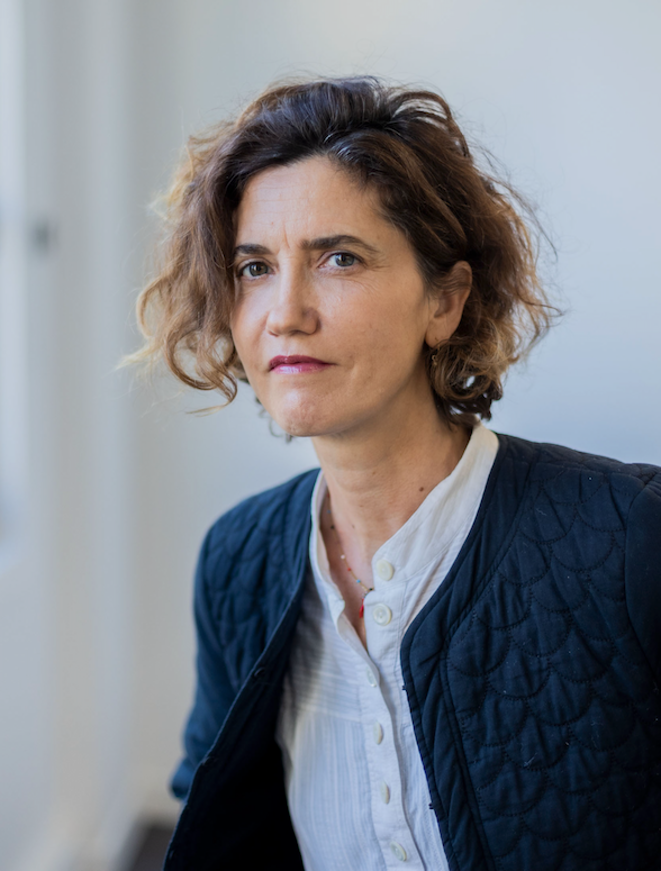
Carine Fouteau

Nommée présidente et directrice de la publication de Mediapart en mars 2024.

Carine Fouteau est née en 1974. Licenciée d’histoire à l’Université Paris I, diplômée de Sciences Po Paris, titulaire d’un master de journalisme à New York University, elle est embauchée en 1999 sur le site internet des Échos et rejoint quelques mois plus tard le quotidien papier pour suivre les conditions de travail. En 2003, elle ouvre un nouveau poste consacré aux enjeux de société : laïcité, démographie et immigration. Sur son temps libre, elle écrit pour la revue culturelle, politique et sociale Vacarme.

Elle quitte les Échos à la suite du rachat du titre par le groupe LVMH et rejoint Mediapart en 2008 dès sa création pour suivre les questions migratoires. Pendant dix ans, elle enquête sur les morts aux frontières de l’Europe, les méfaits de Frontex, le durcissement continu des politiques d’accueil européenne, la torture en Libye, la fabrique de l’illégalité et les violences administratives et policières subies en France par les migrants et les demandeurs d’asile.

En mars 2018, elle succède à François Bonnet, cofondateur de Mediapart, à la direction éditoriale de Mediapart, poste qu’elle occupe aux côtés de Stéphane Alliès jusqu’à octobre 2023.

Co-auteure d'Immigrés sous contrôle (Le Cavalier bleu, 2008), avec Danièle Lochak, elle a également publié en février 2014 Roms & riverains, Une politique municipale de la race (La Fabrique), avec Éric Fassin, Serge Guichard et Aurélie Windels.

Declaration of interest

In the interest of transparency towards its readers, Mediapart’s journalists fill out and make public since 2018 a declaration of interests on the model of the one filled out by members of parliament and senior civil servants with the High Authority for Transparency and Public Life (HATVP), a body created in 2014 after Mediapart’s revelations on the Cahuzac affair.

Consult my declaration of interests

All his articles

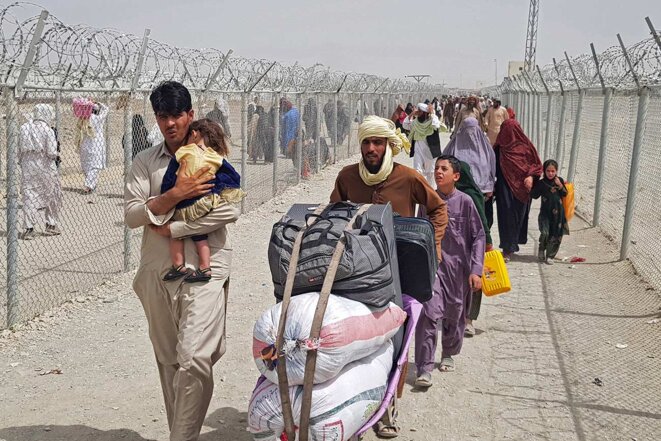
  • Europe's hypocrisy over Afghan refugees

    International — Analysis

    Most European Union countries waited until the last minute before suspending expulsions of Afghans who had sought asylum on their soil. Now that the Taliban have seized power in Kabul, the 27 EU foreign ministers are meeting this Tuesday to decide the next steps to take. A dignified welcome for Afghan exiles who have already arrived on their territory would be a first sign of solidarity, says Mediapart's Carine Fouteau.

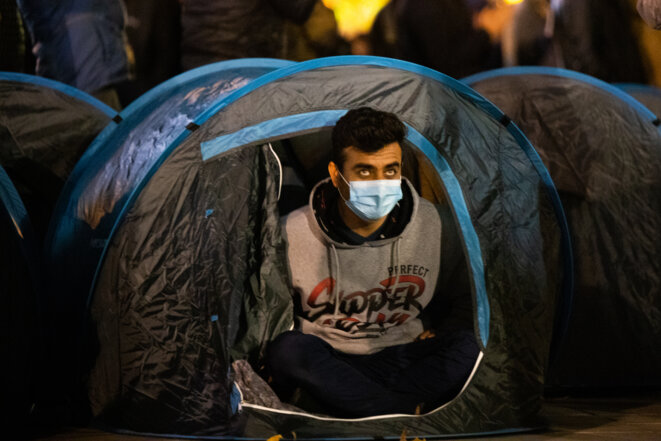
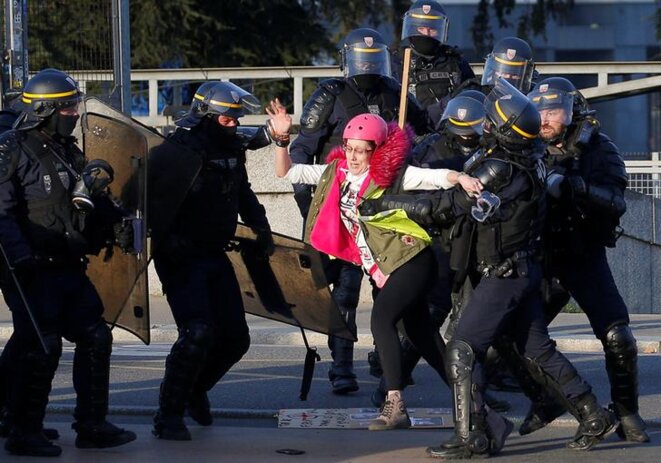
  • The disgraceful events of the Place de la République

    France — Opinion

    On Monday evening in central Paris, migrants and journalists were physically abused by police engaged in a brutal, manu militari evacuation of a makeshift camp set up on the Place de la République. The police violence was exposed in images circulating on social media and which would be banned if draft legislation currently before parliament is approved. In this joint op-ed article, Mediapart co-editor in chief Carine Fouteau and social affairs editor Mathilde Mathieu argue that the overnight events are a representation of the liberticidal drift of President Emmanuel Macron’s administration, and may prove to be a political turning point.

  • How Macron (re)opened the door to Islamophobia

    France — Opinion

    President Emmanuel Macron on Wednesday warned against a stigmatisation of the Muslim population in France and the shortcut of associating the Islamic religion with terrorism, as was illustrated in a string of recent events that have caused outrage and heated debate across the country. It was a tardy reaction by Macron who, Mediapart co-editor Carine Fouteau writes in this op-ed, has left the door open to precisely the problem he now identifies. It is his responsibility to strengthen the barriers against hatred, alongside the fight against terrorism.

  • UN condemns French police violence against 'yellow vests'

    France

    The United Nations has followed the European Parliament in criticising the policing of some demonstrations staged by 'yellow vest' protestors in France. The UN's High Commissioner for Human Rights condemned what she called the “excessive use of force” used by the police on some occasions. The criticism came after interior minister Christophe Castaner's terse response to opposition MP Loïc Prud’homme after the latter was hit with a baton during a yellow vest protest last Saturday March 2nd in Bordeaux. Carine Fouteau reports.

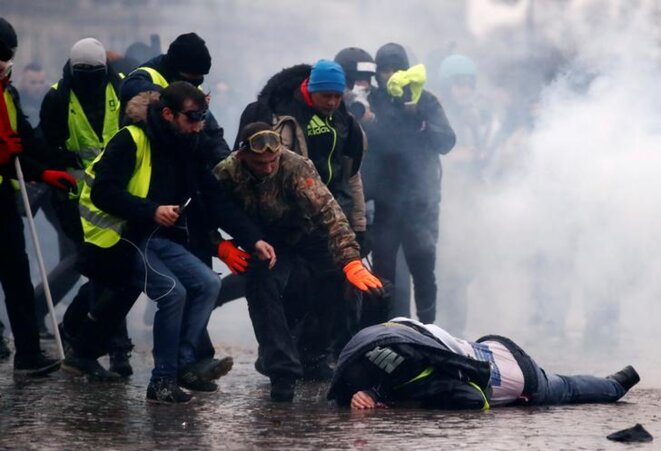
  • French protests: the urgent need to ban use of maiming 'crowd control' weapons

    France — Opinion

    France’s ‘yellow vest’ protestors were back on the streets this weekend, as their movement calling for better living standards for low- and middle-income earners held its tenth nationwide day of action. While some demonstrations have been marred by violence from extremist groups, there is mounting criticism of aggressive police tactics. These notably include the widespread and often indiscriminate use of rubber bullets and stun grenades that have caused, according to several estimations, around 100 serious and life-changing injuries to protestors and bystanders. Mediapart co-editor Carine Fouteau argues here why these highly dangerous weapons, which France is one of very few countries to deploy in such situations, should be immediately banned from crowd-control policing.

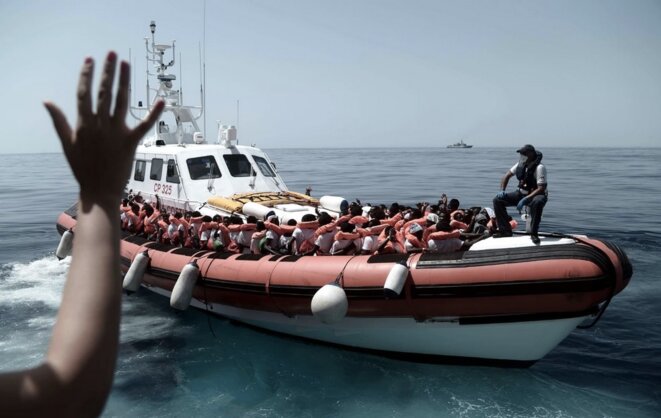
  • The Aquarius odyssey: do migrants have a 'vocation' to die?

    International — Opinion

    The odyssey of the migrant rescue ship Aquarius offers a new example of the violence of Europe-wide immigration policies, and not only those of the far-right in power in Italy, writes  Mediapart co-editor Carine Fouteau. For the migrants onboard the Aquarius, who will eventually arrive in a state of exhaustion in Spain, the ship’s long and deviated route for a safe haven is yet further confirmation that they and others like them are simply considered as a burden by European countries – if, that is, they manage to arrive alive on the continent’s shores.  

  • Macron's migrant clampdown faces mounting opposition

    France — Analysis

    French President Emmanuel Macron on Tuesday visited the Channel port of Calais, which for years has been a magnet for thousands of migrants from Africa and the Middle East seeking a passage to Britain from makeshift camps set up around the town. While his presence was ostensibly to address the local crisis, Macron’s visit also served as a platform to present his government’s proposed toughening up of immigration laws. But the planned clampdown on so-called economic migrants, who face mass deportations, has met with outrage not only from organisations defending migrants’ rights, but also from Macron’s own allies.

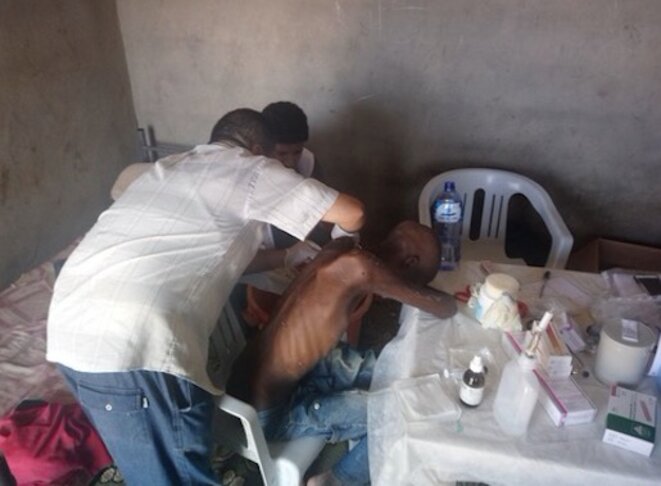
  • The hidden tragedy of migrants crossing north through Africa

    International

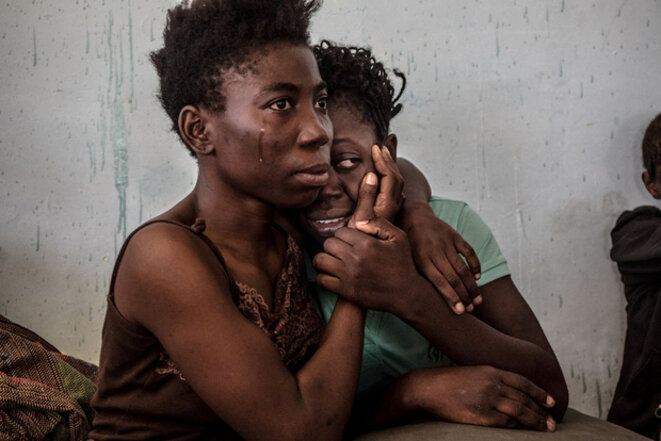
    Behind the fate of thousands of migrants who have died while attempting to cross by sea to Europe lies the even greater tragedy of those who perish on the overland journey through Africa to reach the shores of the Mediterranean Sea, according to estimates of UN agency the International Organization for Migration (IOM). Those who survive the trying conditions of the clandestine routes north from sub-Saharan countries face further danger in Libya, where many are herded into detention centres amid appalling conditions, while others fall victim to kidnappers. Carine Fouteau reports.

  • The shocking tales of child migrants seeking haven in Europe

    International

    A report published this week by UN bodies UNICEF and the International Organization for Migration highlights the shocking treatment meted out to child migrants along their journeys to Europe. The most at risk are those from sub-Saharan countries travelling north to the Mediterranean through Libya, where they are exposed to sexual exploitation and forced labour, and who are especially targeted, the study finds, because of racism. Carine Fouteau reports.

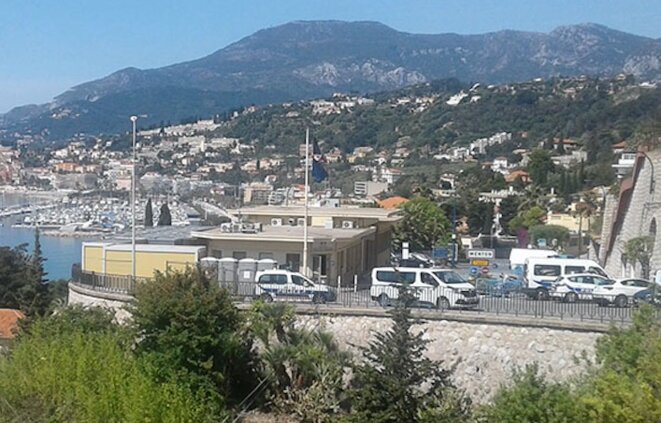
  • Migrants held 'secretly and illegally' in prefab huts in France

    France

    Migrant rights groups are taking legal action after discovering that migrants  are being secretly detained overnight in prefabricated huts in the French town of Menton on the border with Italy. The groups say the the French authorities' treatment of the refugees, many of whom are from Sudan and Eritrea and who include some children, is illegal. Carine Fouteau reports.

  • Vote or abstain? The 'moral dilemma' facing France's working-class districts

    France

    The residents of France's working-class multi-ethnic areas abstained from the first-round elections in greater numbers than the national average. Yet if they turn out in force in Sunday's second round vote between Emmanuel Macron and Marine Le Pen they could yet have a big say in the outcome. Though fed up with being told who to vote for, many of the inhabitants come from immigrant backgrounds and already experience everyday racism they fear will only get worse if the far-right win power. However, many are also afraid Macron's liberal economic policies will make their lives even harder. Carine Fouteau assesses the mood in areas that have been largely overlooked in the French presidential campaign.

  • The Syrian family waiting for a French visa to safety

    International

    Many Syrian refugees living in Turkey have gone to the French Consulate in Istanbul in the hope of obtaining a visa that will allow them to travel to France in safety. But only a small number ever get granted this precious document. Mediapart's Carine Fouteau tells the story of one Kurdish family from Syria who were twice forced to flee the fighting and who are now desperately waiting for a visa from the French authorities that would restore hope to their shattered lives.

All his blog posts

Mediapart’s journalists also use their blogs, and participate in their own name to this space of debates, by confiding behind the scenes of investigations or reports, doubts or personal reactions to the news.

Carine Fouteau (avatar)

Carine Fouteau

Mediapart Journalist

33 Posts

5 Editions