Carine Fouteau

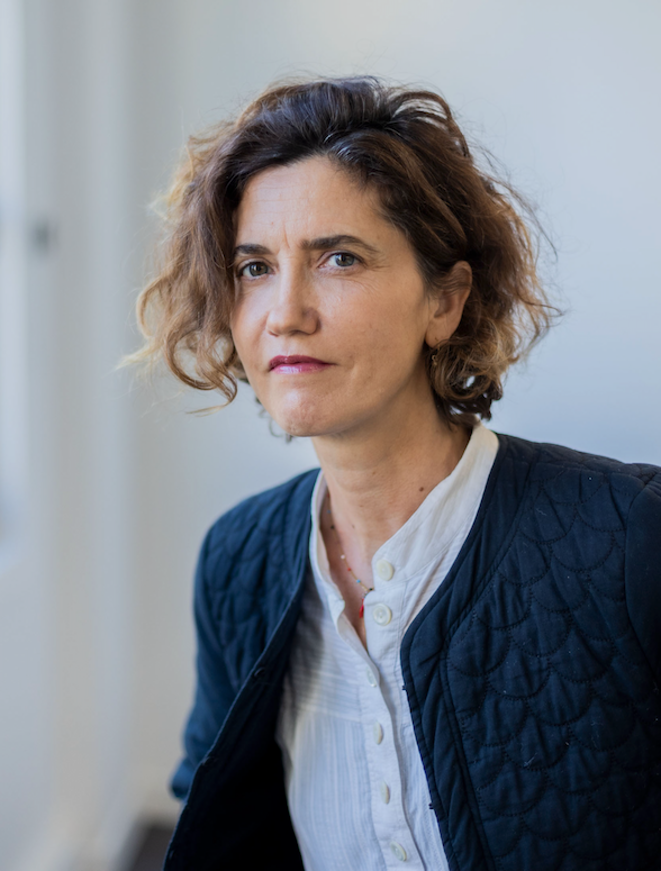
Nommée présidente et directrice de la publication de Mediapart en mars 2024.

Carine Fouteau est née en 1974. Licenciée d’histoire à l’Université Paris I, diplômée de Sciences Po Paris, titulaire d’un master de journalisme à New York University, elle est embauchée en 1999 sur le site internet des Échos et rejoint quelques mois plus tard le quotidien papier pour suivre les conditions de travail. En 2003, elle ouvre un nouveau poste consacré aux enjeux de société : laïcité, démographie et immigration. Sur son temps libre, elle écrit pour la revue culturelle, politique et sociale Vacarme.

Elle quitte les Échos à la suite du rachat du titre par le groupe LVMH et rejoint Mediapart en 2008 dès sa création pour suivre les questions migratoires. Pendant dix ans, elle enquête sur les morts aux frontières de l’Europe, les méfaits de Frontex, le durcissement continu des politiques d’accueil européenne, la torture en Libye, la fabrique de l’illégalité et les violences administratives et policières subies en France par les migrants et les demandeurs d’asile.

En mars 2018, elle succède à François Bonnet, cofondateur de Mediapart, à la direction éditoriale de Mediapart, poste qu’elle occupe aux côtés de Stéphane Alliès jusqu’à octobre 2023.

Co-auteure d'Immigrés sous contrôle (Le Cavalier bleu, 2008), avec Danièle Lochak, elle a également publié en février 2014 Roms & riverains, Une politique municipale de la race (La Fabrique), avec Éric Fassin, Serge Guichard et Aurélie Windels.

Declaration of interest

In the interest of transparency towards its readers, Mediapart’s journalists fill out and make public since 2018 a declaration of interests on the model of the one filled out by members of parliament and senior civil servants with the High Authority for Transparency and Public Life (HATVP), a body created in 2014 after Mediapart’s revelations on the Cahuzac affair.

Consult my declaration of interests

All his articles

  • Mediapart launches operation '#OpenEurope'

    France — Opinion

    Mediapart is launching a special project called “#OpenEurope” in partnership with seven Tunisian and European news outlets plus associations and non-governmental organisations (NGOs). This operation is a direct response to the miserable selfishness shown by European leaders, and aims to tell the real stories of how people are coming together to help migrants in Europe. The objective, too, is to defend a vision of Europe that stays true to its values of welcome, asylum and openness. Mediapart reporter Carine Fouteau and editor François Bonnet explain how it will work – and how people can get involved.

  • Merchant ship captains send out distress call over migrant rescue crisis

    International

    A total of 103,000 migrants have crossed the Mediterranean Sea to Europe so far this year, reported the UN refugee agency the UNHCR on June 9th. Nearly 1,900 others are estimated to have drowned while attempting the crossing, which is most often made in flimsy, overloaded crafts that set sail from Libya. Over the past two weekends alone, nearly 11,000 migrants were rescued at sea by European navy boats taking part in the recently beefed-up ‘Operation Triton’, the maritime patrols led by the EU border control agency Frontex. Less publicised is the increasing role merchant ships are called upon to play in the search and rescue missions, and which last year plucked some 42,000 migrants from the sea. But their crews, often called upon for help by Triton’s command centres, are ill-equipped and untrained to carry out rescues which place both them and migrants in peril. Ship owners, captains and international organisations are now sounding the alarm over the escalating crisis. “We have the feeling of being taken hostage by the situation,” Hubert Ardillon, president of the Confederation of European Shipmasters’ Associations, tells Mediapart in this report by Carine Fouteau, and he warns that the situation is so acute that some captains could soon be tempted “to look the other way”.

  • European rights tsar slams France over 'rising' discrimination

    France

    The Council of Europe’s Commissioner for Human Rights, Nils Muižnieks, on Tuesday released a report entitled ‘France: persistent discrimination endangers human rights’. The Latvian appears largely unimpressed with what he saw during a fact-finding mission to France last October, and denounces increasing anti-Semitism, anti-Muslim acts and racism in general, homophobia, a rise in "hate speech", the poor treatment of asylum seekers and the “social exclusion and marginalisation of persons with disabilities”. Carine Fouteau reports on the Commissioner’s conclusions.

  • Aboard a Mediterranean migrant patrol ship, and the ghost freighter that got away

    International — Report

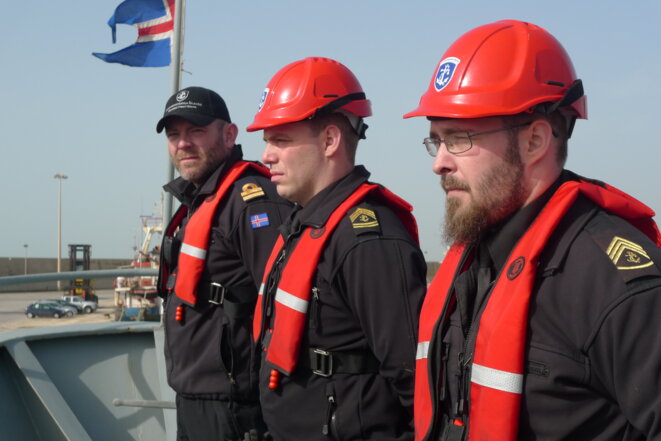
    More than 300 migrants crossing the Mediterranean Sea in a clandestine convoy from Libya to Italy were reported drowned this week when their boats overturned off Lampedusa, just days after 29 other seaborne migrants were discovered dead from hypothermia close to the Italian coast. The tragedies follow the narrow rescues in December and January of more than 1,200 Syrian migrants from two rusting ‘ghost’ freighters left abandoned by people smugglers to their fate. Earlier this month, Mediapart’s Carine Fouteau joined the Týr, an Icelandic coastguard ship patrolling the central Mediterranean as part of an operation mounted by the EU border-policing agency Frontex. She heard the harrowing experiences of the Týr’s proud crew who have already rescued 2,000 migrants in difficulty, and questioned Frontex officials about what is an increasingly confused mission. But she begins this report with the dramatic events she witnessed aboard the Týr, when a drifting, apparently crewless rusting freighter suspected of carrying hundreds of migrants in its hold was left to its fate overnight in strong seas - because no-one had sent out an SOS. 

  • Mystery as asylum claims fall in France while mass Syrian exodus continues

    International

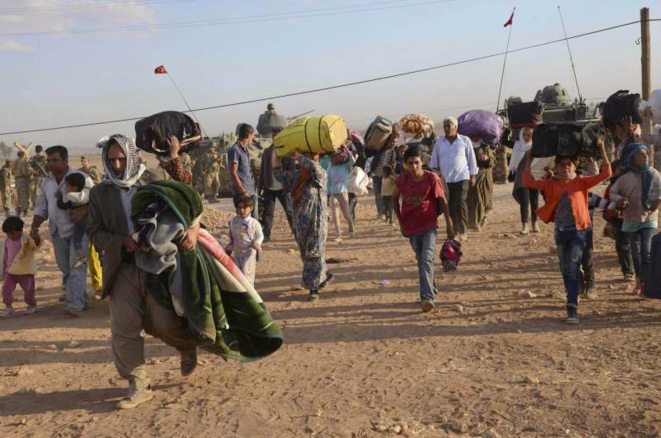
    Since the start of the civil war in Syria millions have fled its borders in a bid to find a safe haven elsewhere, either in a neighbouring country or in Europe. But while this huge exodus continued in 2014, the number of applications made by refugees to France for asylum status fell in the same period. In all, a little over 3,000 Syrians achieved refugee status in France in 2014, a tiny figure compared with many other European countries, notably Sweden and Germany. Carine Fouteau ponders the reasons for this curious drop in the number of asylum applications, which stands in stark contrast to the government's lofty rhetoric on the issue.

  • 'No Jew in France is safe any more'

    France — Investigation

    In the wake of the terrorist acts earlier this month that left 17 people dead, including four Jews at a kosher supermarket in Paris, and after the extraordinary public marches that followed them, Mediapart met with five key Jewish figures in France. They are all past or present heads of the influential Jewish students organisation the Union des étudiants juifs de France and spoke frankly about their views on the rise in anti-Semitism in France, their dismay at the “indifference” of many French people to previous attacks on Jews in the country, and their pride at the mass demonstrations of January 11th. Carine Fouteau reports.

  • Former prison controller warns against 'Islamist quarters' plan in French jails

    France — Interview

    In the aftermath of the Paris terrorist attacks earlier this month, perpetrated in the name of Islam by three gunmen born and raised in France, there has been wide discussion in France about how hard-line Islamists succeed in enrolling a section of the country’s disenfranchised youths into their midst. Beyond the influence of extremist networks that operate in public places, notably a number of mosques, the role that prison plays in the recruitment of potential jihadists has been highlighted, notably by French Prime Minister Manuel Valls. Shortly after the attacks, he suggested that jailed radical Islamists may be grouped together in special quarters in prisons to limit their current opportunities of converting fellow prisoners to their cause. Mediapart’s Joseph Confavreux and Carine Fouteau sought out the opinion of Jean-Marie Delarue, who until July 2014 served for six years as France’s general inspector of prisons. In this interview he argues why he believes the proposition is misguided and potentially dangerous.

  • Revealed: mayor who refused baby burial has history of anti-Roma sentiment

    France

    Christian Leclerc, the mayor of Champlan near Paris who provoked a media storm last weekend when he refused to allow a Roma baby to be buried in his town, has form when it comes to antipathy towards the community. Since the controversy Leclerc has sought to portray himself as a victim of the media and political opponents and claims he has been misrepresented. But Mediapart has got hold of a recording of a recent council meeting in which the mayor denigrated the Roma people in his area. He also wrote a letter to local residents in which he fuelled their fears over a suspected case of tuberculosis. Carine Fouteau and Ellen Salvi report.

  • The money-making machine behind Mediterranean people smuggling

    International — Analysis

    The discovery last week of two abandoned cargo ships crammed with clandestine migrants in the Mediterranean Sea has underlined a cynical change of tactics by people traffickers. Though buying the massive vessels costs money, the traffickers still stand to make millions from preying on the desire of refugees to flee war-torn Syria or the Horn of Africa for a better life in Europe. Mediapart has been reporting regularly on the plight of migrants and refugees crossing the Mediterranean and has highlighted the new tactics being used by traffickers. Here Carine Fouteau looks at the background to people smuggling and describes just how traffickers exploit the needy – including wealthier middle class Syrians desperate to escape the ongoing war in their country.

  • France’s history of immigration museum is finally granted official status

    France

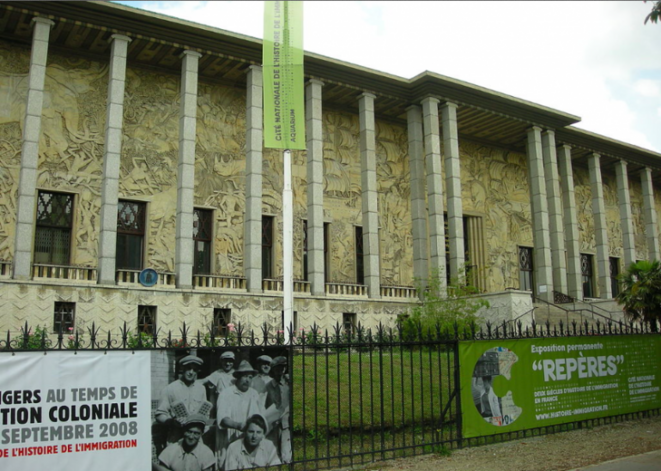
    President François Hollande on Monday inaugurated France’s first museum dedicated to the history of immigration in the country, seven years after it officially opened. It was a symbolic occasion which underlined the snubbing of the museum by Hollande’s predecessor Nicolas Sarkozy, whose hardline anti-immigration stance led to the resignations of a number of the museum’s board members. But it also highlighted a new mobilisation of the museum’s management to present both the tragic and positive history of immigration in France amid a rising climate of xenophobia and racism among sections of French society. Carine Fouteau reports on the museum’s own troubled history, and the defiant programme of its new management.  

  • In the Paris suburb where a Roma boy was lynched, sympathy is hard to find

    France — Report

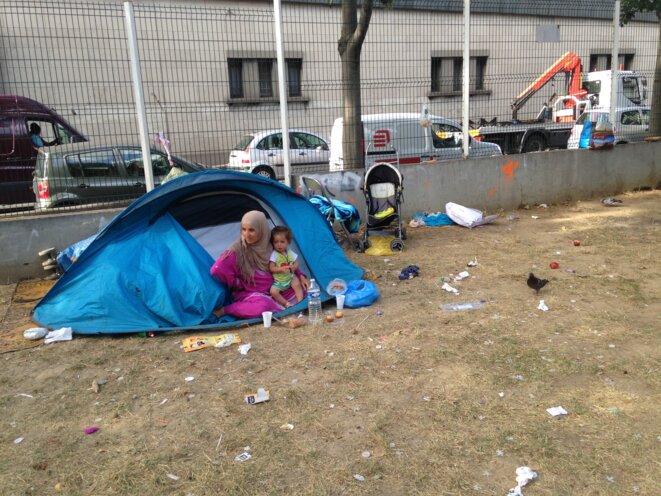
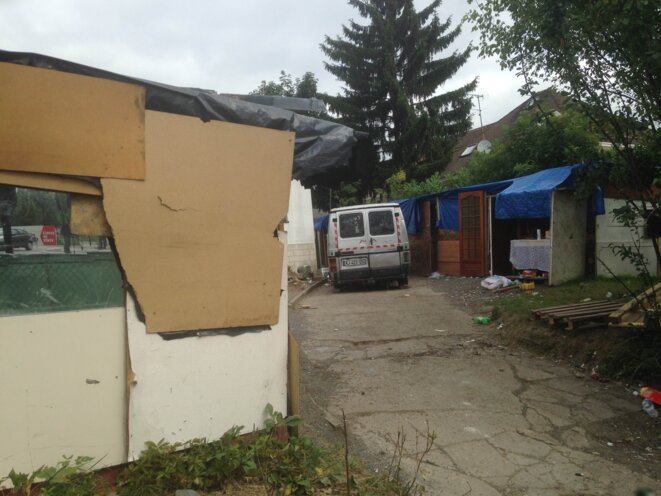
    A 16 year-old Roma boy beaten unconscious by a lynch mob on a sink estate in the Paris suburbs remained in a coma in a Paris hospital on Wednesday, when doctors said he was uncertain to survive the multiple injuries he sustained. Suffering notably from severe fractures to his skull, the teenager was found dumped unconscious in a supermarket trolley beside a main road after the mob of masked individuals kidnapped him from the makeshift camp (pictured) his family and other Roma were living in. Carine Fouteau reports from the run-down housing estate, where she found few people among its multi-ethnic population prepared to openly condemn the horrific events.

  • Video shows French police 'stealing' a Roma family's mattress

    France

    A video obtained by Mediapart shows three police officers removing a mattress from members of a Roma family who are living rough on a Paris street. The incident passed off without incident or even raised voices, either from the family or the officers. Indeed, the episode happened so quickly and so calmly that many passers-by walked on with barely a second glance. But as Carine Fouteau reports, with no clear legitimate reason to take the mattress, the officers are perilously close to being guilty of theft. The incident, which took place at a time when the police in a nearby district were being instructed to “evict” Roma people “systematically”, highlights what some call the regular “harassment” endured by such families.

All his blog posts

Mediapart’s journalists also use their blogs, and participate in their own name to this space of debates, by confiding behind the scenes of investigations or reports, doubts or personal reactions to the news.

Carine Fouteau (avatar)

Carine Fouteau

Mediapart Journalist

33 Posts

5 Editions