


They would be the first and most violently affected if the far-right candidate Maine Le Pen won the French presidential election on Sunday May 7th. This impact would come not just in the idea they would then have of France - to pick up an expression that President Jacques Chirac used in 2002 - but in their everyday life itself.
The inhabitants of working class districts, where there is a greater proportion of foreigners and French people of immigrant backgrounds compared with the national average, would see their living conditions directly threatened by the implementation of an intrinsically xenophobic manifesto – it makes ”national preference” a priority – that was explicitly written in opposition to them.
In a comment article published a few days after the first-round vote on April 23rd, the Franco-Algerian writer and essayist Akram Belkaïd made an obvious but nonetheless unnoticed observation: “It is much easier to wring your hands and to anguish when you're called Jean-Luc, Clémentine, Charlotte or Alexis than when your first name is Karim, Ousmane, Jacob, Latifa, Rachel or Aminata. Contrary to those who seek to put the Front [National] threat into perspective – and who think they can forgo voting – this latter group know that the Front National in power means an immediate physical threat to them, from its voters and sympathisers.” He then adds, in an article that has been widely shared on social media: “And that's enough of a reason to oppose them.” Writing about his “friends and comrades” who voted in the first round for radical left Jean-Luc Mélenchon, Akram Belkaïd goes on to say that “deep down inside they cannot be unaware that Le Pen and her acolytes will not start with 'them'”.
He appears to suggest that abstaining is simply the privilege of white people. Yet not voting is also being considered by some living in working-class immigrant areas, where discrimination is a real experience and where the effects of poverty are felt more strongly than elsewhere. In the first round on April 23rd the people who live in these areas abstained more than the national average, but those who voted did so in massive numbers for Mélenchon, the candidate for the France Insoumise ('Unbowed France') movement.
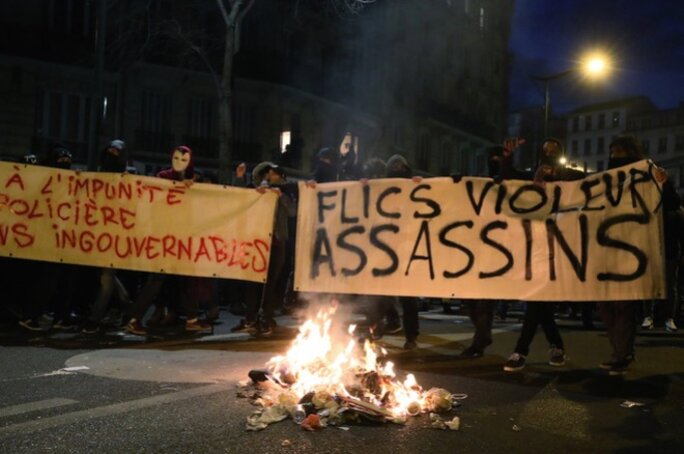
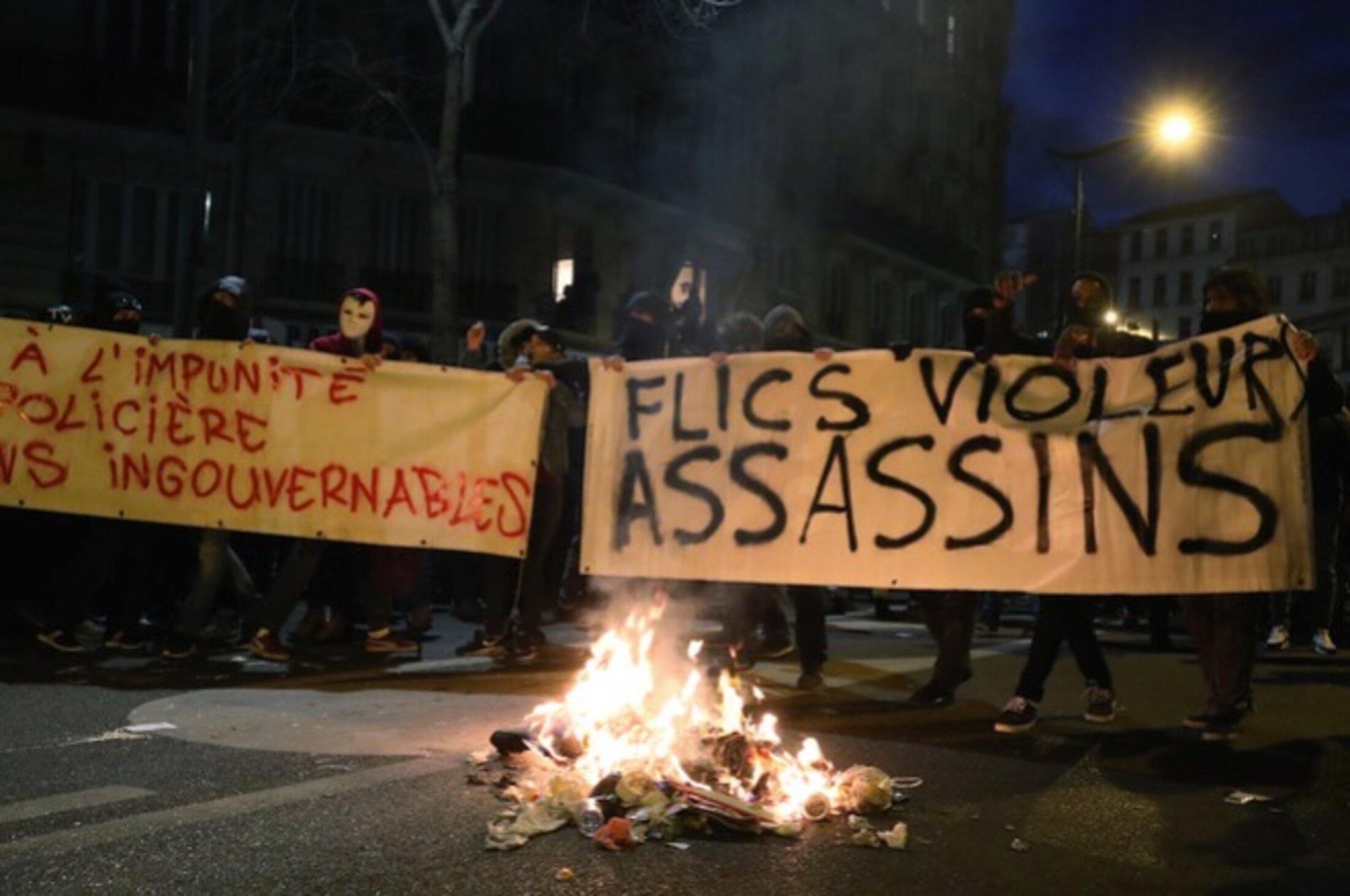
Mediapart has spoken with a number of people who are involved on the ground in the fight against racism. They are the ones who are, day in, day out, taking action over police violence against mostly young people targeted because of the colour of their skin, over women who are sidelined because they wear a headscarf, over the evictions of poor families from rented accommodation, over the refusal to allow Roma children into schools and over the effects of the current state of emergency, which mostly targets Muslims.
They are especially exasperated by the way that political leaders and editorialists wake from their slumbers every five years to urge them to vote against the risk of fascism, given that they themselves feel abandoned in their daily struggle against racism and hate. For all of them, this period between the two rounds of voting has been a difficult time. Do they vote against racial hatred at the risk of increasing economic and social deregulation? Do they abstain or leave their voting slip blank, leaving open the risk that the Front National (FN) could govern France? They have spent considerable time discussing and reflecting on these questions, with some of them changing their minds in recent days.
Enlargement : Illustration 1
Mounia Feliachi has gone on quite a journey over the issue. This anti-racism, feminist and anti-capitalism activist, who is a member of the anti-Islamophobia collective Libertaires contre l’Islamophobie, did not vote in the first round on April 23rd, the result of a long process that turned her away from elections. “I stopped after the European elections in 2014,” she explains. “My sole motivation was to fight against the FN. Yet the FN came top.”
Her decision not to vote any more came from the conviction that she could no longer expect political parties, unions and associations to defend her ideas and that she herself had to share them with others. Searching for direct democracy she ended up in the Nuit Debout protest movement, taking an active part in its commission against Islamophobia. “In the [presidential election] first round there was no one who represented me: they were virtually all white men, professional politicians; and two women, one from the far right [Marine Le Pen] and the other making Islamophobic remarks.”
On the evening of that first round Mounia Feliachi decided she would not vote in the second round either. “I was one of the people who got tear-gassed during demonstrations against the employment law: for me it was out of the question to vote for the candidate [Macron] who was promising to go further in the destruction of the employment code,” she says. Then her mother intervened. “My mother is Algerian, she has a residence permit, but as a foreigner she can't vote. She said to me: 'You're going to vote.' Nothing makes her more afraid than the FN. She's terrified. I told myself I was going to vote for her. And then also for me too: I have been the victim of racism and for that reason I struggled for a long time to get a job and housing. My parents sacrificed a lot for their children. I can't sit still and do nothing. With the FN I risk losing everything,” she says.
So, with a heavy heart, Mounia says she will go and “vote for Macron” on May 7th. “I no longer have the luxury of my convictions,” she says with regret. She then adds another argument to the debate: “We know that Macron will bring in rubbish policies but he remain inside the framework of representative democracy. Marine Le Pen, I'm not so sure about. We're already sliding towards a disgusting system with bans on demonstrations, the arrest of people who come to the aide of migrants and unjust decisions to hold people in custody. With the FN there's the risk of letting the fascists spread their wings and never being able to turn back.”
'Marine Le Pen will mean the return of racist attacks'
Mohamed Mechmache, the co-founder and president of the national movement Pas Sans Nous ('Not Without Us'), which describes itself as a union for working class areas, and himself a Green councillor for the Paris region, representing Seine-Saint-Denis to the north of the capital, has no doubt as to how he will vote. “As a child of immigrants, I experienced racist attacks when going home from school,” he says. “There's a fundamental difference between Marine Le Pen, who comes from a party that hunts down and kills foreigners, and Emmanuel Macron, who is part of a democratic politician system,” he says.
Mechmache, who worked with researcher Marie-Hélène Bacqué on a report called 'Towards a radical reform of urban policy' which was submitted to the government in July 2013, does not just call on people to vote against Le Pen on Sunday but is also fighting against those who are considering abstaining. “I prefer to say that I'm going to vote for Macron, it's clearer,” he says, while adding that this does not give the centrist a “blank cheque” for his policies. “We'll fight toe-to-toe against all injustices,” he warns.
Addressing those in the working class areas who are still unsure what to do in the second round, the activist says it is in their own interest to vote and in as large a number as possible. “We have to vote to show that we exist, so we carry some clout in the balance of power,” he insists. “As long as the blank ballot paper is not officially recognised, an abstention automatically favours the FN. Not voting or leaving the ballot paper blank helps the FN, I don't know how else to put it. Perhaps it's a generational thing? Perhaps the younger ones no longer see the real face of the FN? Perhaps they hear Marine Le Pen address the working classes and say to themselves that she's right, without understanding that she is lying to them?”
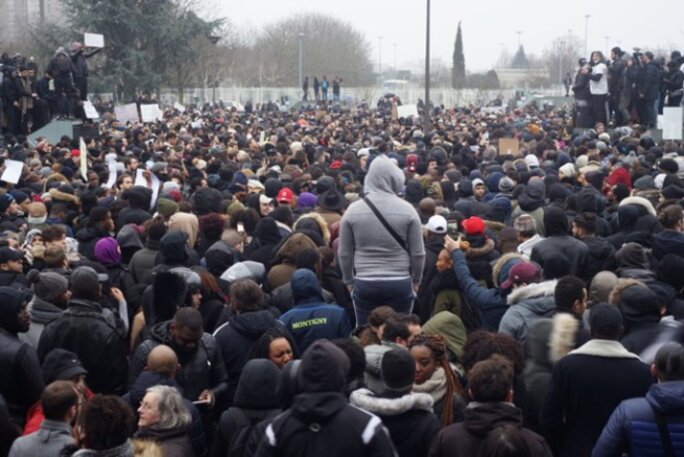
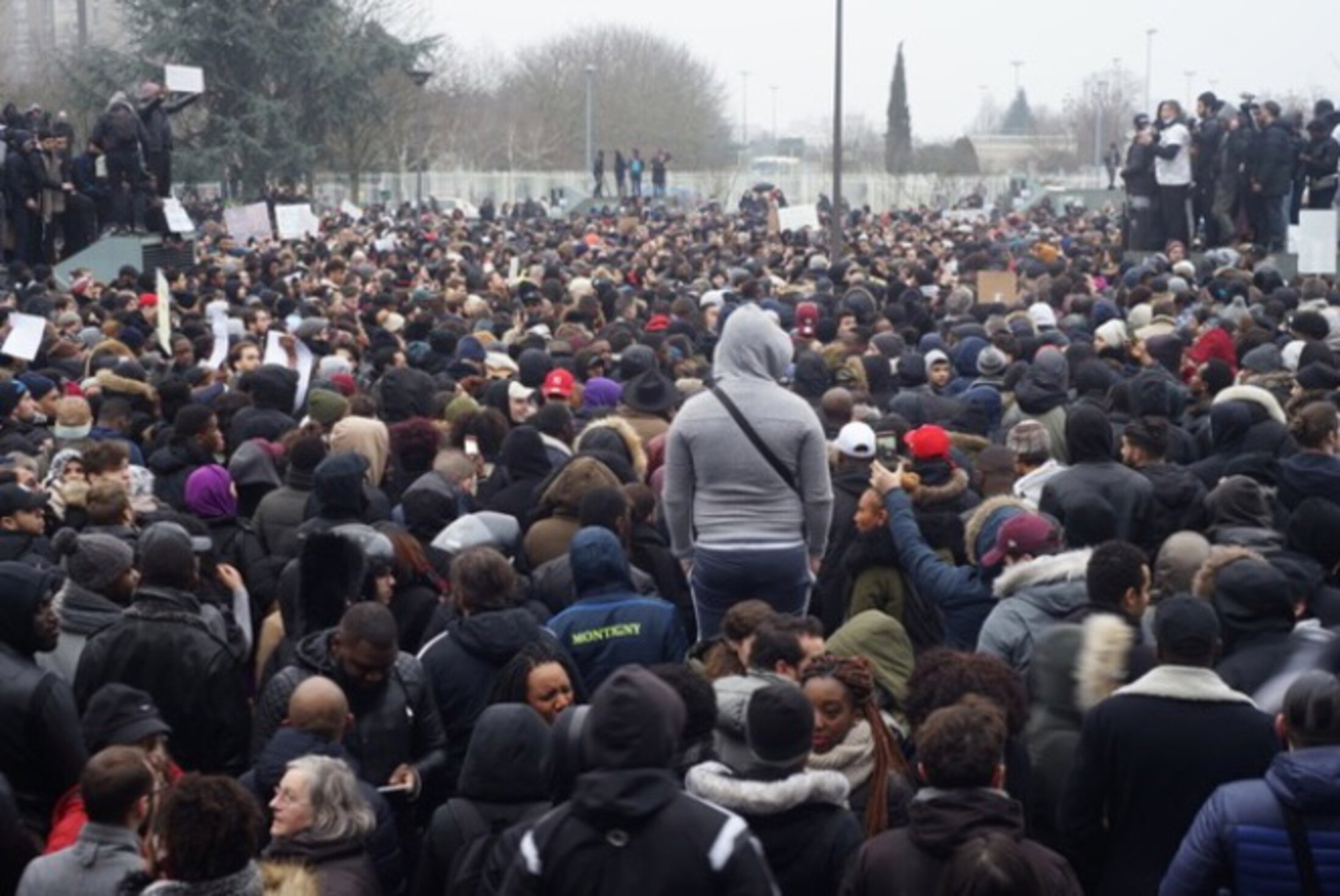
However, this point of view is not unanimous among activists in working class areas. In a sign of a certain political embarrassment and an indication that the situation is very different from 2002 – when Jacques Chirac beat Marine Le Pen's father Jean-Marie Le Pen – very few organisations have made public statements about who people should vote for. Many influential activists are also more silent than usual on social media. The gathering organised by the anti-racist group SOS Racisme on the Monday after the first-round vote attracted just a few hundred people, a reminder how an organisation founded by the Socialist Party in 1984 has now lost all credit. Meanwhile Muslim organisations, whose level of representation is also disputed, quickly made clear their support for Macron. The Conseil Français du Culte Musulman (CFCM) called on voters to ensure the failure of “an approach based on hate and exclusion” while the Union des Organisations Islamiques de France (UOIF) called on voters to give the leader of En Marche! ('On the move!') the largest possible “score”.
Enlargement : Illustration 2
“Political discussions today take place below the local level,” says sociologist and anthologist Nacira Guénif, a lecturer at Paris VII university, explaining the absence of organisations from working class areas in public debate. “Who's taken the trouble to go into a housing estate to see what's happening there? No one,” she says. Like Mohamed Mechmache, she has seen the disagreements between activists. “It's a serious time. If you consider the two candidates away from the illusions uttered by the FN candidate on social issues, they are both vassals of capitalism. The difference is that with Marine Le Pen there's a return to racist attacks, the oppression of minorities, hounding Roma people, blacks and Arabs; she doesn't even need to take measures in that regard because it will be done all on its own. Her supporters will feel justified in attacking dark-skinned people; the difference with today is that it will be done as a patriotic pleasure.”
The academic says that to get this far the FN candidate has “benefited from 15 years of inertia and cowardice” while racism has been allowed to develop in French society. The prevalence of discrimination over jobs and housing, which has been ignored or even perpetuated by Republican institutions themselves, plus police violence have ended up persuading some inhabitants that voting is for white people, she says. “For many of them the issue isn't one of abstention but lack of interest: it's not that they don't have a political conscience, on the contrary; some young people have been excluded so many times from school, from training, from the jobs market, that by refusing to go to vote and refusing even to take an interest in the election they are highlighting their symbolic eviction from society. They not only think that putting a voting slip in a ballot box will not change their situation but that, worse, they run the risk of being manipulated. Holding back is a way of safeguarding their autonomy, the only thing they have left - not being able to be bought,” says Nacira Guénif. “No political messages were addressed to them during the campaign, not even those of Jean-Luc Mélenchon. Everything's been done to exclude them, make them feel of no importance, even though they partly hold the election in their hands. Many of them think that it can't be worse than it is today. That's wrong, the dogs will be let off their leashes if Marine Le Pen is elected,” she says.
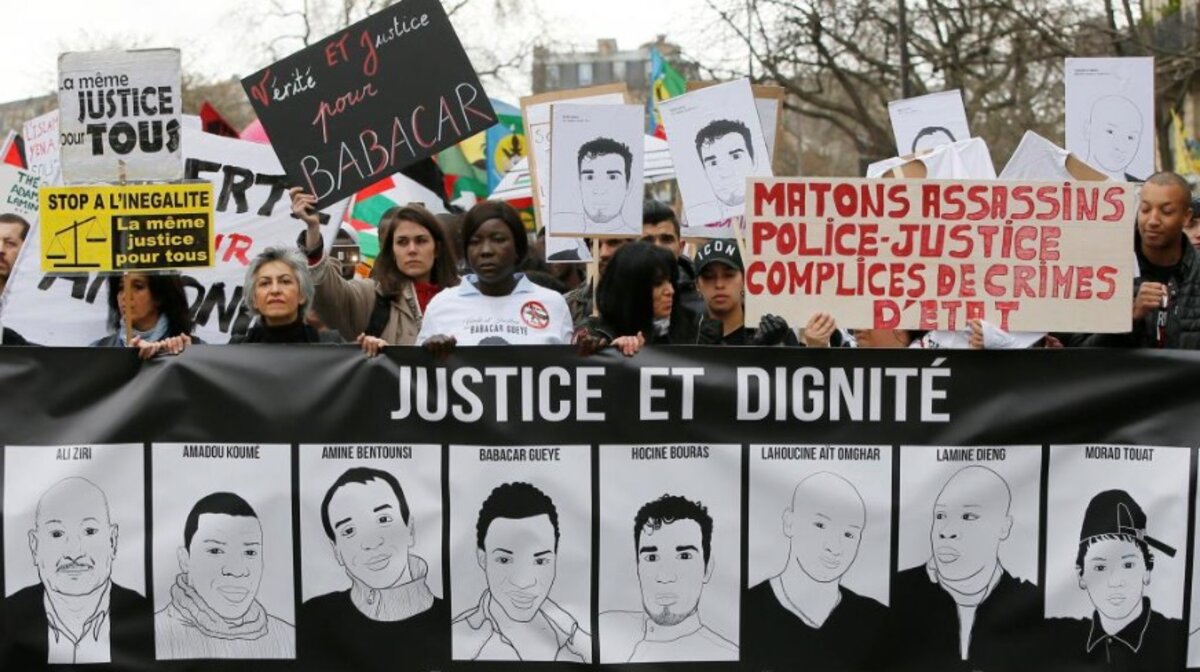
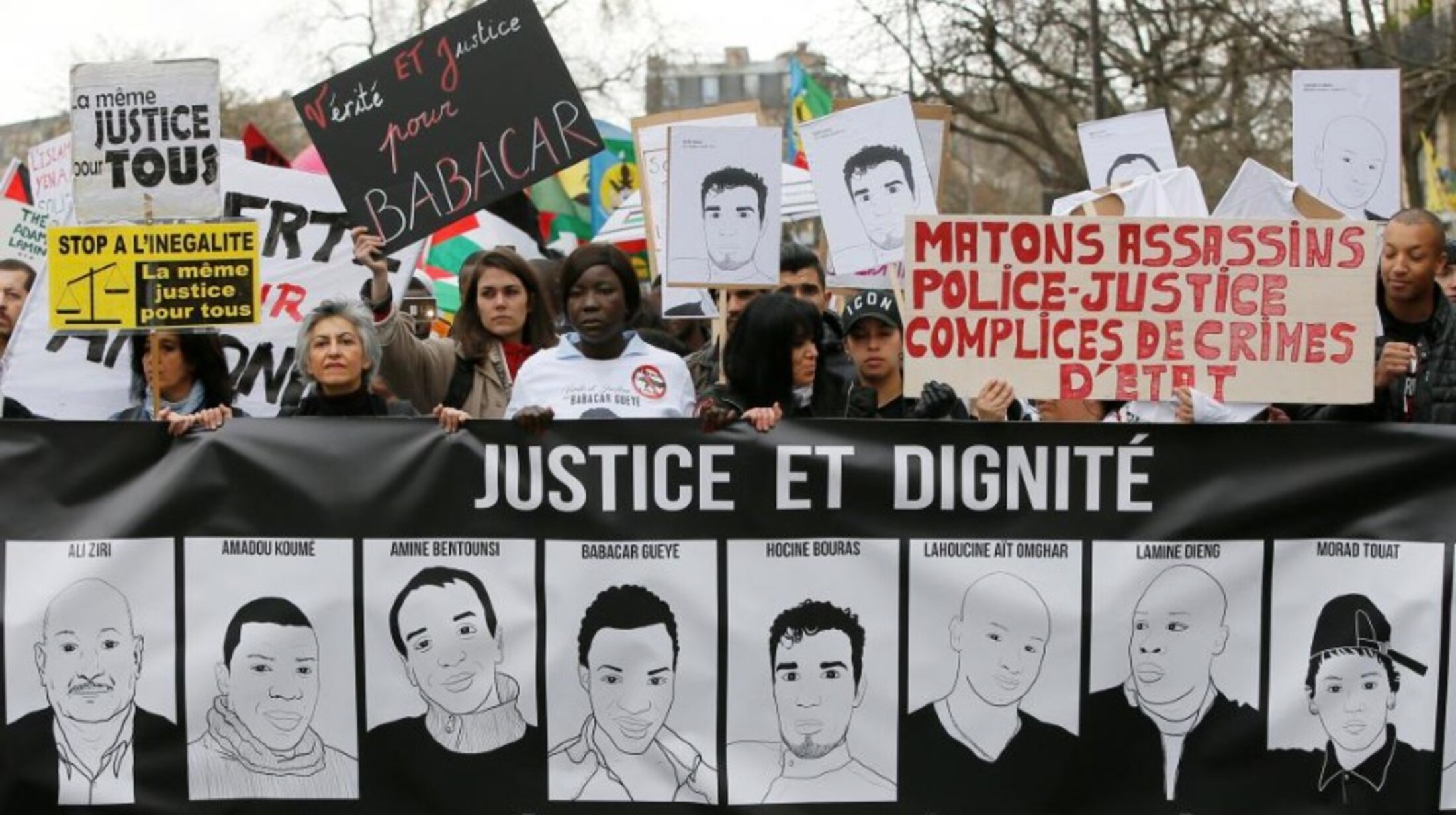
Omar Slaouti, an anti-racist activist and a member of the collective group Vérité et Justice pour Ali Ziri – a 69-year-old pensioner of Algerian origin who died after he was arrested by police in 2009 - is a spokesperson for the anti-racist march on March 19th, the Marche pour la Justice et la Dignité, and fights against the expulsion of Roma people. He is thus in a good position to see the discussions and hesitations among voters in working class migrant areas. In Argenteuil north-west of Paris, where he lives, he saw a “large turnout”, including in places where “ethnic segregation is high”, in favour of Jean-Luc Mélenchon during the the first round of the election. Between voting rounds these disappointed voters have formed two broad groups, with some crossover between them. “For one group fascism is an absolute danger, so you have to vote for Macron to keep out Le Pen; for the others, neoliberal policies are so dangerous, and especially in working class areas, that they cannot envisage voting for Macron,” says Omar. “For those who opt for abstention, fascism and neoliberalism feed one another. The issue is how one breaks this vicious circle.”
Another argument crops up in all such discussions: that with or without Marine Le Pen, the inhabitants of these areas already experience racism on a daily basis. “Discriminatory practices aren't just down to the Front National, they are corrupting our republic,” says Omar Slaouti. “And that's the fault of political leaders such as [former president Nicolas] Sarkozy and [former prime minister Manuel] Valls, who have fanned the embers. Many think it's a bit much that they come and seek our votes to stop the FN, when no one has come to help us while we're fighting against racism. There's something unacceptable, guilt-laden and paternalistic about this order to vote that makes one want to stay out of the electoral game.”
Omar quit the anti-capitalist Nouveau Parti Anticapitaliste (NPA) six years ago and in the first round voted for Mélenchon, though he is not a member of the France Insoumise movement. He is still deciding what to do in the second round. He may yet abstain if the polls show a big enough gap between the two candidates “so there's no risk that Marine Le Pen gets in”. He adds: “This time I'd like the [François] Fillon supporters and the socialists to do the hard work; we're in this situation because of them, it's down to them to get out and stop disaster.”
'Le Pen has been in power for years in working-class areas'
The stance adopted by Jamel Blanchard, who is from Angers in west central France and a member of the Pas Sans Nous 49 collective, is not that different from that of Slaouti. Except that he now has no doubts and has decided he will abstain on Sunday. “Le Pen has been in power for years in working class areas, and there was no one getting angry about it. People who are the victims of racism, the blacks and Arabs, see the FN all the time on the faces of those police officers who treat us like we are less than nothing. We who are the descendants of the colonised will make our choice knowingly: we're not a tribe of natives. We reject those political leaders who have allowed the FN to become normalised and who then call on us to vote for Macron. I was a trade unionist and I know the dangers if he is elected. My parents fought to win social rights. There's no question of going back on them.”
“It is a moral dilemma,” admits Jamel, who voted for Mélenchon in the first round. “I know that it risks being worse if Marine Le Pen is elected,” he says, conceding that he, too, will keep an eye on the opinion polls. In any case Jamel says he will take to the streets to protest. “That's how I look at politics. Demonstrations, militancy, everyone involved: I take action on a daily basis to change things, that won't stop with the elections.” The next electoral battleground will be the Parliamentary elections in June. “I'm waiting for the leader of France Insoumise to commit support to working class districts, something he didn't do in his [presidential] campaign. He must now articulate the class struggle and the battle of the [working class] districts. I have a free vote and it doesn't automatically go back to him,” he warns.
Enlargement : Illustration 3
Adil Fajry, who has lived in Istres in the South of France for 40 years, and who is a product of postcolonial immigration and the son of a worker – which is how he also defines himself – belongs to France Insoumise and he, too, is refusing to vote for Macron on Sunday. “We won't construct anything until we free ourselves from neoliberalism, which produces fascism. Historically, it's the members of the Socialist Party who have allowed the far right to emerge,” says Adil, a member of the group representing working class immigrant areas the Front Uni des Immigrations et des Quartiers Populaires (FUIQP). He is convinced that Macron will be elected on May 7th. “There's some leeway, let's put an end to this game of scaring us,” he says. He, however, will leave his voting slip blank, and is looking beyond Sunday's vote. “My aim is that [Macron's] score is as low as possible. The following step is to build focal points of opposition and to reconstitute a real Left that continues the dynamic started by France Insoumise,” he adds.
In the absence of common appeals being made by organisations, a variety of individual personalities have instead spoken out as the second round of voting looms. In a note published on Facebook on May 1st, the writer and journalist Nadir Dendoune explained why, in the end, he would vote on Sunday: “I thought of the Front National. Of Marine. And it's stupid, but I said to myself: 'Imagine if this Nazi got through'. I thought of the most vulnerable, the refugees, the women who wear a veil, the Roma etc. Of my Algerian parents. Of the pressures they would put on historians, teachers, the grants they'd take away from the groups that help immigrants, of certain books they'd ban from bookshops. In Marine's France the cops who already enjoy almost complete impunity would have no limits at all.”
In his own way Yasser Louati, the former spokesperson for the anti-Islamophobia collective Collectif contre l’islamophobie en France (CCIF), has reached the same conclusion. “Millions of us can no longer bear the blackmail of [being force to vote for] the least bad,” he said on YouTube, while calling on people who planned to abstain to “not take the risk” and to “not delegate to others the need to stop the Front National”. He said: “If Marine Le Pen makes it, she'll have all the power she needs to make France a fascist and totalitarian country, as was the case under Marshal Pétain [the head of Vichy France in World War II]. For those people like me who suffer racism, blacks, Arabs, Jews, Roma and Asians, she and her party represent a dangerous threat.”
This argument is one that unites all activists and also one that has broader appeal beyond the working class migrant areas, which are key testing grounds for trying out policies that seek to unite society. “Your Macron voting slip will not be a vote of support, but preparation for permanent defiance,” added Yasser Louati. It seems that this warning about what happens after May 7th is another message that is gaining wider appeal on the Left, transcending ethnic origins, affiliations and the generations.
----------------------------------------------------------------------------
- The French version of this article can be found here.
English version by Michael Streeter