


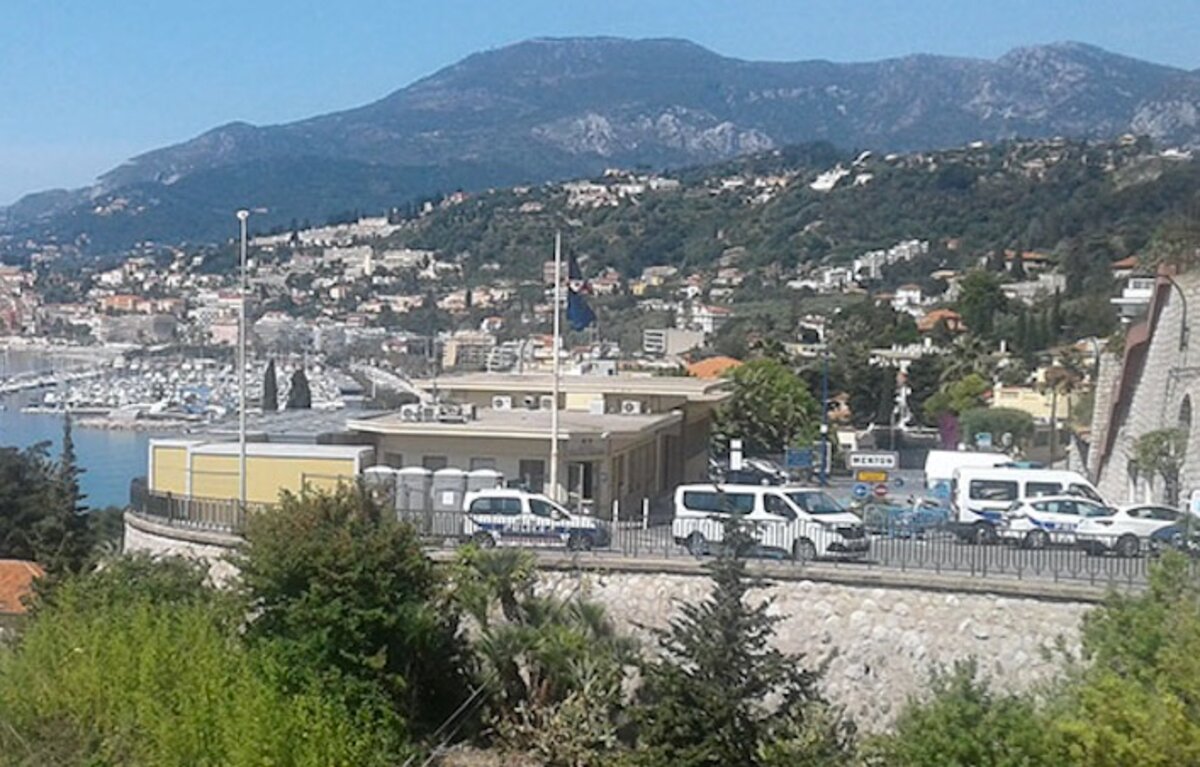
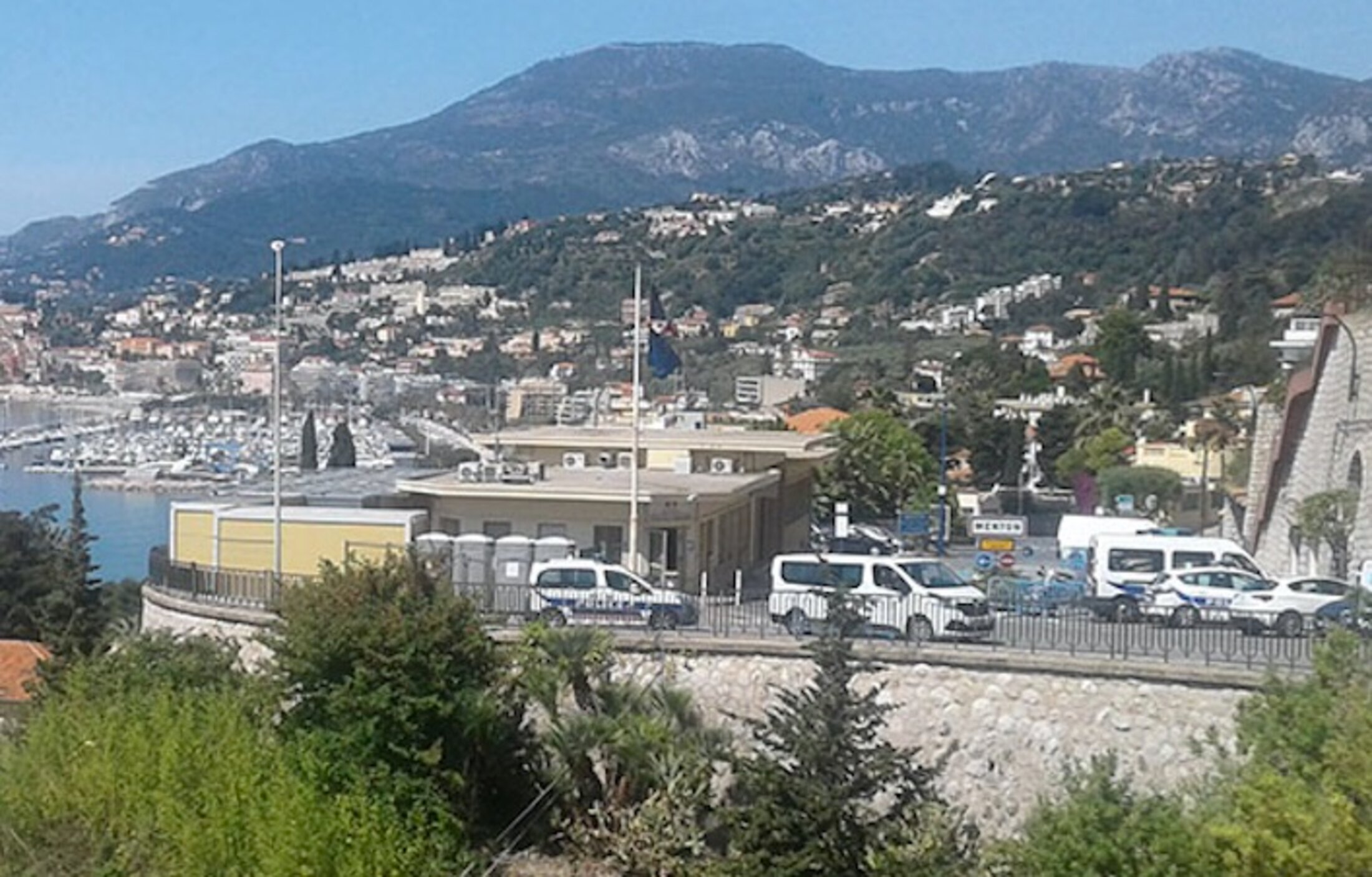
The French border police are using prefabricated huts to secretly detain migrants who have crossed the border from Italy, according to migrant rights groups. They are being held in a police station next to the railway station at Menton on the border with Italy, a transit point for many migrants who have crossed the Mediterranean and who then head further north in Europe. Migrant rights groups say the migrants are kept in the huts overnight before being sent back back to Italy the following day.
According to those groups involved, who include CIMADE, ANAFÉ, GISTI and lawyers on behalf of the associations ADDE and SAF, the detentions are taking place outside the framework of existing French law which provide rights and guarantees for migrants. They have now sought an injunction to stop the practice.
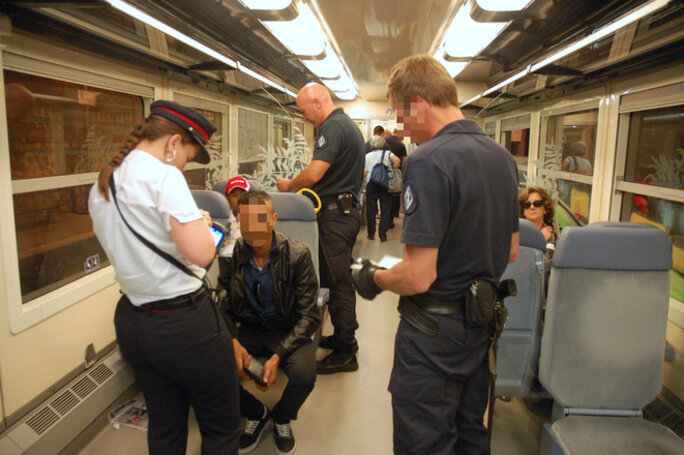
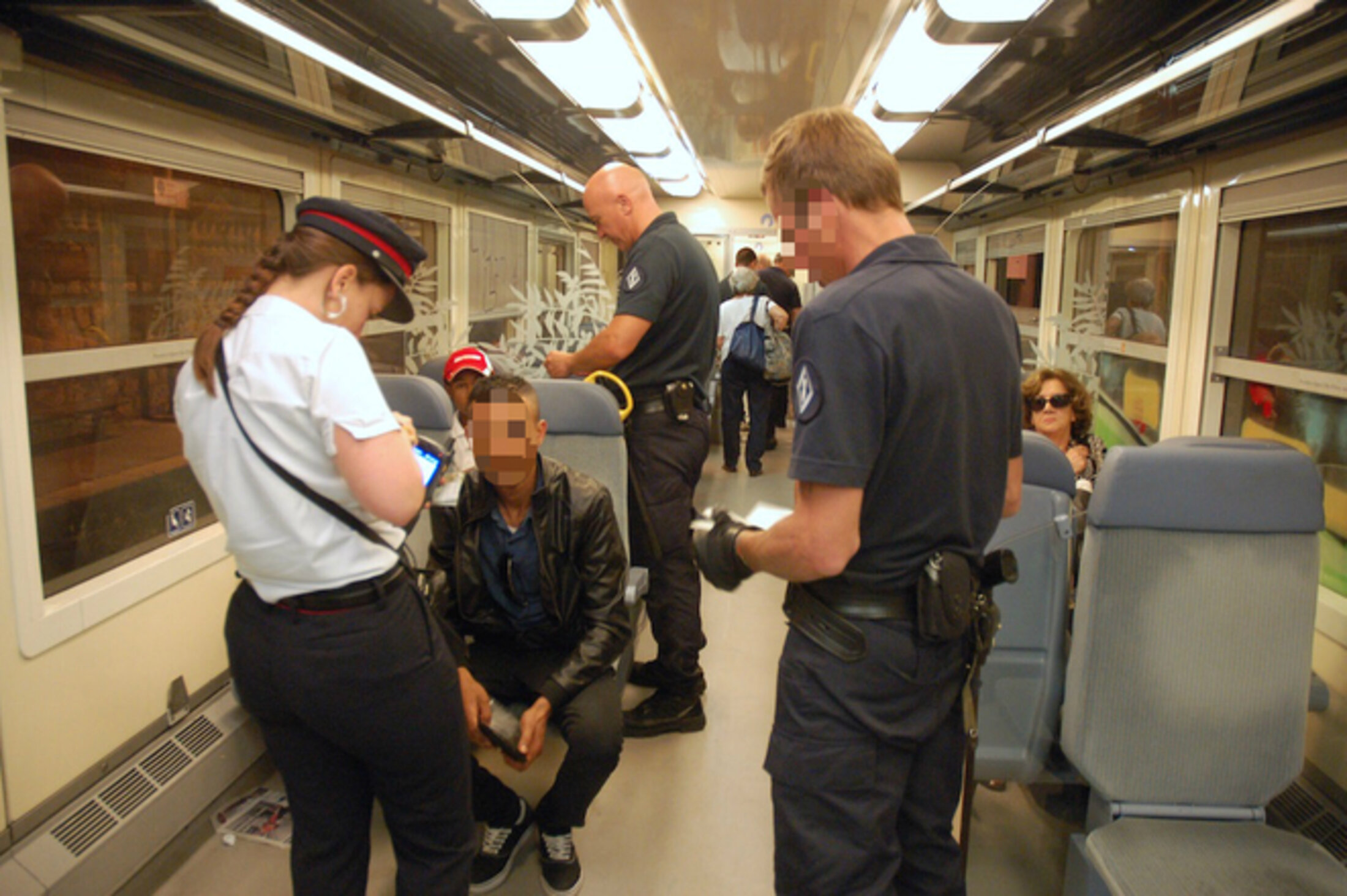
Between 100 and 150 people arriving in Menton from Italy are turned back every day, many of them after being stopped and arrested on the train between the two countries. Most are simply sent straight back to Italy on the grounds that they do not have a valid residence permit and, despite what the law says, they are not given the chance to seek asylum. But at 7pm each day the Italian border guards close the frontier until 7am the following morning. Those migrants who are arrested on the French side in the meantime are thus ushered into the prefabricated huts.
These sparsely-equipped huts, which have a little fenced yard, have portable sanitary facilities and not much else. According to one minor, who spoke to local associations, there are no beds, mattresses or bedclothes and just a few benches for people to sleep on. He said that during his detention he was given nothing to eat and that the border police had refused to buy him any food even though he had money to pay for it.
Enlargement : Illustration 1
According to the statistical agency Eurostat, in 2016 France barred 54,5000 people from entering at its land borders, equating to 149 people a day. These included 7,500 Eritreans, 7,405 Sudanese and 4,460 Afghans. These refusals have mostly taken place on the border with Italy, particularly at Menton. Each day a few dozen people are deprived of their freedom and kept in the huts, and contrary to French and European law there is no legal framework controlling the length of their stay, their rights and their legal guarantees.
The migrant associations only discovered the detention huts by chance during a fact-finding visit to the border area made by representatives of CIMADE and ANAFÉ in May. Members of the organisations were refused entry to the buildings, which were not listed anywhere on official documents and which they knew nothing about. During a visit on May 16th and then a later one on June 6th, the observers noticed that migrants were being deprived of their liberty, and have now raised the alarm.
The state does have the right to detain people who have been refused entry in what are called waiting zones – zones d'attente (ZA). These are different from administrative detention centres – CRAs in French – which are used to hold foreigners who do not have the right to stay in France but who are already living on French soil.
But even according to the local authorities on the ground the prefabricated huts near Menton-Garavan railway station do not have ZA status. “The PAF [editor's note, border police] initially claimed it was a waiting zone,” says Rafael Flichman from immigrant rights group CIMADE. “But they later retracted this so they could refuse access to representatives of ANAFÉ who are authorised to enter any waiting zone immediately and without condition.” He continued: “According to the PAF commander's declarations it is a provisional detention zone for people who are not admitted, a private place of liberty for people who are going to be readmitted to Italy.”
However, no such such structures exist under French law. Waiting zones have to provide certain facilities and access to rights, which includes information about the possibility of seeking asylum, provided in a language understood by the foreigner. None of these are provided in the huts at Menton.
Questioned about the detention of migrants at Menton, the head of the PAF locally is reported to have spoken openly about an “arrangement between the prefecture and the Italians”.
Accounts from local observers and migrants have confirmed what is going on and suggest that the first floor of the railway station at Menton is also used as a place of detention. According to CIMADE some minors are even being held there without any regard to their rights in such situations; children put into an official waiting zone are supposed to have an official appointed by the prosecution services to represent their interests. Over the last few weeks Italian NGOs helping unaccompanied minors at Ventimiglia (known as Vintimille in France) on the Italian side of the border have noticed that these youngsters are no longer notified of the fact that they have been refused entry to France.
Enlargement : Illustration 2
In a bid to halt the detentions, migrant rights associations in France applied to the administrative court in Nice on June 6th for an injunction to “stop all the serious and clearly illegal violations of fundamental freedoms resulting from the removal of freedom from exiled people, resulting from the informal decision of the prefect for the Alpes-Maritimes [editor's note, the local département or county] to create a provisional detention zone for people refused entry”.
The associations who have put their names to the legal action say they want court officials to visit the detention zone. They also want the practice of detaining migrants there to be suspended and to guarantee access to rights for all those arrested at the border. France's prisons inspector, the controller general of the independent CGLPL, has also been informed of events at Menton and may now take up the case.
The detention huts are the latest in a long line of illegal and long-standing practices to which migrants in this corner of south-east France are subjected. The stopping and questioning of people based on their racial profile – which is illegal - is the norm for migrants here, and local inhabitants who come to their aid frequently face criminal proceedings, as was the case with a farmer called Cédric Herrou. Migrants' rights in general are not greatly respected in the area and unaccompanied minors are often dealt with in the same way as adults.
Since the terrorist attacks in Paris on November 13th, 2015, when border controls were officially re-established on the Franco-Italian border, arrests have become almost systematic on the seven road crossings and three railway stations on the border. But the arrests in fact began back in 2011 when large numbers of Tunisians began arriving following the revolution in their country that sparked the so-called Arab Spring.
According to the International Organization for Migration (IOM), more than 72,000 migrants have arrived in Europe so far in 2017, including more than 60,000 via Italy, having risked their lives to cross the Mediterranean. With the arrival of better weather these crossings are increasing in number. Some 1,650 people are reported as having disappeared since the start of the year. Those who do survive the journey generally head north, and for many the railway station at Menton is one of the places where they have to stop.
-----------------------------------------------------------------------------------
- The French version of this article can be found here.
English version by Michael Streeter