Political and financial crime is one of the French Republic’s best-kept secrets. It poisons the state quietly, to the detriment of the citizens who have to pay the price. That is why the judgement handed down on September 25th in the Libyan funding affair involving former president Nicolas Sarkozy and other high-profile defendants is of vital importance, writes Mediapart’s publishing editor in this op-ed article.
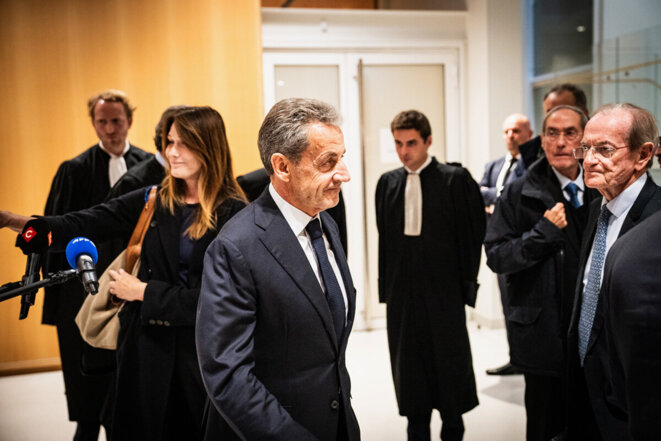
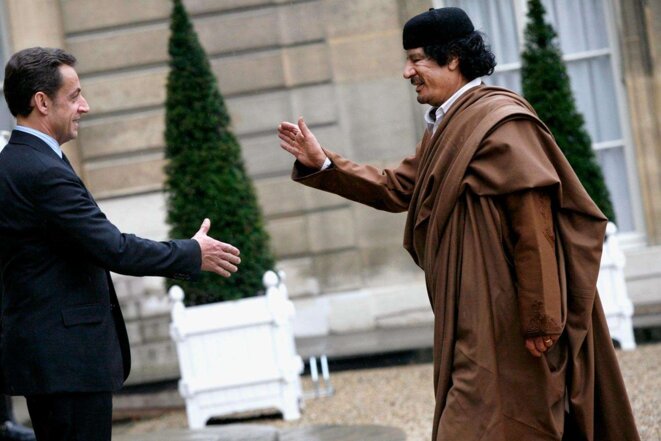
In an historic verdict, the former French president Nicolas Sarkozy has been given a five-year jail term after being found guilty of criminal conspiracy over a plan to accept money from Muammar Gaddafi's Libyan regime to fund his 2007 election campaign. Sarkozy, 70, was also fined 100,000 euros and banned from public office for five years. The court made clear that the former head of state will have to serve time behind bars even if he appeals. He was meanwhile acquitted of charges of corruption, the receipt of the proceeds of the misappropriation of public funds, and illegal campaign financing. Sarkozy's conviction follows ten years of judge-led investigations into the affair, and investigations by Mediapart which go back to 2011.
The verdicts and sentences were announced on Thursday at the end of the trial of Nicolas Sarkozy and 11 co-defendants over their roles in the alleged funding of Sarkozy’s 2007 presidential election bid by the Libyan regime of Muammar Gaddafi. The ten-year judicial investigation, and Mediapart’s own investigations over a period of 14 years, have seen ups and downs along the way, and here and there some surprising outcomes. Graham Tearse looks back on the different developments and how the “Gaddafi-Sarkozy funding affair” became an epic legal marathon.
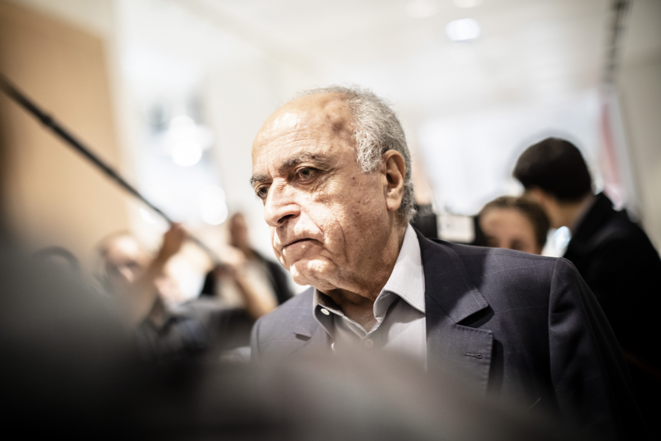
A key figure in the Karachi and Sarkozy-Gaddafi scandals, the middleman Ziad Takieddine died on Tuesday, September 23rd, at a hospital in Beirut. His death in the Lebanese capital came just two days before a court in Paris delivers its long-awaited verdict in the trial of former president Nicolas Sarkozy and other defendants – including Takieddine himself - over the Libyan-French presidential election funding affair. Fabrice Arfi and Karl Laske report.
Gaël Perdriau, mayor of the city of Saint-Étienne in south-east France, stood trial on September 22nd for his role in a homophobic blackmail plot against his own deputy, who was secretly filmed with a male escort in an hotel room. In the dock alongside him are three former close associates of the rightwing mayor, who all turned on him during the judicial investigation that led to these proceedings. Antton Rouget reports on the background to an extraordinary trial that is expected to last a week.
A study published this week by two French health agencies details a well-above-average exposure to pesticides of residents who live close to vineyards, as illustrated in urine and hair samples, and others of ambient and household air, dust and home-grown vegetables. The study was originally prompted by an unusual cluster of child cancer cases discovered in a wine-growing area of south-west France, one of which concerned Lucas Rapin (pictured) when he was aged five, and who now lives with the debilitating side effects of his successful treatment for leukaemia. Amélie Poinssot reports on the findings of the study, and hears from Rapin and his mother about their arduous experience.
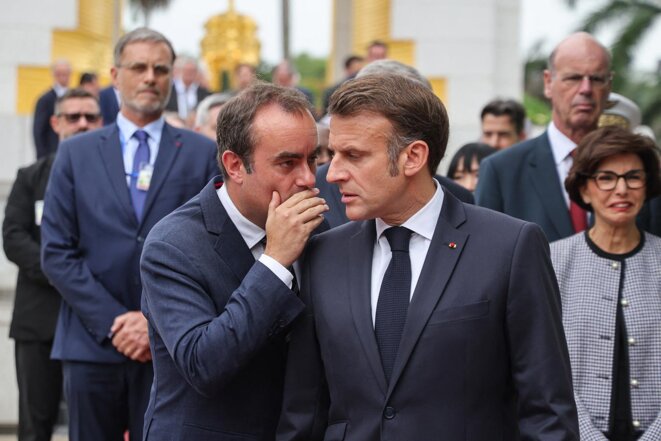
Insensitive to mounting anger in France over worsening social conditions and increasing demands made upon the less well-off, while obstinately turning his back on honouring the results of last year’s snap parliamentary elections, in which the broad Left triumphed, Emmanuel Macron is precipitating a major political crisis, writes Mediapart’s publishing editor Carine Fouteau in this op-ed article. Joined also by an economic crisis, and a blurring of political lines, she argues, the French president is opening up the final stretch of the road to power for the far-right.
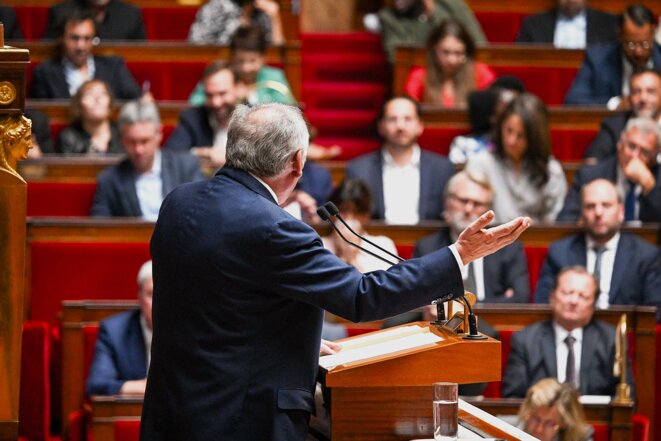
France's prime minister François Bayrou is due to tender his resignation to President Emmanuel Macron in the coming hours after his government was heavily defeated on Monday evening in a vote of confidence at the National Assembly that he had himself called. In the end, just 194 MPs voted for the government and 364 MPs voted against as, at the end of a long parliamentary debate, and to little surprise, the Left and the far-right brought down the prime minister. In the corridors of the National Assembly there will be little regret at the administration's passing. Now all eyes will be on how President Macron reacts to what is for him yet another deeply damaging political reversal. Alexandre Berteau, Pauline Graulle and Youmni Kezzouf report.
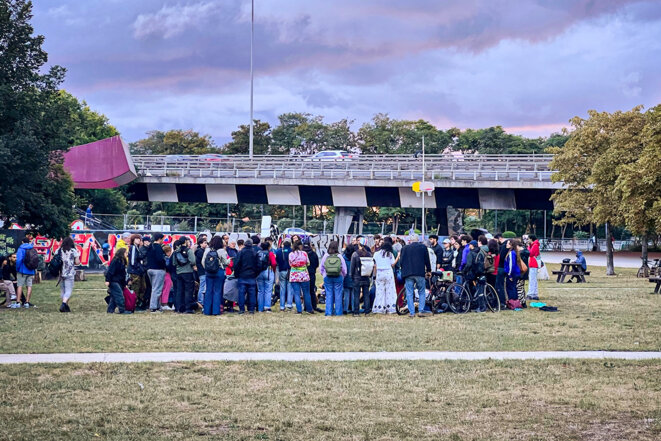
A major nationwide protest to “block everything” is due to take place across France on September 10th. However, the reaction of working-class, multi-ethnic neighbourhoods to it remains a weak point of the protest movement. What often stops residents of these areas joining in such struggles is their own difficult living conditions, a fear that any backlash will hit them the hardest, and their wariness of a Left that shows little interest in “jointly constructing” a protest movement with them. Laura Wojcik reports on the views of residents and activists from working class districts in the Paris region and Marseille.
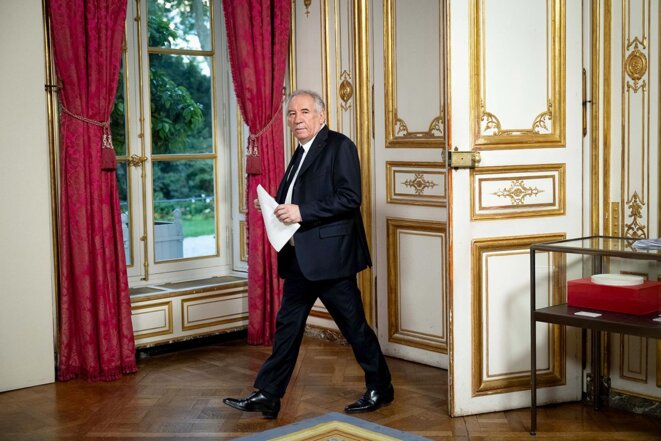
On September 8th the government of François Bayrou looks set to be toppled in a vote of confidence that the prime minister himself has called. Since his appointment at the end of December 2024, Bayrou’s government has obviously struggled because of its lack of an overall majority in the National Assembly, but it has nonetheless clearly pursued a liberal and conservative path. Here, members of Mediapart's editorial team look back at the nine months of an administration whose time in office has been marked by environmental setbacks and by its endorsement of the anti-immigration line espoused by the rightwing Les Républicains party.