


The news on Friday September 10th that former health minister Agnès Buzyn has been placed under formal investigation in relation to her handling of the start of the Covid-19 epidemic is potentially explosive for the French government. The health crisis is still continuing, while it is just months before President Emmanuel Macron is expected to seek re-election in the April 2022 presidential elections.
Buzyn was placed under investigation – one step short of charges being brought – for allegedly “putting the lives of others in danger” in relation to the pandemic. Prosecutors also named her as an “assisted witness” - a status between that of a witness and a potential suspect which can change as the investigation proceeds – in relation to claims of “failing to fight a disaster”.
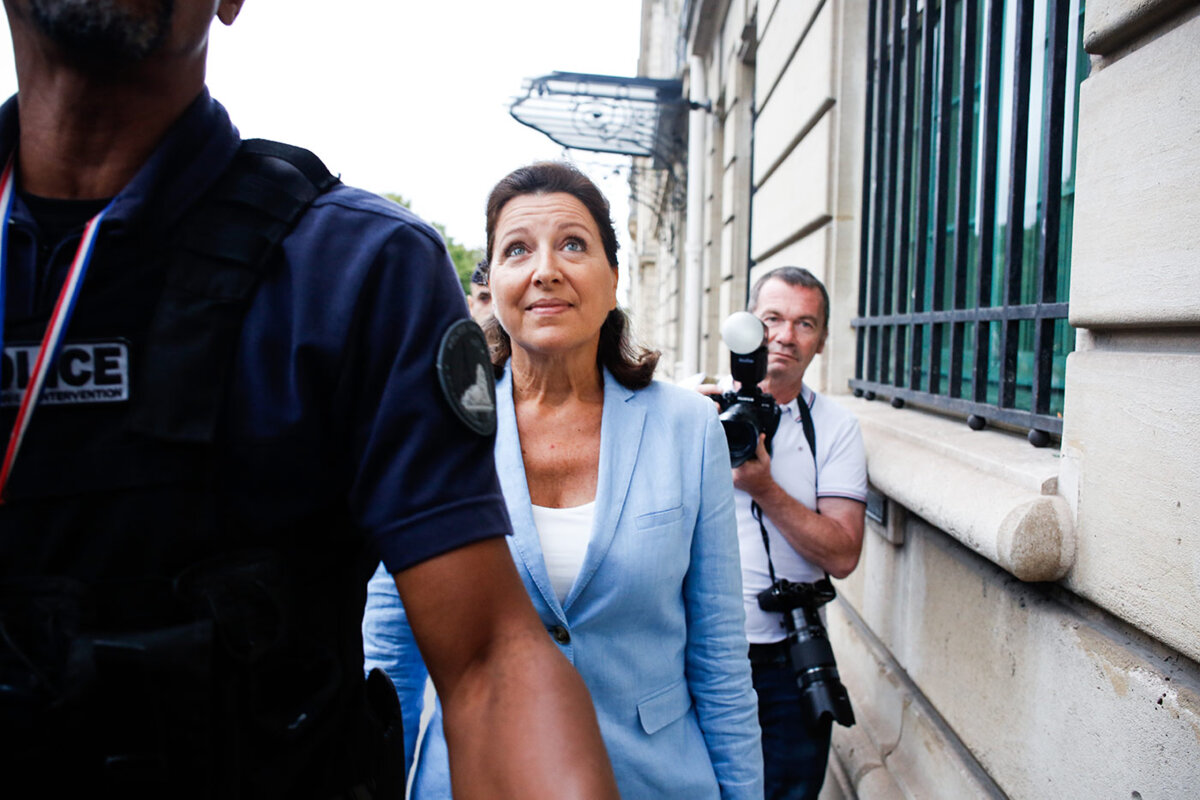
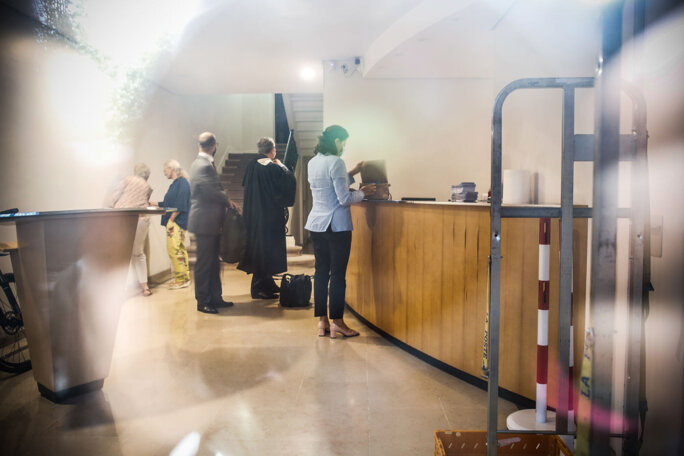
Buzyn, a doctor and researcher for much of her career, stood down as health minister in mid-February 2020 as the Covid epidemic was gathering pace in order to become the Paris mayor candidate for Emmanuel Macron's ruling La République en Marche (LREM) party. On Friday she was questioned for nearly ten hours by examining magistrates at the Cour de Justice de la République (CJR), the only court able to deal with alleged offences committed by a minister in the exercise of their duties.
Just before being quizzed by the judges Agnès Buzyn told reporters: “This is an excellent opportunity for me to explain myself and re-establish the truth of events. I will not let the government's actions or my actions as a minister be tarnished.”
The former minister was summoned for questioning as part of a criminal investigation opened in July 2020 into the French authorities' handling of the epidemic. It follows searches carried out in October 2020 of offices at the Ministry of Health, where Olivier Véran took over as minister. In addition searches were carried out of the offices of the then-prime minister Édouard Philippe and the official government spokesperson at the time, Sibeth Ndiaye, against whom complaints were also lodged.
In all, prosecutors decided to pursue 16 formal complaints made against the authorities out of more than 14,000 that were deposed. These complaints, which came from ordinary citizens as well as associations and trade unions, accuse members of the government of failing to take decisions that matched up to the severity of the health crisis, despite being aware of it, and also of having lied over the usefulness of masks with the sole aim of hiding a shortage of them, as Mediapart revealed in April 2020.
Enlargement : Illustration 1
When the investigation began in July 2020 it was in relation to the offence of “failing to fight a disaster” which carries a maximum penalty of two years imprisonment and a fine of 30,000 euros. But as the investigation progressed magistrates at the CJR decided to widen its scope to include the offence of “putting the lives of others in danger”, which is punishable by a year's jail term and a fine of up to 15,000 euros. It was in relation to this latter offence that Agnès Buzyn has been placed under investigation.
The investigation is being carried out by detectives from the Office Central de Lutte contre les Atteintes à l’Environnement et à la Santé Publique (OCLAESP), a unit from France's gendarmerie that tackles threats to public or environmental health. Prosecutors from Paris also separately referred the case to the OCLAESP unit. For in parallel to the CJR investigation, which only concerns the role of ministers, four separate investigations have been launched by public prosecutors following hundreds of complaints about the actions of public institutions and public servants. Among the organisations and figures who have been the object of complaints is France's director-general of the health service, Jérôme Salomon.
At the heart of the accusations against former health minister Agnès Buzyn are some of the declarations she herself made. For example, just weeks after stepping down as health minister she told Le Monde that continuing to hold the first round of the local elections on March 15th 2020 – just two days before the first lockdown in France – was a “mockery”. It also emerged that as early as the end of January, when she was still health minister, she had suggested to some colleagues that it would be difficult to hold the elections (see here).
In the Le Monde interview, published on March 17th 2020, Buzyn declared that she “knew that the tsunami wave was ahead of us” at the time she left the health ministry in mid-February to start her ultimately fruitless campaign to be mayor of Paris. As early as January 11th, she added, she had “sent a message” to Emmanuel Macron.
When, at the end of June 2020, she gave evidence to a National Assembly committee of inquiry into the handling of the epidemic, Agnès Buzyn repeated that she had warned the Élysée and the prime minister's office back in January 2020 of the potential “danger” of the coronavirus.
Yet the health minister had also stated publicly on January 21st 2020 that the “risk of it being introduced to France was low” though no particular preventative measure was being taken, not even suspending flights between Wuhan – the origin of the epidemic – and Paris. “Our health system is well prepared, professionals and institutions have been informed,” said the minister.
Two days later the French government finally stopped direct flights from Wuhan. But the message from the health minister remained the same. “The risk of importing [the virus] from Wuhan was moderate. It is now practically nil, as the city, as you know, is isolated,” Agnès Buzyn said on January 24th 2020.
But on January 22nd 2020 the World Health Organisation (WHO), whose emergency committee had been convened, had already indicated that the virus, which was “severe” in 25% of confirmed cases, was spreading to “Japan, Republic of Korea, and Thailand”.
The former health minister is also being blamed over the chaotic management of mask supplies. Hiding the shortage, the government adapted its health instructions over the wearing of masks according to the availability of stocks. Although at the end of February 2020 the director-general of the health service Jérôme Salomon had advised the wearing of a mask for anyone in contact with someone with Covid, a month later the government spokesperson Sibeth Ndiaye declared that it was pointless.
In reality, this change of message was just to hide the shortage of protective equipment, a shortage which was the result of years of budget restrictions and a lack of government forward planning.
At the end of January 2020 the French state had reserves of fewer than 100 million surgical masks - the French Senate's committee of inquiry said it was 33 million paediatric masks and 66 million adult masks – plus 65 million extra masks that had been ordered before the epidemic but which had not yet delivered. As for the higher-grade FFP2 masks, which were designed to be used for the most exposed health staff, France simply had none at all in stock.
It was only on January 24th 2020 that the management of the Health Ministry, the Direction Générale de la Santé (DGS), was informed by the public health body Santé Publique France (SPF) – which reports to the ministry – of the level of medical equipment that was available. On January 30th the DGS asked the SPF to get hold “as soon as possible” of just 1.1 million FFP2 masks. It was to take months for the authorities to build up the reserves needed to equip health professionals (see here).
Several leading figures in charge of handling the health crisis have been interviewed by investigators in a bid to understand the reasons for this lack of preparation. Mediapart understands that this includes Emmanuel Macron's two health advisers.
Astonishingly, the first adviser, Marie Fontanel, left the Élysée on January 31st 2020 just after the WHO had officially declared the outbreak as a “Public Health Emergency of International Concern (PHEIC)”. She was only replaced a month later by Anne-Marie Armanteras de Saxcé.
Both advisers responded to the summons and were questioned, but refused to answer questions that related specifically to decisions taken by Emmanuel Macron, invoking presidential immunity.
The issue of presidential immunity has already been examined by the courts in an earlier affair. In a case involving the use of public money for opinion polls in the Élysée deemed not in the public interest, which will come to court next month, France's top appeal court the Cour de Cassation ruled in December 2012 that the justice system could investigate a contract entered into by President Nicolas Sarkozy's former chief of staff Emmanuelle Mignon.
In its ruling the court pointed out that “no constitutional or legal measure or convention provides for criminal immunity or non-accountability for members of the president of the Republic's office”. Yet Emmanuel Macron's two advisers argued that this decision applied to actions that could be separated from the president's own actions, and that in an investigation into the handling of the health crisis they did not have to respond to questions on issues linked to the preparation of presidential acts.
In their investigation detectives came up against another difficulty: the decision by Emmanuel Macron to organise the handling of the crisis using the public health Defence Council, whose decisions are by their very nature classified, as Le Monde has noted. This means detectives have to identity each document they want declassified and ask permission from the committee that oversees national defence secrets, which can oppose it.
In February 2021, at the request of magistrates at the CJR, a report from the French domestic intelligence agency the Direction Générale de la Sécurité Intérieure or DGSI, dated April 17th 2020, plus 31 reports sent by the head of the health ministry to the public health Defence Council were declassified in this way for use in the investigation.
Meanwhile the decision to place Agnès Buzyn under investigation has pleased lawyers representing individuals and groups who have joined as civil parties to the criminal investigation, as victims or alleged victims are allowed to under French law. “It's the least they could have done. There's very serious evidence that shows an offence,” said Yassine Bouzrou, who represents three plaintiffs whose legal action was judged admissible – a police trade union, the association Cœur Vide 19 and one family.
Another lawyer involved, Nabil Boudi, applauded the “swiftness” of the investigation and also the fact that the offence of “putting the lives of others in danger” now features as part of the probe.
“In our complaints we attacked the government's inaction, the non-replenishment of masks and the holding of the first round of the municipal elections. This is even more serious, as it entails a deliberate action: when you are a minister and you make declarations, that's followed by actions. If they tell you that masks serve no purpose then you're not going to wear masks and you're going to get infected,” said the lawyer, who is representing two people who were infected with Covid-19 in March 2020.
“Some serious errors and failings were committed, the fact that justice is taking its course is reassuring in terms of the functioning of the state,” said lawyer Laurent Gavarri, who represents nurses and police officers who lodged complaints with the prosecution services in Paris. He hopes that the “two investigations [editor's note, by the CJR and Paris prosecutors] will progress at the same speed in parallel, so that we can come to an overall analysis of the dysfunctions, beyond individuals”.
Enlargement : Illustration 2
Senator Bernard Jomier, a member of the socialist group in the Senate, who acted as rapporteur in the institution's inquiry into the handling of the health crisis, is not surprised by the progress of the criminal investigation. “We revealed the opaque nature of the way decisions were taken during this crisis. The CJR has made the same observation and wants to know more. It's only right that the health minister should have to explain themselves: after Agnès Buzyn it should be the turn of [current health minister] Olivier Véran,” said the senator from Paris.
In its report the Senate made the “triple observation of a fault in preparation, a fault in strategy - or rather of consistency in strategy - and a fault in appropriate communication” as it held health service chief Jérôme Salomon heavily responsible over the handling of the mask issue. It was he who had been kept informed of the calamitous levels of the state's mask stocks, and even got a modification made to a 2018 report from the ministry's advisory public health body the Haut Conseil de la Santé Publique that recommended building up a stock of a billion masks (see here).
The senators also described as a “Phoney War” the actions of Agnès Buzyn at the start of the crisis, from the first alerts coming from China at the end of December 2019 to her departure from office on February 16th 2020 to stand in the municipal elections. Yet when she gave evidence to the Parliamentarians (see here) the former health minister insisted that she had “seen everything”. She said: “You can't say that I didn't anticipate it, I won't let anyone say the services didn't anticipate it.”
“She understood quite early on that something was happening, she alerted the prime minister,” acknowledged Bernard Jomier. But he said that there was a “discrepancy” between this and her “public declarations”.
The Paris senator believes questions also need to be asked about the responsibility of the prime minister at the start of the crisis, Édouard Philippe. “He told us that he was not able to assess the need for masks. I looked at his diary for the month of February [2020]: he devoted more meetings to pension reform than to the health crisis. For our front-line leaders, health was always put on the back burner. The machinery of state took far too long to get to grips with the issue. During this period Taiwan was ordering masks,” said Bernard Jomier.
When he gave evidence to Members of Parliament in October 2020 the prime minister conceded there had been “communications errors” while defending his government's actions. “How can you manage a health crisis with very dispersed levels of decision-making … when you immediately have the risk of prosecution hanging over you?” Édouard Philippe had asked.
In everyone's mind at the time was the infected blood scandal in France. This involved blood products contaminated with HIV that had been given to haemophiliacs in the mid-1980s. Eventually the health minister at the time, Edmond Hervé, was convicted though given no sentence, while the prime minister Laurent Fabius was acquitted.
---------------------------------------------------------------------------
- The original French version of this article can be found here.
English version by Michael Streeter