


When French president Emmanuel Macron spoke to the nation on the evening of Monday July 12th he announced a series of measures to combat the growing threat posed by the Delta Covid variant in France. But more than anything else this was a 30-minute exercise in self-satisfaction. During his televised address the French head of state spent a long time praising his own track record in handling the Covid crisis as well as his economic and social record in office, before finally getting to the key issue.
Speaking about the arrival of the Delta variant and the possibility that other variants could emerge in coming months, the president described vaccinations as a “trump card” against them. “We must move towards the vaccination of all French people because it's the only route towards a return to normal life,” he declared. He said that vaccinations would be made obligatory “without delay” for all health professionals, including both nursing staff and non-nursing staff, plus all those who work in contact with frail or old people, whether as volunteers or paid workers, and including those who provide home care. Those affected will have until September 15th to get vaccinated, before being subject to sanctions, he said.
Emmanuel Macron did not himself specify the sanctions. This was left to health minister Olivier Véran who told the LCI news channel a few minutes later that any nurses or other healthcare workers who did not get vaccinated “would no longer be able to work and would no longer be paid” after the September 15th deadline. At the same time the vaccination appointments website Doctolib took to social media to announce a sudden surge in demand on their site, with 20,000 appointments being booked every minute.
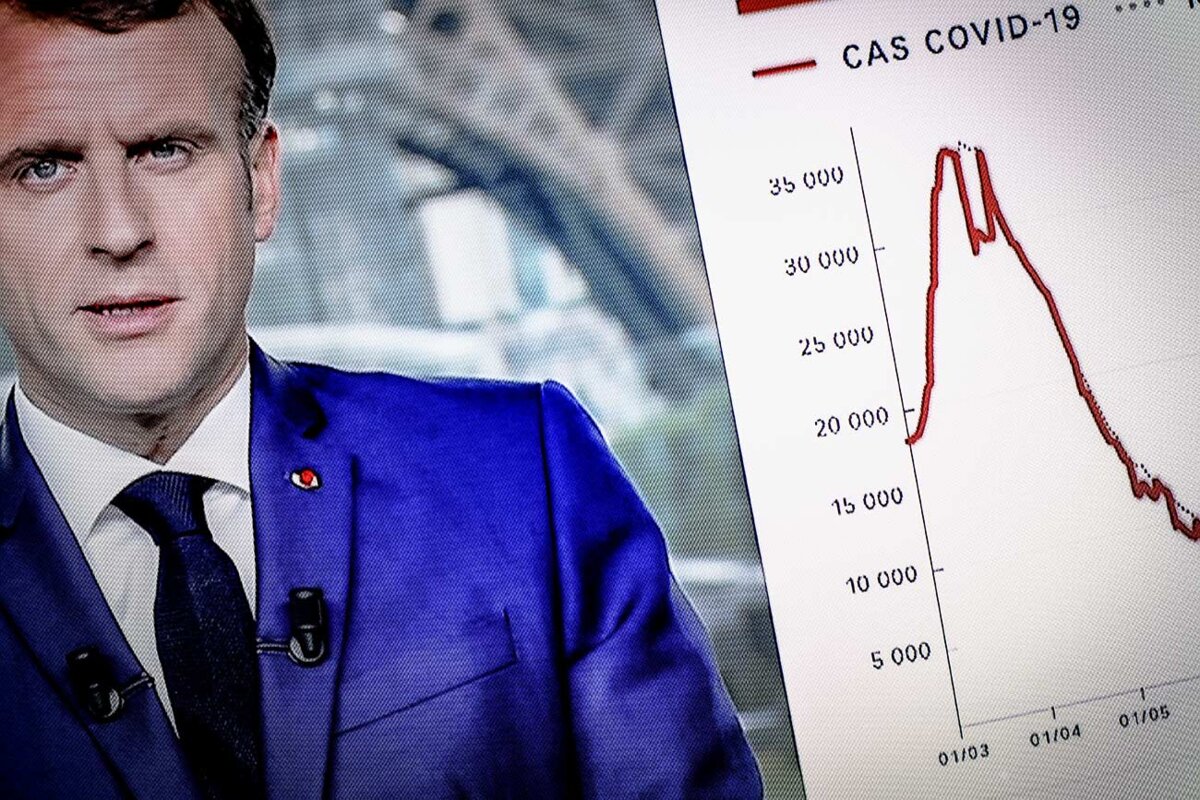
Enlargement : Illustration 1
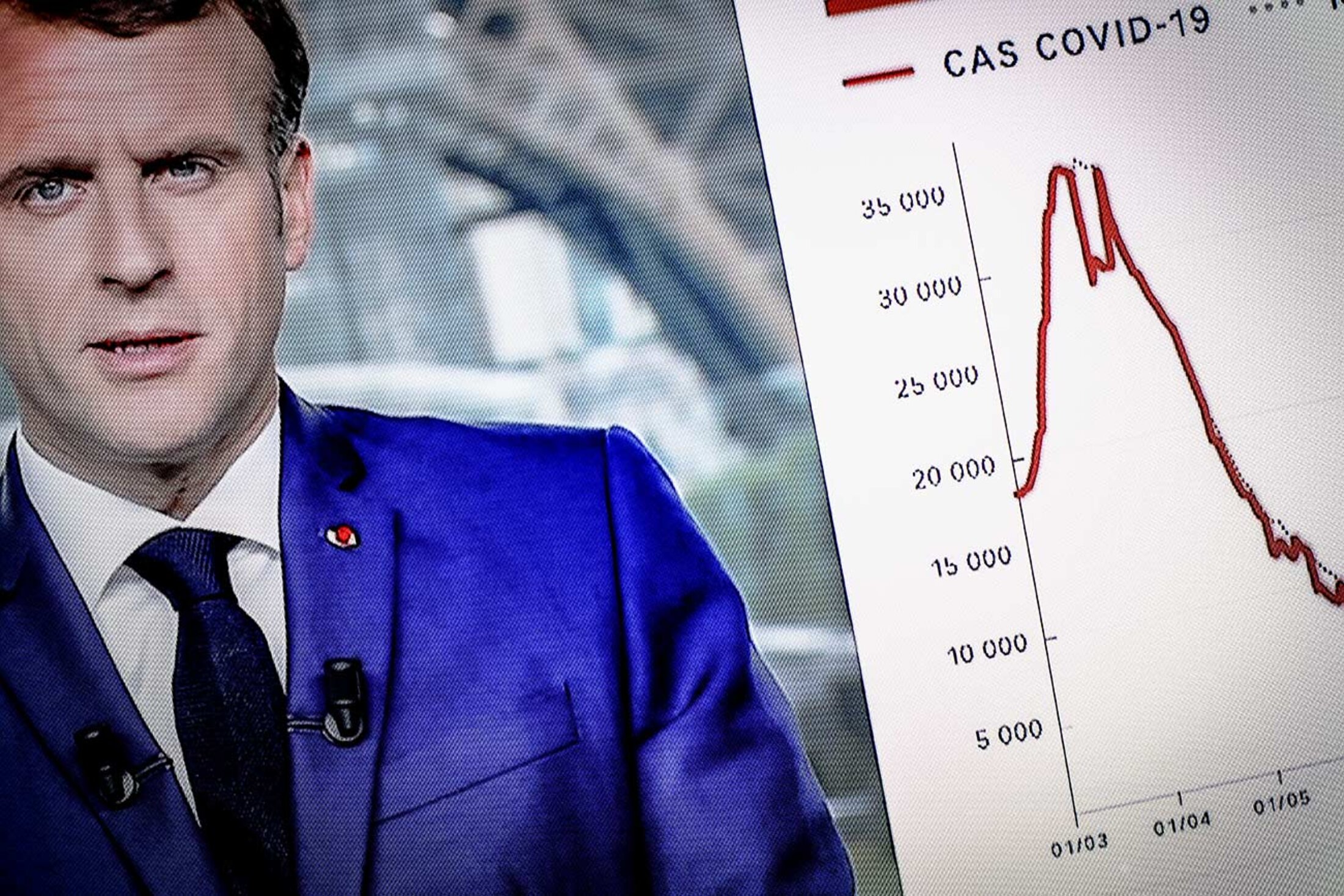
During his address the French president stated that “depending on how the situation develops we will doubtless have to raise the question of obligatory vaccinations for all French people”. He added: “But I prefer trust and I formally call on all our unvaccinated citizens from today to go and get vaccinated as quickly as possible.”
To achieve its ends the government has in fact chosen obligatory vaccination in all but name by making a normal social life dependent on having a health pass or 'Covid passport' as they are often called. These passes – which show that the holder has been vaccinated or had a recent negative test – will be required for leisure and cultural events from July 21st. Then, from the beginning of August, they will be required for entry to cafés, restaurants, shopping centres, hospitals and retirement homes as well as for travelling on planes, trains and long-distance coach journeys.
Yet on April 29th Emmanuel Macron had assured the regional press in France that “the health pass would never give a right of access that would differentiate between French people”. Speaking before the Delta variant began its surge in France, the president had promised: “[The pass] will not be required to access everyday places such as restaurants, theatres and cinemas, or to go and visit friends.”
On Monday night the president not only announced a toughening of border controls and “enforced quarantine” for unvaccinated arrivals, he also said that from the autumn people would have to pay for PCR tests for Covid “unless they have a medical prescription”. The proposed legislation implementing these new measures will be debated by the French Parliament meeting in extraordinary session from July 20th. From Tuesday July 13th a health emergency will be declared in the overseas territories of Martinique and La Réunion, where curfews will also be introduced.
By announcing mandatory vaccinations for healthcare staff, President Macron was following the advice of the country's scientific advisory body the Conseil Scientifique, delivered on July 6th. In a document entitled 'React now to avoid a second wave linked to the Delta variant' this body supported the recommendation of another body, the vaccination advisory council the Conseil d’Orientation de la Stratégie Vaccinale, to move towards “mandatory vaccination for nurses”. The Conseil Scientifique also raised the possibility that this measure might have to be extended to “carers” and other professionals in contact with vulnerable people. That is indeed what the government has now decided.
The mandatory approach to vaccination for healthcare staff is backed by the independent health body the Haute Autorité de santé (HAS), as well as the Académie Nationale de Médecine and the Académie Nationale de Pharmacie. These two advisory bodies recently noted that “the principle of vaccination on a voluntary bases is today showing its limitations”. In a joint statement published on July 9th the two advisory bodies declared: “While individual freedom must be respected, it is nonetheless limited when there's a danger to others. Faced with Covid-19, vaccination is not just a civic act, it's an ethical necessity.”
Before setting out these new measures, Emmanuel Macron spent some time during his broadcast going back over his actions during the health crisis, starting with the decision made in January to delay a new lockdown for several weeks. “I want to tell you this evening that we were right to keep searching collectively for the balance between protection and freedom; right to protect life at the start of this year, yet without locking down the country,” he insisted. This is despite the human toll resulting from this decision; according to an initial estimate published by Le Monde in mid-June it led to more than 14,000 deaths.
We will have to work longer and retire later.
In the second part of his address, President Macron looked at the handful of reforms that he wants to relaunch before his term of office ends next year. He began with the reform of the unemployment benefit system which he said will be “fully implemented from October 1st”. This is despite the fact that the introduction of this controversial reform – which may save up to 2.3 billion euros over the next two years largely at the expense of the unemployed - was suspended by the country's top administrative body the Conseil d' État at the end of June pending further deliberation. The president's announcement on this presupposes either that the Conseil d' État will deliver its final verdict on the reform by the start of the autumn or that the government intends to publish a new reform decree before the end of the summer.
The head of state also brought up the tricky issue of pension reform. “I've always spoken truthfully, “ he insisted, before going back on his 2017 campaign pledge not to increase the retirement age. “We will have to work longer and retire later,” he said, while making clear that this reform will not be undertaken “while the epidemic is not under control” and until the “recovery is well under way”. Yet as he himself said, we are gong to have to “live with the virus” right through 2021 and “doubtless for several months in 2022”.
In the meantime, on Monday evening Emmanuel Macron had invited Parliamentarians from his ruling La République en Marche (LREM) party to the Élysée to discuss the remaining months before the presidential election in April 2022. The president was careful not to mention the election in his televised address, but raised the subject with the LREM politicians. According to Parliamentarians who attended the event, President Macron urged them to get out and go door-to-door from the autumn to defend a government record of which he is visibly very proud.
------------------------------------------------------------------------
- The original French version of this report can be found here.
English version by Michael Streeter