


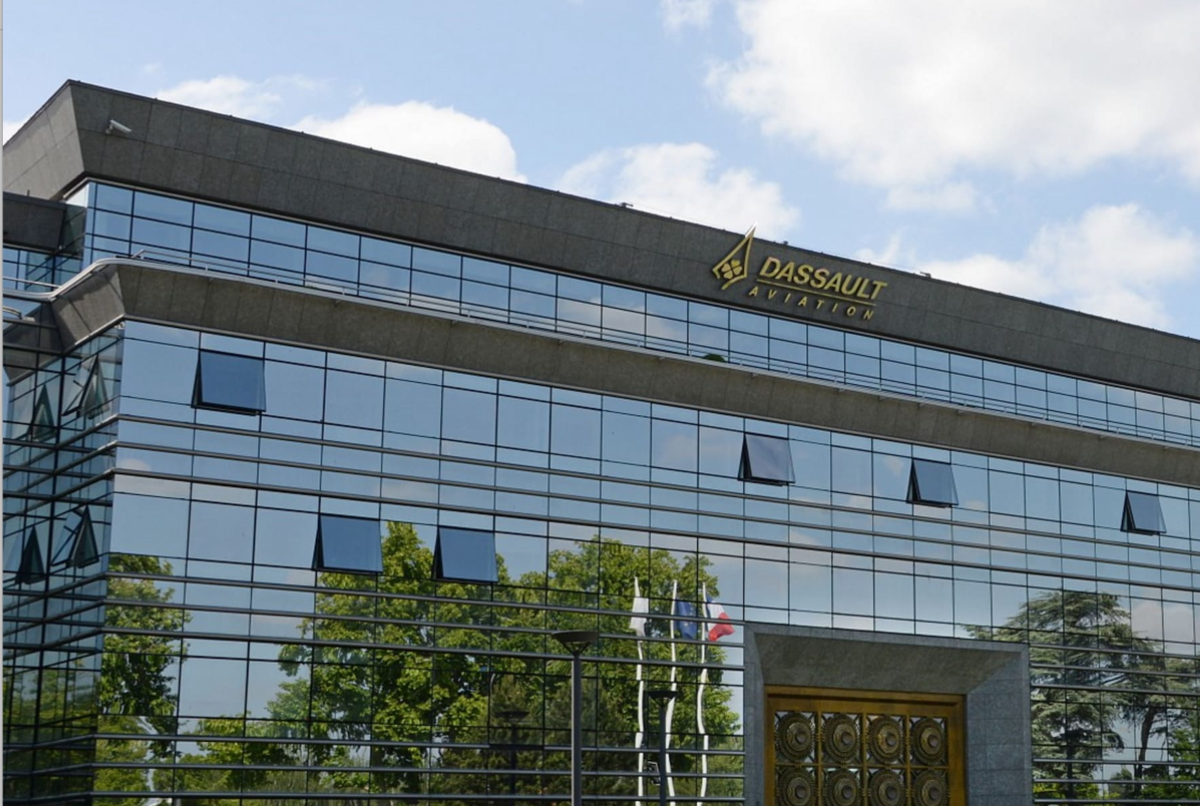
The French judicial investigation into the sale of 36 Rafale fighter aircraft to India is gathering pace. According to Mediapart's information, in February 2022 detectives from the OCLCIFF, the anti-corruption unit of the French police, discreetly searched the headquarters of Rafale manufacturers Dassault Aviation at Saint-Cloud in the western suburbs of Paris at the demand of investigating judges Virginie Tilmont and Pascal Gastineau. When contacted, Dassault made no comment.
For a year, the two judges have been carrying out a investigation focussing on suspicions of “corruption”, “influence peddling” and “favouritism” surrounding this massive contract for 7.8 billion euros which was signed between the two countries in 2016 under the presidency of François Hollande.
Enlargement : Illustration 1

But four months after the search at Dassault the judges came up against a major hurdle: military official secrets.
According to Mediapart's information, in June this year France's Ministry of the Armed Forces and Ministry of Foreign Affairs refused to declassify secret documents that the judges had asked them to release concerning the sale of the Rafale jets to India. The refusals came following two advisory opinions delivered by the body that oversees the declassification of state secrets, the Commission du Secret de la Défense Nationale (CSDN), recommending that the documents should not be handed over. These opinions were published in France's official state publication the Journal Officiel.
This refusal to declassify the documents, a decision that is hard to understand on the facts, looks like a new attempt to hold up the investigation into this state affair, a probe that could implicate François Hollande, his successor as president Emmanuel Macon – who was economy minister at the time – as well as their former minister Jean-Yves Le Drian (see our investigations here and here).
“Once again military secrecy is used as window dressing to protect personal interests and ensure the impunity of top public or private figures united in the same fraudulent grouping,” William Bourdon and Vincent Brengarth, lawyers for the French anti-corruption NGO Sherpa who filed the complaint triggering the affair, told Mediapart.
In 2019 Éliane Houlette, then head of the financial crimes prosecution unit the Parquet National Financier (PNF), had dismissed an initial complaint from Sherpa without carrying out a full investigation, and against the advice of one of her deputies, in order to “preserve France's interests”. It was not until June 2021 that a judge-led investigation was finally opened, thanks to a second complaint by Sherpa picking up on revelations in Mediapart's investigation the Rafale Papers.
On September 30th 2021, investigating judges Virginie Tilmont and Pascal Gastineau sent two requests for documents to be declassified to the armed forces minister at the time, Florence Parly, and to the then-minister of foreign affairs Jean-Yves Le Drian. The aim was to get hold of the classified documents held by the two ministries concerning the negotiations for the contract to sell the Rafale jets to India.
Though it was Dassault who profited from the deal, it was in fact a contract between states. On the French side, negociations had been overseen in 2016 by Jean-Yves Le Drian, who at the time was President Hollande's armed forces minister. The French negotiating team was led by a senior official from the French state's weapons procurement and export agency (the DGA) and was made up of eight military personnel, two representatives from Dassault and a senior figure from the France-based European missile manufacturer MBDA.
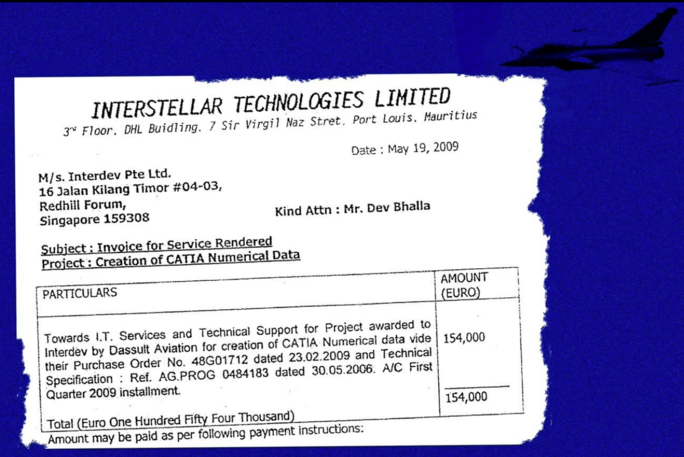
The investigating judges therefore need to see these confidential documents held by the ministries. In particular they want to verify information disclosed by Mediapart about anti-corruption clauses being removed from the contract. We had revealed that the French side had fought to get the clauses withdrawn – even though they are mandatory under Indian law – after Dassault and its subcontractor Thales had paid millions of euros in hidden commissions to the intermediary Sushen Gupta to clinch the deal.
Enlargement : Illustration 2
The armed forces and foreign affairs ministries started by playing for time. They took seven-and-a-half months to process the request, in other words to search for the documents in their archives and send them to the Commission du Secret de la Défense Nationale (CSDN).
The CSDN, an independent authority created in 1998, is composed of one member of the country's top appeal court the Cour de Cassation, one from the public accounts watchdog the Cour des Comptes, one from the constitutional advisory body and administrative court the Conseil d'État, a Member of Parliament and a member of the French Senate. Its role is to give an advisory opinion on requests to declassify secret documents that are made as part of a judicial investigation.
On June 8th this year the CSDN delivered two opinions advising against the declassification of the documents linked to the Rafale contract, with no reasoning given for this advice.
On the face of it, it is difficult to understand how they came to these conclusions. The law stipulates that the CSDN can advise against declassification in order to preserve “the country's defence capacities”, to ensure the country “respects its international commitments” and to maintain the “safety” of military “personnel” who are on operational duty. Yet none of these three criteria seems relevant to the Rafale affair where the issue is simply one of determining whether corruption had taken place.
Contacted by Mediapart, the president of the CSDN Jean-Pierre Bayle, a former socialist senator and ex-president of the Cour des Comptes, did not respond.

Enlargement : Illustration 3
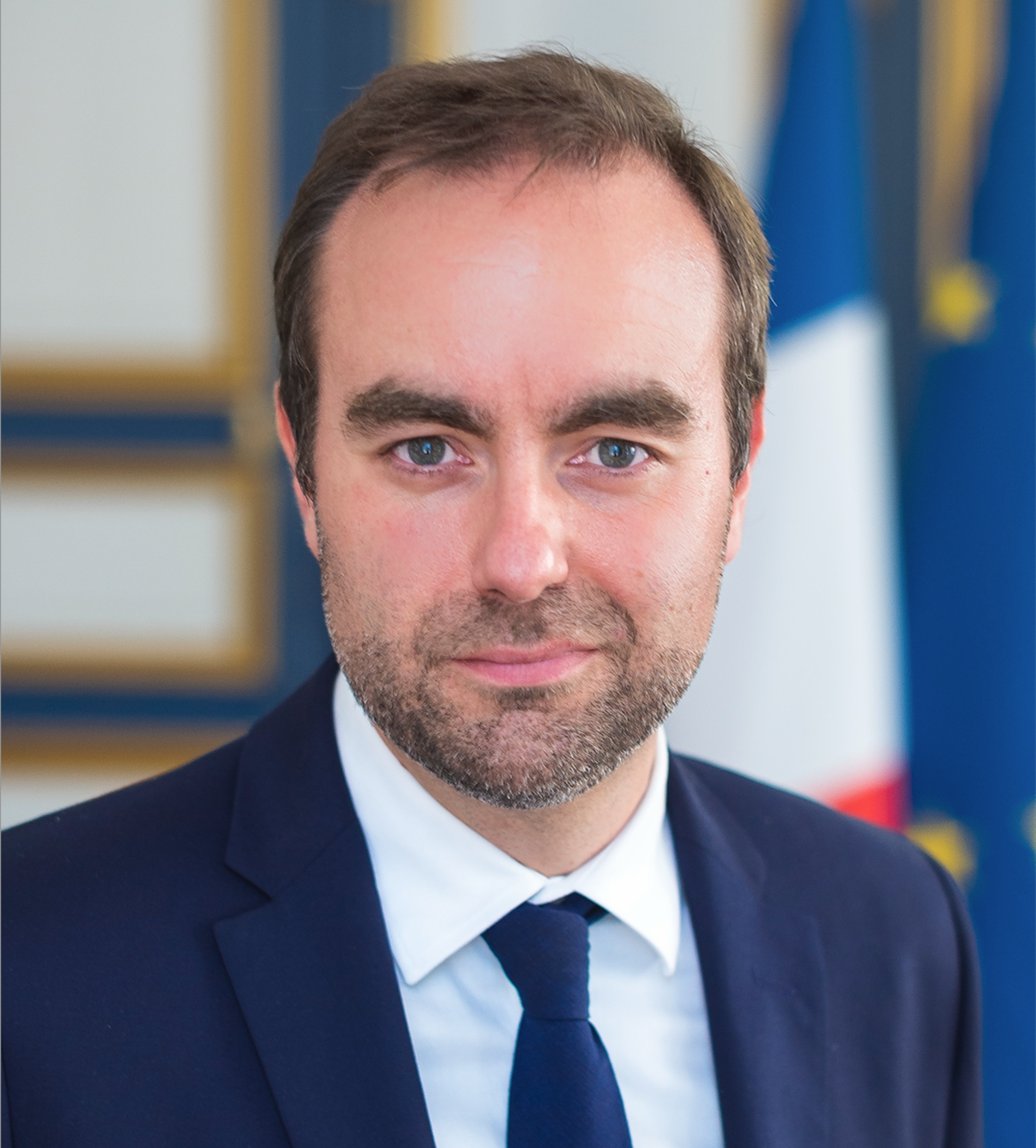
Immediately after the CSDN advisory opinions the new ministers appointed in May after Emmanuel Macron's re-election, armed forces minister Sébastien Lecornu and foreign minister Catherine Colonna, refused to declassify the documents.
When contacted by Mediapart, the Ministry of the Armed Forces did not respond. The Ministry of Foreign Affairs told us that the intergovernmental agreement on the sale of the Rafale aircraft “relates solely to the obligation of the French government to guarantee the delivery and the quality of this equipment”. The ministry added that the “French authorities are complying with the negative opinion given by the Commission du Secret de la Défense Nationale” on the judges' request for declassification of certain documents, but it declined to justify that decision.
This refusal to lift the secret status of the documents, and the wall of silence that surrounds it, is further illustration of the way the French state uses the issue of official secrets to hamper investigations that are too embarrassing. In 2010 the investigating judge Renaud Van Ruymbeke was obliged to drop the case in the affair involving the sale of frigates to Taiwan, despite the payment of huge commissions and very strong suspicions that part of the money paid came back to France and made its way to some politicians. The judge was never able to prove this because his requests for documents to be declassified were refused.
That was also the view of the judge specialising in anti-terrrorism cases, Marc Trévidic, who was in charge of the Karachi affair involving arms sales to Pakistan and allegations of illegal commissions. He came up against the issue of official secrets as soon as he began investigating suspicions that the tragedy - eleven French naval engineers were murdered in a bomb attack in Karachi in 2002 – could be linked to political funding.
“Let's not deceive ourselves: the legal instruments of the French state are designed so that not everything is in the judicial case files,” the judge said in 2011 in an interview with Mediapart.
In the interview the judge laid bare, step by step, the system's absurdity. First of all, the processing of the requests is carried out by the ministries themselves; as the judges do not have the right to see and select the documents, it is the ministries who determine which ones are sent to the CSDN.
“I'm going to reveal something to you: I have never come across, and I mean never, any case in which a single document stamped 'official secret' was declassified, and still less one marked 'top secret'. Only documents stamped 'confidential', the lowest grade of classification, have been provided to magistrates. It's the hypocrisy of the system. They let us read anything which isn't too embarrassing,” said the judge.
Marc Trévidic judged the process “unconstitutional” because the CSDN's advice was merely advisory. “The ability of a judge to get access to a document or a place that is classified depends on an administrative decision, therefore of the executive, and this can be an obstacle to justice. This process doesn't respect the separation of powers.”
To resolve this problem, Marc Trévidic called for the setting up of a truly independent special tribunal that would deal with the declassification of official secrets. Eleven years later, the Rafale affair shows that the situation has not progressed one iota.
-------------------------
If you have information of public interest you would like to pass on to Mediapart for investigation you can contact us at this email address: enquete@mediapart.fr. If you wish to send us documents for our scrutiny via our highly secure platform please go to https://www.frenchleaks.fr/ which is presented in both English and French.
-------------------------
- The original French version of this investigation can be found here.
English version by Michael Streeter