


The Panamanian law firm Mossack Fonseca, at the centre of the Panama Papers revelations, provides a common link between a series of major corruption scandals that have shaken the French political establishment over recent years.
The Panama Papers revelations - the largest data leaks, by volume, in the history of journalism – have revealed how clients of the firm were provided with offshore financial structures that enabled tax evasion and money laundering on a staggering scale. They include past and present heads of state and high-ranking politicians, their families, businessmen, and sports officials, all linked to the 214,000 secretive financial entities made up of trusts, foundations and companies that are exposed in the files dating back to 1977.
The information gathered comes from 11.5 million documents that were first handed to German daily Sueddeutsche Zeitung and which it shared with the International Consortium of Investigative Journalists (ICIJ). The ICIJ mounted an operation in conjunction with 107 media organisations from 76 countries to research through the files over the past year, leading to the first revelations published on Sunday, and which expose the mechanisms by which vast assets, their origins and owners, were hidden from tax authorities.

Enlargement : Illustration 1

Mediapart has gained access to documents that further demonstrate how Mossack Fonseca played a role in numerous recent high-level corruption cases in France. These are the secret bungs paid in French weapons sales to Pakistan and Saudi Arabia, which has become known as the Karachi Affair; the hidden fortune of arms broker Ziad Takieddine, who played a key role in the Karachi Affair and later business and political dealings by the close entourage of former French president Nicolas Sarkozy; the tax evading foreign accounts held by former French budget minister Jérôme Cahuzac; a corruption scam involving the allocation of public sector contracts in Corsica and southern France, and the hidden assets of conservative politicians Patrick and Isabelle Balkany.
In all of these cases, Mossack Fonseca appears to be a key player in dissimulating the origins and destination of the secret gains, and to hide the identities of the beneficiaries.
- THE KARACHI AFFAIR
It seems that, just like with submarines, the truth in this complex case that dates back more than 20 years, will eventually find its way to the surface.
In the case of the Karachi Affair (see a guide to the background here), centred on the sale of three Agosta-class submarines sold to Pakistan in 1994 by the conservative French government of then-prime minister Edouard Balladur, the Mossack Fonseca law firm appears as the “domiciliation agent” for a Panamanian company which a French judicial investigation has identified as playing a central role in the siphoning-off of kickbacks paid in the deal.
The Panamanian company in question, Mercor Finances Inc., which was set up on April 21st 1994, received 133 million French francs (then the currency in circulation, equivalent to about 27 million euros) that were secret commissions paid out by the French national naval construction firm Direction des Constructions Navales (DCN).
There is mounting evidence that those kickbacks, called retro-commissions, found their way back to France where they were secretly –and illegally – used to fund Edouard Balladur’s bid for the presidency.
The true owner and financial beneficiary of Mercor Finances Inc, and whose identity was initially protected through the role played by Geneva lawyer Hans Ulrich Ming, was Abdul Raham el-Assir.
El Assir was at the time an associate of Ziad Takkiedine, a Paris-based arms broker (see further below) and businessman who served as the principal intermediary in a number of weapons sales mounted by Balladur’s entourage and later that of Nicolas Sarkozy.
Takkiedine and El Assir were imposed, at the last minute, as intermediaries in the deal with Pakistan, and also in a parallel sale of French frigates to Saudi Arabia, by the Balladur government. They were to receive secret cash kickbacks which an ongoing judicial investigation into the affair suspects were used to fund Balladur’s campaign in presidential elections in 1995, when he launched a rival bid against the principal conservative candidate, Jacques Chirac. At the time, Balladur’s budget minister Nicolas Sarkozy acted as his campaign spokesman.

Enlargement : Illustration 2

The 133 million francs paid to Mercor represented 60% of the total sum in kickbacks promised to Takieddine and his associates over the sale of the three submarines to Pakistan. Domiciled in Panama, Mercor opened an account in 1994 with the VWP bank in Lichtenstein. In an effort to better hide the transaction, the DCN transited the payment to Mercor via the tax havens of Luxembourg and the Isle of Man before it arrived in offshore accounts.
The accounting records of Mercor Finances Inc. show that of the 133 million francs paid by the DCN, 24 million francs were subsequently paid into a company owned by Ziad Takieddine. Meanwhile, another 55 million francs were destined for Asif Ali Zardari, then husband of the late Pakistani prime minister Benazir Bhutto (who was assassinated in 2007), and who became president of Pakistan between 2008 and 2013.
- THE TAKIEDDINE AFFAIR
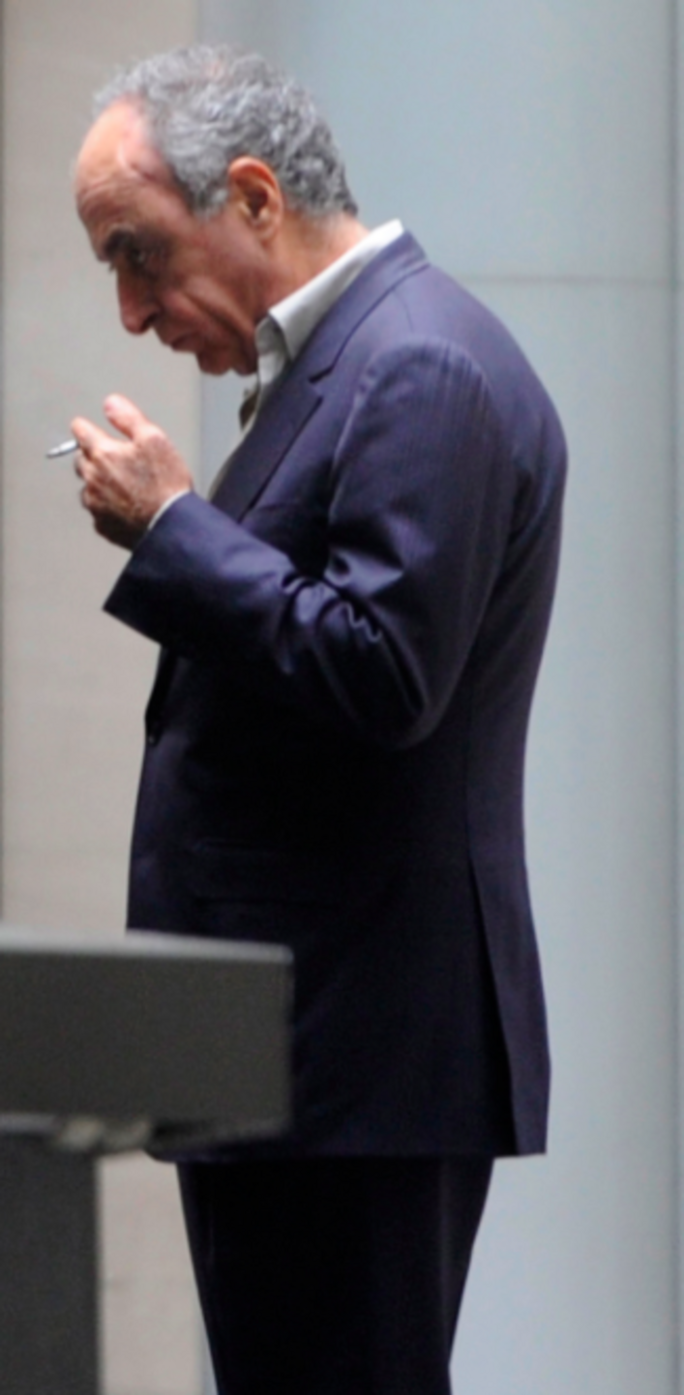
Following the role he played for the Balladur government, Ziad Takieddine was to become an active intermediary in both weapons sales and diplomatic negotiations for the staff of Nicolas Sarkozy, beginning when Sarkozy was appointed interior minister in 2002. Mediapart has published a lengthy series of investigations that reveal Takieddine’s key role in Sarkozy’s dealings with the Libyan regime of the late dictator Muammar Gaddafi, as well as with Syria, and the close relations he maintained with leading conservative politicians in Sarkozy’s circle (see more here) and which eventually led to the opening of a judicial investigation.
Enlargement : Illustration 3

It was the bitter divorce proceedings in 2007 between Takieddine and his British wife Nicola Johnson that pushed the arms broker closer to Panama and Mossack Fonseca. He had already concealed much of his property ownership, but had been advised that he was not sufficiently protected from a potential seizure of his assets and to avoid this he should set up Panama-based foundations. A company called Alveston International SA was created to act as owner of two Luxembourg-based companies, Illor I and Illor II, which themselves became owners of SCI Lamartine, a property firm that was the named owner of Takieddine’s plush town house in central Paris, at number 40, Avenue Georges-Mandel.
Meanwhile, a company based in the British Virgin Islands, called Warwick and which was officially the owner of his London house in Holland Park, was taken over by a Panama firm called Arcos Assets, and in turn became part of Alveston International.
Takieddine was advised that all of his assets should be placed under the management of the Saudi bank Al Ahli, where he duly placed the Alveston International shares. In 2009, to further protect himself, Takieddine transferred ultimate ownership of all his assets to a newly-created Panamanian company called Perford International, domiciled with law firm Mossack Fonseca.
In early 2009, Takieddine became involved as an intermediary for French oil giant Total in its negotiations for a gas field contract in Libya with the regime of the late Libyan dictator Muammar Gaddafi. He set up a new company for payment of the commissions he was to receive, called the North Global Oil & Gas Company Ltd. Domiciled in the British Virgin Islands, it was managed from Panama by Mossack Fonseca. In May 2010, the North Global Oil & Gas Company Ltd was paid 7.7 million euros, via an account in the Lebanese capital Beirut, for its rights to a Libyan gas field situated in the west of the country, in the Ghadames Basin, close to the borders with Algeria and Tunisia.
In a statement given to a French judicial investigation, Takieddine claimed to have been only a representative of the North Global Oil & Gas Company Ltd, and that his associates were Libyan “businessmen”, among whom figured the son of Gaddafi’s oil minister, the late Shukri Ghanem (whose body was found in Vienna in the river Danube in April 2012).
Other offshore companies managed by Mossack Fonseca on behalf of Takieddine - Donover Limited in the Bahamas and the Sohta Foundation in Lichtenstein - have been identified by French investigators, although their precise role has not been established.
- THE GUÉRINI AFFAIR
Enlargement : Illustration 4

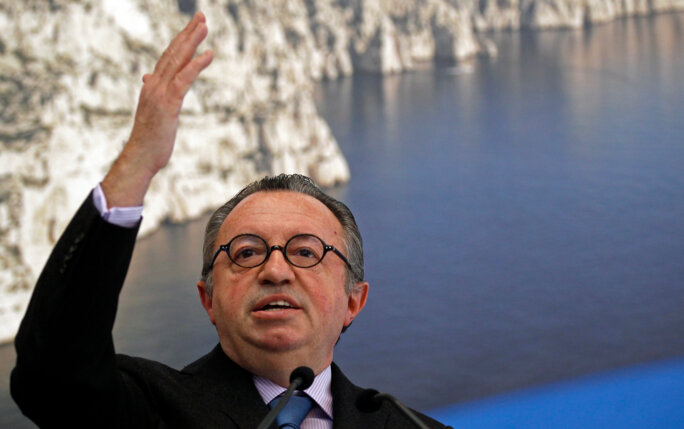
Mossack Fonseca is also implicated in an ongoing judicial investigation in Marseille into a network of corruption surrounding rigged waste management and disposal contracts in the Bouches-du-Rhône département (county) in which the Mediterranean port lies, and on the nearby island of Corsica.
The case centres on a Marseille businessman Alexandre Guérini, brother of socialist Senator Jean-Noël Guérini who was, at the time of the alleged events, president of the Bouches-du-Rhône general council. It is alleged that Alexandre Guérini used his political contacts to obtain lucrative waste disposal contracts with local authorities on behalf of a number of companies owned by two associates, Bernard Barresi and Patrick Boudemaghe.
Mediapart has had access to documents from the judicial investigation which show that millions of euros from the profits of the waste disposal and management contracts were pumped into offshore companies set up by Mossack Fonseca.
The money laundering of the profits apparently involved false invoicing by a construction firm owned by Boudemaghe, ABT, and another firm, Alba Sécurité, owned by Barresi. These allowed the transfer of funds to accounts in Luxembourg held by Boudemaghe, Barresi and their associates, whose identities were hidden by Panamanian shell companies. Most of these shell companies were created by Mossack Fonseca lawyers, including Boudemarghe’s Delta Real Estate Group, which is headquartered at the same Panama City address as Mossack Fonseca. The law firm is also behind the creation of Barton Alliance, a shell company belonging to Jean-Marc Nabitz, a former head of a semi-public consortium acting for the Bouches-du-Rhône council and a close ally of Alexandre Guérini, and who now lives in Israel.
The judicial investigation has found Mossack Fonseca was notably involved in the financial structures set up around the management of a highly profitable waste disposal site at la Vautubière, north of Marseille. The investigation has established that the company running the site was the object of what it describes as “fictitious buyouts” organised by Alexandre Guérini to siphon off cash sums to Luxembourg. In 2006, he bought out the shares of two Panamanian companies in the site for 8 million euros. The companies, Tareo and Farman, belonged to à Nabitz and Boudemaghe. Two years later, the waste disposal site was sold to another Panamanian company, Satellite Astro Corporation, owned by Guérini.

Enlargement : Illustration 5

The shell companies Tareo and Farman, along with another owned by Bernard Barresi, called Deliboz, were all created by Mossack Fonseca to hide the true identities of the men holding accounts with the Luxembourg bank BSI. The investigation has found that Mossack Fonseca had worked hand-in-hand with a Luxembourg lawyer who managed the accounts of several of those implicated in the waste disposal scams.
- THE CAHUZAC AFFAIR

Enlargement : Illustration 6

French judges Renaud Van Ruymbeke and Roger Le Loire, specialized in financial crime investigations, discovered the presence of Mossack Fonseca in the secret financial entities used by disgraced former socialist budget minister Jérôme Cahuzac to hide his wealth abroad.
In December 2012 Mediapart revealed that Cahuzac had held a secret tax-dodging bank account in Switzerland for more than 20 years. Cahuzac, then leading a loudly trumpeted crackdown on tax evasion, first vehemently denied ever holding a bank account abroad until early April 2013, when he finally admitted the scam, confirming Mediapart’s investigations.
A judicial investigation was opened, headed by judges Van Ruymbeke and Le Loire, which led to Cahuzac being charged with tax evasion and money laundering. His trial finally opened in February, but was immediately postponed pending Cahuzac’s appeal against the legality of the charges leveled against him.
The investigation found that several Seychelles-based companies were used by Cahuzac to transfer, in 2009, about 600,000 euros from his account in Switzerland, managed by the banks UBS and Reyl, to another in Singapore. One of them, Cerman Group Ltd, was created by Mossack Fonseca.

Enlargement : Illustration 7

The Panama Papers revelations this week include a letter dated May 3rd 2013 (see above) in which the Panamanian law firm clearly recognised its role in the creation of Cerman Group Ltd, whose “ultimate end user” was Jérôme Cahuzac.
- THE BALKANY AFFAIR
Patrick Balkany, 67, is a Member of Parliament (MP) for a constituency in Levallois-Perret, a suburb west of Paris, of which he is also mayor and where his wife Isabelle, 68, is deputy mayor. A longstanding ally of Nicolas Sarkozy’s, Balkany’s long reign as mayor of Levallois-Perret (firstly from 1983-1995 then from 2002 to date) has been marked by corruption and scandal.
In 1996 he was given a suspended jail sentence, a fine and a two-year ban on holding public office after it was discovered that three town hall employees, paid out of public funds, were used as full-time domestic staff by him and his wife in their Levallois-Perret apartment home and Normandy mansion. Isabelle Balkany was handed the same sentence.
In an ongoing judicial probe into his financial affairs, Balkany has been placed under investigation (a French legal status one step short of being charged, but which indicates “serious and concordant” evidence of criminal activity) for tax fraud, corruption, money laundering and giving a false declaration of his wealth in the MPs’ register of assets. Isabelle Balkany is also placed under investigation for money laundering in the probe, which is led by judges Renaud Van Ruymbeke and Patricia Simon.
Part of the investigation centres on their undeclared ownership of a luxurious villa in the Moroccan town of Marrakesh. The Balkany couple have insisted that they rent the property, Dar Gyucy, which is officially owned by a Panama-based company called Hayridge Investment Group Corp., registered in Panama in 2007 by Mossack Fonseca (see document below).

In 2014, judges Van Ruymbeke and Simon established that the shell company hides the identity of a close associate of Patrick Balkany’s, Jean-Pierre Aubry, who bought the property. Aubry became the head of Hayridge via a Geneva-based company, Gestrust SA, which was the official administrator of the Panamanian shell company.
The magistrates, in cooperation with the Moroccan authorities, requested a police search of the Marrakesh villa last summer, when a number of personal objects belonging to the Balkany pair were found, and a witness statement given that Isabelle Balkany had personally chosen the property’s garden furniture.
Paris lawyer Arnaud Claude, a partner with Nicolas Sarkozy over many years in a legal practice (Claude & Sarkozy), has also been placed under investigation on suspicion of helping in establishing the off-shore tax evasion structures linked to Patrick and Isabelle Balkany.
-------------------------
- The French version of this article can be found here.
English version by Graham Tearse