


The active investigations in an unprecedented nine-year judicial probe into the suspected illegal funding by the Gaddafi regime of former French president Nicolas Sarkozy’s 2007 election campaign drew to a close this month, leading to a second legal phase before charges can be brought and a trial ordered.
The different parties to the case were notified on October 21st of the end of the judicial investigations. The case has now been passed on to the public prosecution services for their deliberations, after which the magistrate in charge of the investigations, first led by Judge Serge Tournaire and now by Judge Aude Buresi, will take the final decision on who should stand trial.
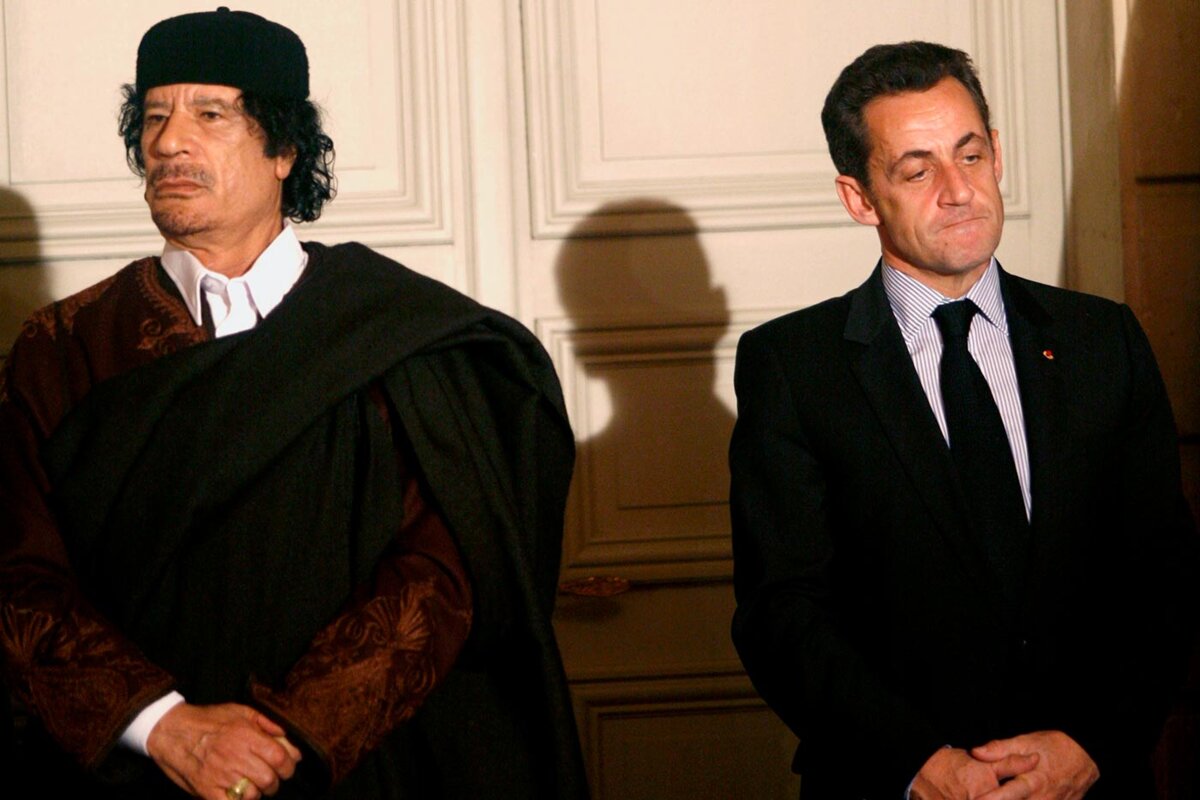
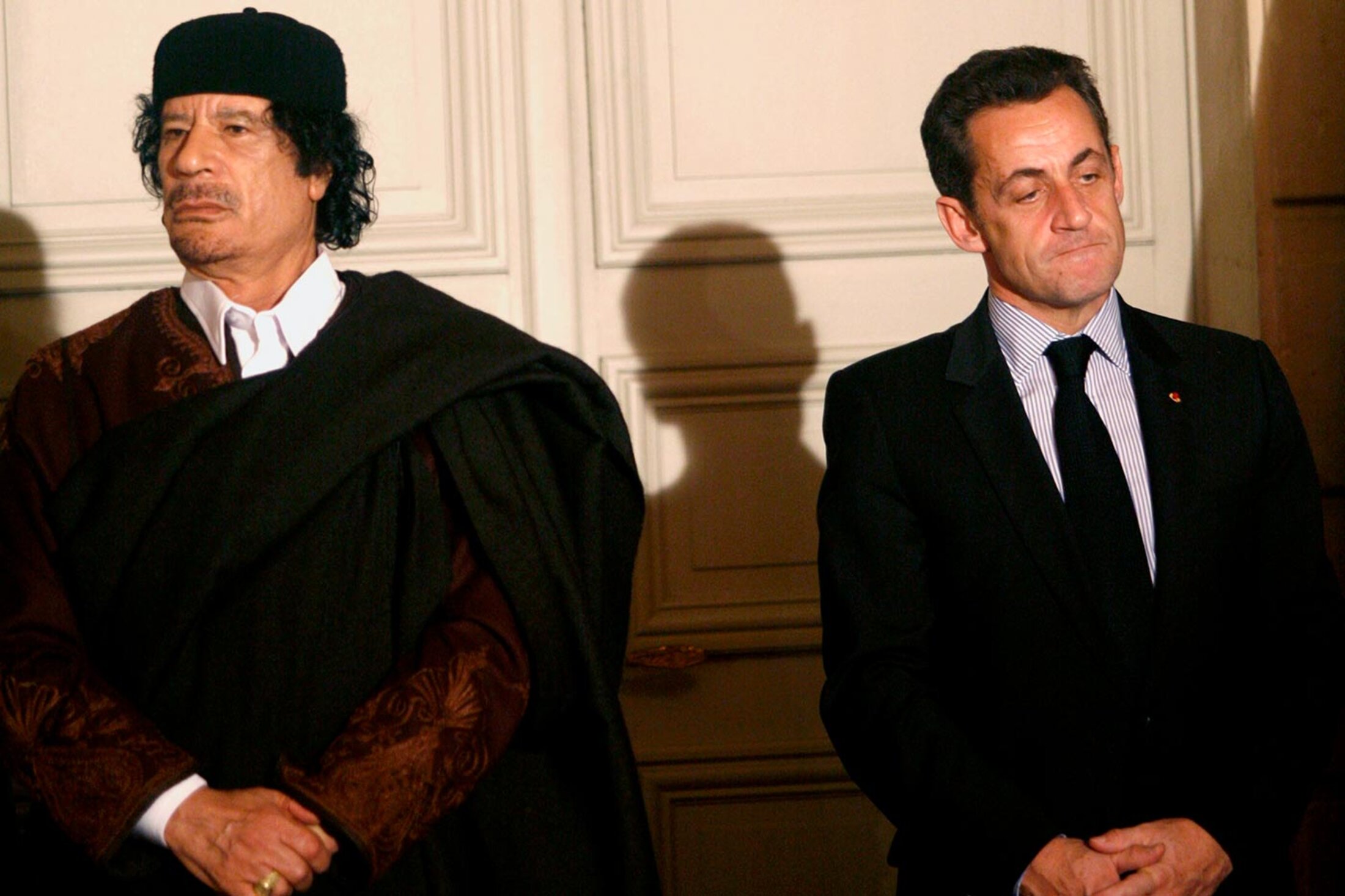
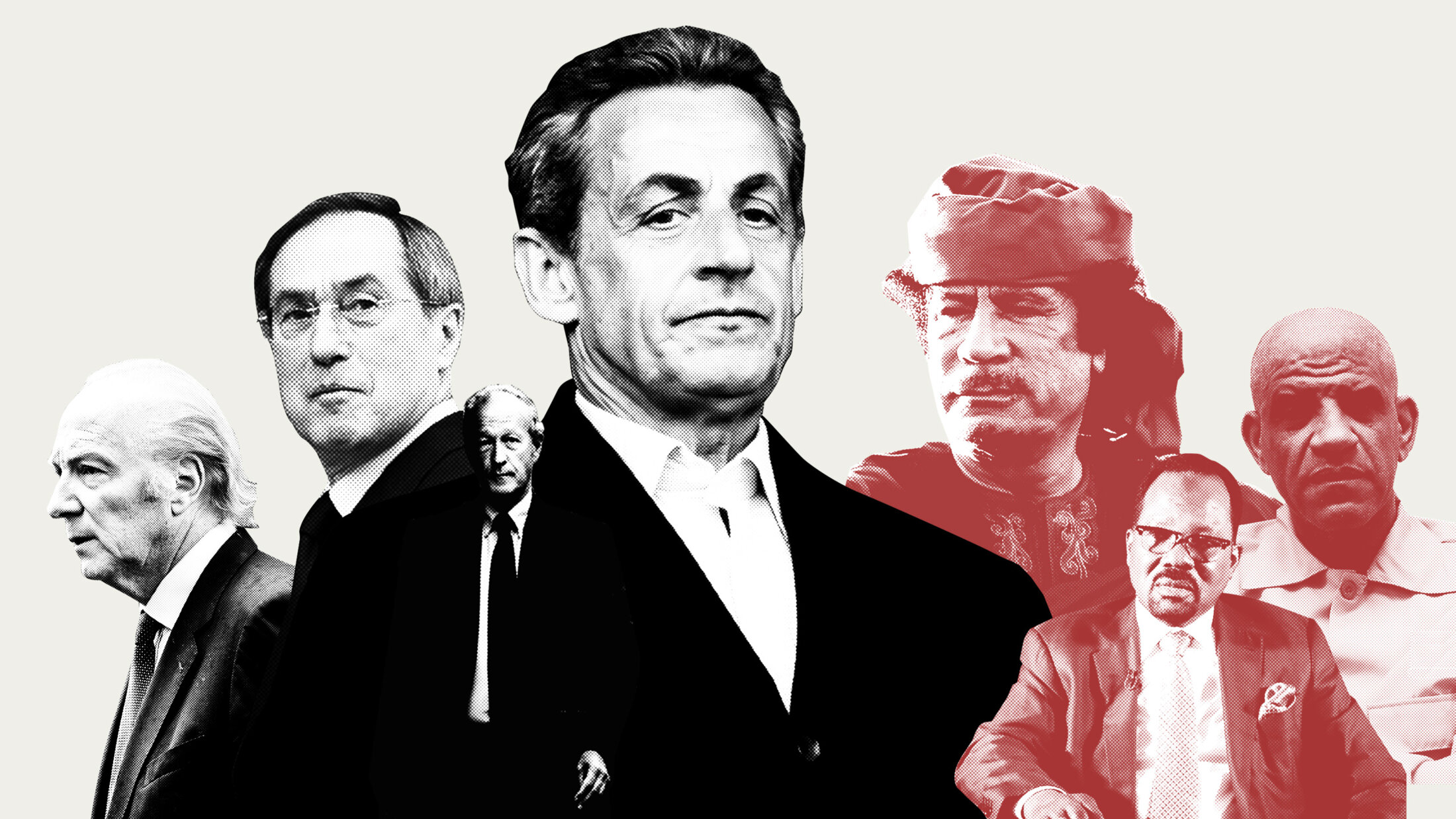
Those identified as the principal suspects in the case notably include Sarkozy and three of his former ministers, who have all been formally “placed under investigation” for their suspected roles in the alleged corruption scam, the elements of which span from the murky backrooms of French politics and parallel diplomacy, to the shady world of immoral intermediaries and the unsavoury workings of the regime of the late Libyan dictator Muammar Gaddafi, which was finally toppled in 2011.
Enlargement : Illustration 1
Under French law, a person can only be placed under investigation if the magistrates in charge of the probe can justify serious or corroborating evidence that they committed a crime. It is only at the very end of a judicial investigation that the magistrates decide whether to charge them and send them for trial, or not.
In the Libyan funding probe, a total of 13 people remain under investigation. In the case of Sarkozy, 67, he has been placed under investigation for “corruption”, “criminal conspiracy”, “illegal financing of an election campaign” and “receiving the proceeds of the misappropriation of public funds”.
The former president vigorously denies any wrongdoing.
Brice Hortefeux, 64, and Claude Guéant, 77, both long-serving close allies of Sarkozy who were successively appointed to the post of interior minister during his 2007-2012 presidency, are both placed under investigation for “criminal conspiracy” and “illegal financing of an election campaign”.
In the case of Guéant, who was Sarkozy’s chief of staff at the time of the alleged events, when the latter was himself interior minister, he has also been placed under investigation for “corruption”, “money laundering”, “forgery and use of forgery”.
Éric Woerth, 66, who was Sarkozy’s 2007 election campaign treasurer, and who was appointed immediately after Sarkozy’s election as budget minister, and later as labour minister, is placed under investigation for “illegal financing of an election campaign”. Woerth, a Member of Parliament, is currently the “quaestor” – the administrative and financial officer – of the National Assembly, the lower and most powerful of the French parliament’s two houses.
All three also deny wrongdoing.
Thierry Gaubert, 71, another of Sarkozy’s loyal political allies, whose professional relationship with the latter began in the early 1980s, is placed under investigation for “criminal conspiracy”.
Under French law, all those placed under investigation benefit from a presumption of innocence unless proved guilty in a court of law.
Almost all of those who have been placed under investigation in the probe have challenged the legal justification of the moves, which some have attempted to have overturned by claiming procedural errors. But in every one of these cases, brought over recent years before both the Paris appeal court and France’s highest appeal court, the Cour de cassation, their claims have been dismissed, and every stage of the investigation has been validated.
Now that the active investigations are at an end, the public prosecution services, in this case the financial crimes branch, the PNF, have three months to advise what and who should be the subject of prosecution proceedings. At the end of that process, the magistrates in charge of the case have the final word. During this second legal phase, those placed under investigation can request further enquiries – if they believe these would be advantageous to them – which can be refused if they are considered to be unjustified.
The future is becoming increasingly clouded for Nicolas Sarkozy who, despite two recent convictions, has continued to wield political influence, both among his conservative camp and with President Emmanuel Macron. In two separate cases which are unconnected with the Libyan funding allegations, Sarkozy was last year convicted of corruption and influence peddling for seeking to bribe a judge, and for illicit campaign financing in relation to his failed 2012 re-election bid. Sarkozy has appealed both convictions, which carry jail sentences that, under French law, are automatically suspended during the appeal process. In the first of those two cases, his re-trial on appeal is due to open next month.

Enlargement : Illustration 2
In a lengthy interview with French weekly Le Journal du dimanche (JDD) and published on October 23rd, the former president (who sits on the board of directors of the group that owns the weekly) was asked how heavy the weight of his legal woes was. “That was the aim, no?” he said in a sideways reply, reiterating his previous suggestions that he is the victim of a witch-hunt by the judiciary. In a previous interview with French daily Le Figaro he compared the French police anti-corruption branch, OCLCIFF, which was the unit assigned to the judicial investigation into the Gaddafi funding allegations, with the Stasi, the notorious state security service of the former East Germany.
Under questioning in October 2020 by magistrates leading the judicial investigation, Sarkozy even disassociated himself from his two closest aides, Claude Guéant and Brice Hortefeux, describing their dealings with Libya as “incomprehensible” and an “error”, in a vain attempt to remove suspicions over his own role.
As the case stands now, two networks, operated by different people and at different stages, appear at the heart of the illegal funding allegations.
The Takieddine-Senussi network
Ziad Takieddine, 72, is a Lebanese-French business intermediary who acted as a fixer for the contacts and dealings between the Gaddafi regime and Sarkozy’s close political aides, with whom he had begun working in the early 2000s.
Between 2002 and 2007, Sarkozy served as a minister under the second presidency of fellow conservative Jacques Chirac, first as interior minister, then briefly as economy and finance minister in 2004, before he was re-appointed, in 2005, as interior minister. During that five-year period, Sarkozy was openly preparing his future bid for the presidency, while Paris-based Takieddine took on a key role with Sarkozy’s aides as an intermediary in business and political contacts with Arab countries.
One of two networks identified by the judicial probe into the alleged Libyan funding was built around Takieddine, who now lives on the run in his native Lebanon after he was handed a five-year jail term by a French court in 2020 for his part in a separate political funding scam. It was Takieddine who, as of 2005, organised in fine detail the trips made to Libya by Sarkozy, then interior minister, by his chief of staff Claude Guéant, and by Brice Hortefeux, Sarkozy’s close friend and ally who was at the time a junior minister for local authorities at the interior ministry. According to witness statements given to the judicial investigation, it was during a lightening visit to Tripoli by Sarkozy on October 6th 2005 that the ground was laid for the future financing of his presidential bid by the Gaddafi regime.
In his manoeuvres to bring Sarkozy’s team and the dictatorship in Tripoli together, Takieddine approached Gaddafi's brother-in-law and security chief Abdullah Senussi. But this was a dangerous card to play: in 1999, Senussi had been handed a life sentence by a Paris court, in his absence, for his part in the 1989 bombing of a French UTA airline DC10 passenger plane over Niger, in which 170 people lost their lives, including 54 French nationals.
But in September and in December 2005, Guéant, the French interior ministry's chief of staff, and Hortefeux, a French junior minister, separately met secretly with Senussi, despite his conviction and an international arrest warrant issued against him. During the meetings neither Guéant nor Hortefeux were accompanied by any French diplomat, nor security guard, nor translator, but were accompanied by Ziad Takieddine.
In statements given to the judicial investigation, several senior French diplomats and intelligence officials have spoken of their astonishment that such senior officials could have held amiable talks with a wanted terrorist, as well as denouncing the conditions in which the meetings were organised.
Both Senussi, who is today detained in Libya, and Takieddine have told the French investigation that the two meetings were centred on the prospect of secret funding by Tripoli of Sarkozy’s future presidential election campaign. Guéant and Hortefeux, under questioning, have denied those accounts. But they have not given precise reasons for the meetings, and have claimed that they had fallen into a trap – although that version would mean that Guéant did not warn Hortefeux of this, while the investigation has established that neither of them raised the matter with their respective administrations.
The probe has also established how, in early 2006, shortly after the December 2005 meeting between Hortefeux and Senussi, Ziad Takieddine transferred 440,000 euros onto a secret bank account in The Bahamas belonging to Thierry Gaubert, Sarkozy's close friend and political ally throughout the latter’s political ascension. The sum was sent from a Takieddine-owned offshore company, Rossfield Limited, which had earlier received a transfer of 2 million euros from the Gaddafi regime on the order of Senussi. Part of the sum received by Gaubert was subsequently withdrawn in cash in France.
Sarkozy has insisted, both in statements he gave to the judicial investigation and in comments made to the media, that he has nothing to do with the secret payment to Gaubert, and in separate interviews with the press he claimed he had had no contact with Gaubert since the mid-1990s. However, an examination of Gaubert’s seized computer hard disk suggest the contrary, as Mediapart recently reported (see here and here).
Cryptic notes in Gaubert’s computer archives show the two men continued to be close during and after the key period of the contacts with the Gaddafi regime. The initials “NS” appear on several of the notes, including one dated January 23rd 2006, two weeks before the transfer of the 440,000 euros into Gaubert’s secret bank account in The Bahamas, in which he wrote “NS-campaign”, while others refer to “ZT”, which appears to designate Ziad Takieddine, from whom messages concerning Libya are also recorded on the hard disk.
Meanwhile, the judicial investigation has established how Sarkozy’s aides, notably Sarkozy’s personal lawyer, Thierry Herzog, along with Claude Guéant, strived, between 2005 and 2009, to find a legal loophole for overturning the international warrant for the arrest of Senussi, who placed great importance on the issue. Herzog even travelled to Tripoli, in November 2005, to meet with Senussi’s legal advisors to discuss the subject. When he was formally questioned about the moves to overturn the arrest warrant against Gaddafi’s henchman, Herzog refused to answer, citing professional confidentiality.
The investigation has also found that in May 2009, two years into Sarkozy’s presidency, Takieddine had an appointment at the Élysée Palace with Guéant, then secretary general of the presidential office, for further discussions on getting the arrest warrant dropped.
Along with the records of transfers into bank accounts, the judicial probe has also gathered ample evidence of cash withdrawals. Takieddine has recounted how he transported in suitcases a total of 5 million euros in cash from Tripoli to Paris. He said he handed part of the total over to Guéant on two separate occasions, and that he gave another part directly to Sarkozy on another occasion. Both Guéant and Sarkozy have vigorously denied the claim. Sarkozy, during questioning by Judge Aude Buresi, said that the records of his diary contained the proof that Takieddine’s account of directly handing him the cash, suspected of taking place at the end of January 2007, was physically impossible. But shortly afterwards, when he was due to hand the diary, and others, over to the magistrate, Sarkozy told her, via his lawyer Thierry Herzog, that he was unable to because he had mislaid them.
Amid the claims and counter-claims, the probe has found the evidence that during the course of 2006 Takieddine withdrew cash sums, notably from an account in Geneva, totalling more than 1 million euros and which came from funds transferred by the Gaddafi regime.
References to payments made by Tripoli for Sarkozy’s campaign were found in a notebook belonging to Shukri Ghanem, who was Libyan prime minister from 2003 to 2006 and subsequently the country’s oil minister up until the toppling of the Gaddafi regime in 2011, when Ghanem fled to Austria. The notebook, handwritten in Arabic, was discovered after Ghanem’s body was found in April 2012 floating in the River Danube in Vienna (Austrian police considered the theory that he had been assassinated, but later concluded he had drowned following a heart attack). The notebook, which was handed to the French investigation, contained Ghanem’s account of meetings he had attended with senior members of the Gaddafi regime and which detailed separate payments made in favour of Sarkozy’s campaign, and which totalled 6.5 million euros.
An audit carried out in 2019 of official, available records of spending on Sarkozy’s 2007 campaign found evidence that several hundred thousand euros in cash was left over at the end of the election, pointing to a vast circulation of cash during the campaign itself. The campaign treasurer was Éric Woerth, who Sarkozy, after his election, appointed as budget minister and later labour minister. Questioned about the cash sums in circulation, Woerth, who was this year appointed as administrative and financial officer of the French parliament, told the investigation that they came from money sent in envelopes to the campaign by Sarkozy's supporters. In a summary of his testimony, the anti-corruption police assigned to the judicial investigation described Woerth’s explanation as “specious”.
Adding to suspicions over the cash was the discovery that, during the campaign, Guéant had rented a large vault – big enough for an adult to stand upright in – at a central Paris branch of the BNP bank. Questioned about the purpose of the vault, Guéant told investigators that it was for storing confidential archives and the texts of Sarkozy’s speeches.
The Djouhri-Saleh network
In parallel to Takieddine, the other key intermediary in the alleged Libyan funding is businessman and wheeler-dealer Alexandre Djouhri, 63, who has also been close to Sarkozy for many years, and who edged into the space once occupied by Takieddine. The two men, who were bitter rivals, are both placed under investigation in the judicial probe, notably for “corruption” and “criminal conspiracy”.
Djouhri’s influential contact within the Gaddafi regime was Bashir Saleh, who served as chief of staff to Gaddafi and who was also the head of Libya’s multi-billion-dollar Libyan African Investment Portfolio (LAIP), part of the country’s sovereign wealth fund.
In early June this year, Judge Aude Buresi travelled to Tripoli, accompanied by a senior officer of the French police anti-corruption branch, and a magistrate from the French public prosecution services’ financial crime branch, the PNF, to meet with Libyan public prosecutor Omar Askilih. The latter gave them an account in Arabic of statements given to Libyan prosecutors by Saleh and Gaddafi’s former personal secretary, Ahmed Ramadan, which was then translated into French and recorded in an official document now added to the case file of the French investigation.
The Libyan prosecutors had separately questioned Saleh and Ramadan in the framework of an international judicial cooperation agreement with the French.
Prosecutor Askilih said that in his statement, Saleh, who had previously claimed that the funding allegations were “invented”, admitted that “he had heard that Nicolas Sarkozy had asked Muammar Gaddafi to help him with his campaign” during Sarkozy’s October 6th 2005 meeting with Gaddafi, and that “Muammar Gaddafi replied to Nicolas Sarkozy […] ‘If my friend Chirac does not stand, I am ready to help you’.” That account has been corroborated by several former Libyan civil servants who were in post at the time.
Askilih told the French investigators: “Bashir Saleh [allegedly] confided to Ahmed Ramadan that he had, for his part, given at the same time 8 million euros to Claude Guéant in France. He reportedly used funds coming from the LAIP [sovereign wealth fund]. These funds were reportedly transported to France in a special flight from Tripoli. During this transfer, Bashir Saleh was accompanied by Nouri al-Abahni [head of Gaddafi’s financial bureau]. This transfer was made a little while after the receipts [were issued]. It was during the presidential campaign in France.”
Saleh, 76, who has been dubbed “Gaddafi’s banker”, is the subject of an international arrest warrant issued by France in relation to judge Buresi’s investigations. She notably wants to question him over a payment of 10.1 million euros out of LAIP funds in 2008 to a Panama-registered company belonging to Djouhri. The payment was supposedly for the purchase of a villa in Mougins, in southern France, which in fact had a value of just a fifth of that amount.
Djouhri is suspected of using the funds to hand 500,000 euros to Claude Guéant, then secretary general of the Élysée Palace, for his purchase of an apartment in central Paris. Guéant, whose bank details were found during a search of Djouhri’s home, had first claimed that the sum was from his sale of two oil paintings, which experts later declared were worth nowhere near the sum. Djouhri is also suspected of having offered a luxury Patek Philippe watch to Guéant (who, in a separate case, was found guilty in 2017 - and again on appeal in 2019 - of embezzling public funds when he served as Sarkozy’s chief of staff while the latter was interior minister between 2002 and 2004).

Enlargement : Illustration 3

The 10.1 million euros were sent to Djouhri by Saleh in March 2008. Just months earlier, In December 2007, Gaddafi had been welcomed to France by Sarkozy, who rolled out the red carpet for a six-day state visit by the dictator, an invitation that caused uproar among opposition parties and rights groups and which was even publicly criticised by a junior minister in Sarkozy's government.
The judicial investigation suspects that in return for the 500,000 euros, Guéant put pressure on aerospace group EADS for the payment to Djouhri of outstanding secret commissions he was demanding over the sale in 2006 of Airbus passenger aircraft to the Gaddafi regime.
According to statements given to the judicial investigation by several former Airbus managers, Djouhri had no contractual agreement of any sort for the sales. But Judge Buresi’s investigation established that an account opened by Djouhri with a Singapore branch of the Swiss bank UBS was credited with a sum of 2 million euros in November 2006, three weeks after the sale of the Airbus planes to Libya. Over following years, Djouhri demanded that EADS pay him at least another 10 million euros.
The discovery of that 2006 payment led to Édouard Ullmo, a former vice-president of regional business development at Airbus, being placed under investigation earlier this year for corruption, criminal conspiracy and money laundering. Mediapart has been told by sources that the company, which could be forced to recognise its responsibility in the case, is preparing to sign a settlement with the French prosecution services. Contacted by Mediapart, Airbus declined to comment on the case.
Meanwhile, the judicial investigation into the Libyan funding allegations established that Djouhri played a key role in an operation organised in May 2012 by Bernard Squarcini, then head of the French domestic intelligence service under Sarkozy, to smuggle Bashir Saleh out of France.
Saleh had fled to France after the overthrow of Gaddafi, and as of March 2012 he had been the subject of a ‘red notice’ issued by Interpol for his arrest pending an eventual extradition back to Libya, where he was wanted by the country’s new authorities on charges of fraud, misappropriation of public funds and abuse of power.
On May 3rd 2012, in between the two rounds of voting in that year’s presidential elections, when Sarkozy was standing for re-election (but fianlly defeated), Saleh was secretly smuggled out of France by plane to his native Niger, before settling in South Africa. Importantly, the operation was carried out just days after the revelation by Mediapart on April 28th 2012 of a document recovered from the archives of the then-toppled Gaddafi regime which detailed its agreement to fund Sarkozy’s 2007 presidential election campaign. The document was signed by Gaddafi’s intelligence chief Moussa Koussa and addressed to Saleh.
Questioned by the investigation on the subject of the removal from France of Saleh, a potential key witness in the case, Sarkozy has insisted that he knew nothing about the conditions in which it was carried out, even though at the time his loyal chief of staff Guéant had been promoted by him to the post of interior minister.
-------------------------
- The original French version of this report can be found here.
English version by Graham Tearse
-------------------------
If you have information of public interest you would like to pass on to Mediapart for investigation you can contact us at this email address: enquete@mediapart.fr. If you wish to send us documents for our scrutiny via our highly secure platform SecureDrop please go to this page.
-------------------------