Poste culture. Journaliste à Mediapart depuis sa création, en 2008. Correspondant à Bruxelles sur les affaires européennes (2011-2017), puis reporter, au sein du service international à Paris (2018 - 2025). Co-programme la case « documentaire » chaque samedi sur Mediapart. Toujours en veille sur l’Espagne et l’Argentine.
Ai publié un guide sur l'Argentine (La Découverte, 2011), un essai sur les politiques espagnoles nées du mouvement « indigné » du 15-M (Squatter le pouvoir, Les mairies rebelles d'Espagne, Editions Lux, 2016) et un autre sur l'architecture du quartier européen à Bruxelles (Bruxelles chantiers, Une critique architecturale de l'Europe, Lux, 2018).
Mail : ludovic.lamant[@]mediapart.fr
Declaration of interest
In the interest of transparency towards its readers, Mediapart’s journalists fill out and make public since 2018 a declaration of interests on the model of the one filled out by members of parliament and senior civil servants with the High Authority for Transparency and Public Life (HATVP), a body created in 2014 after Mediapart’s revelations on the Cahuzac affair.
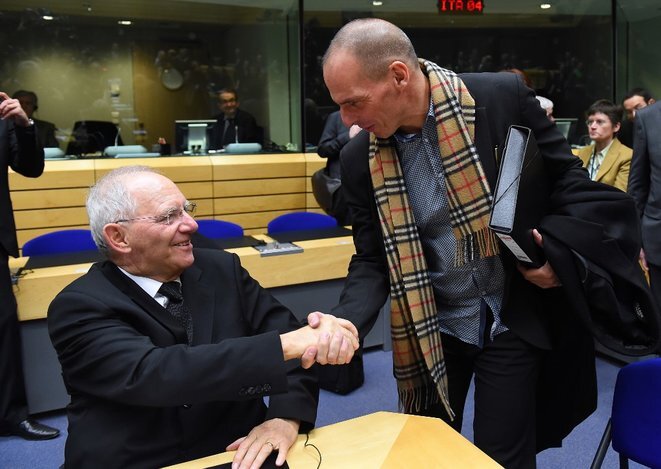
Mediapart has obtained access to secret sound recordings made by former Greek finance minister Yanis Varoufakis of his negotiations with eurozone finance ministers and representatives of the IMF, ECB and the European Commission at the height of the Greek debt crisis in 2015. The 15 hours of recordings offer a sometimes disturbing insight into the tense, closed-door, informal talks aimed at deciding the fate of a nation that was being brought to its knees. Ludovic Lamant reports.
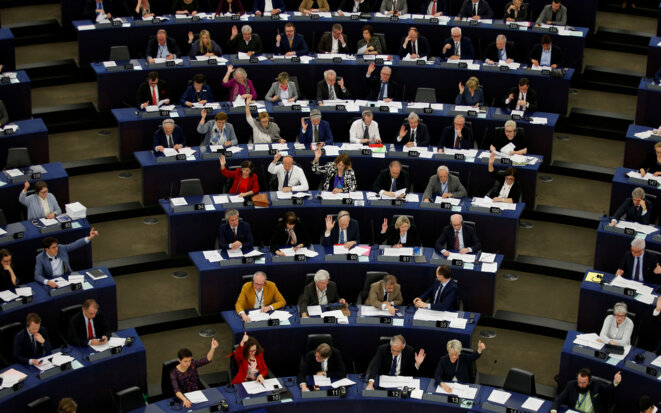
The withdrawal of the UK from the European Union this month was accompanied by the departure of the 73 British members of the European Parliament. The vacuum and partial redistribution of seats has caused a significant upset for the assembly’s Green members, who now find themselves overtaken in numbers by the far-right, reducing their budget and above all their clout in voting on legislation, notably regarding the raft of future policy measures for the Commission’s major “Green Deal” programme. Amid this collateral damage from Brexit, the Greens are urgently seeking new alliances, even eyeing a deal with Italy’s populist Five Star Movement. Ludovic Lamant reports from Brussels.
An exhibition in Paris reveals Poland's now forgotten colonial ambitions in the 1930s. In doing so, it makes a link between past Polish attitudes to colonies and other peoples and the racist reflexes of some governments in Central and Eastern Europe today. Ludovic Lamant reports.
The results of this month’s European Parliament elections, which in France and 21 other countries are to be held today, will be a key test of political parties across the continent, where anti-EU, nationalist and populist groups have been gaining ground on traditional parties. For French President Emmanuel Macron, whose LREM party, strongly pro-EU, is fighting European elections for the first time, the outcome on Sunday will also be a test of the credibility of his ambitions for the bloc. But the polling also lifts the curtain on a series of new appointments to lead the EU’s major institutions, which will hang on the results. Ludovic Lamant presents a guide to how the elections work, and the detail of what’s at stake.
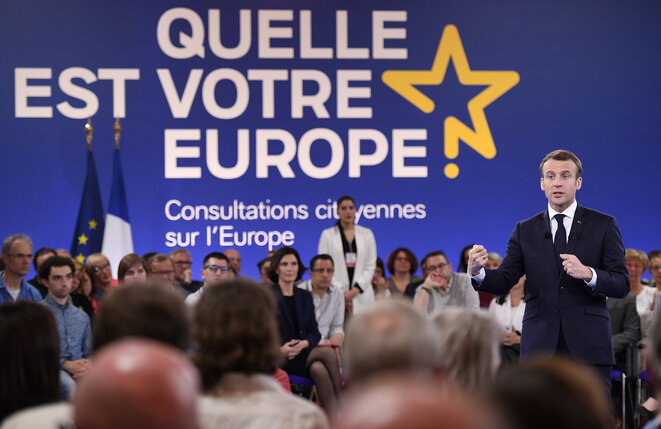
The aim was to allow people to come up with a concept of the “Europe of tomorrow”. Hundreds of public citizen consultations have already been held across France and more will continue into the autumn in a bid to help bring the French people closer to the European Union. Mediapart has visited three such meetings held in northern France, in Dieppe, Issy-les-Moulineaux and one of the seats of the European Parliament, Strasbourg. The Élysée promised they would be no holds barred meetings. But in reality the gatherings have largely attracted people who are already pro-European or who are members of President Emmanuel Macron's ruling party La République en Marche. Justine Brabant and Ludovic Lamant report.
Members of the European Parliament’s ENF group, a pan-European alliance of parliamentarians from far- and hard-right parties, and mostly made up of France’s Rassemblement National, have nominated a South African organisation championing the landowning interests of the country’s white Afrikaner farmers for the assembly’s prestigious yearly Sakharov Prize, Mediapart can reveal. The move follows increasing lobbying for the Afrikaner activists by far-right groups and commentators who claim the existence of a “white genocide” in South Africa. Mediapart Brussels correspondent Ludovic Lamant reports.
Almost a third of the 751 Members the European Parliament (MEPs) have earned a combined total of up to 41 million euros from outside activities over the four years since the current legislature was elected in 2014, according to a report published this week by anti-corruption organisation Transparency International. The numbers of MEPs remunerated for outside activities – which include working for private companies, lobbyists and investment funds – has risen dramatically since 2014, reveals the NGO which highlights a limp and ill-enforced code of ethics that allows numerous potential conflicts of interest among the lawmakers who are among the continent’s highest-paid elected representatives. Mediapart Brussels correspondent Ludovic Lamant reports.
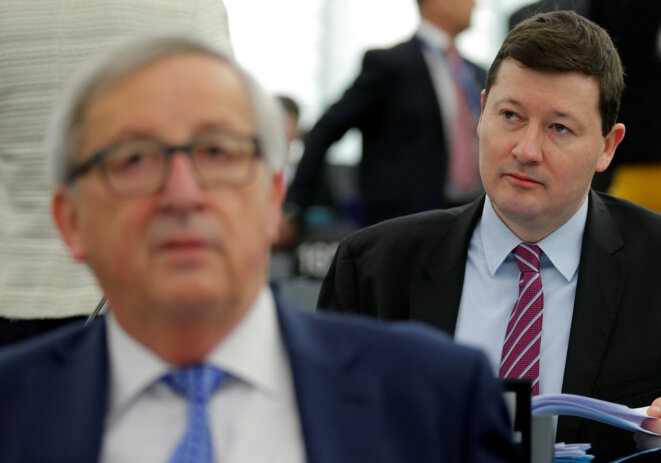
The highly questionable circumstances of the appointment of German conservative Martin Selmayr as secretary-general of the European Commission, a move initiated by commission president Jean-Claude Juncker for whom Selmayr until then served as chief of staff, has been met with outrage within the European Parliament, which on Wednesday adopted a motion describing the promotion as “coup-like” and “which possibly even overstretched the limits of the law”. But it pulled back from demanding Selmayr’s resignation, thereby avoiding a serious institutional crisis. Meanwhile, the commission, accused of blatant cronyism, has refused to compromise and insists Europe’s new top civil servant will remain in the post. Mediapart Brussels correspondent Ludovic Lamant reports.
The European Parliament is poised to launch proceedings to reclaim “non-compliant” expenses from the far-right parliamentary grouping that includes France's Front National, Mediapart has learnt. The total amount of the expenses involved, which include “unreasonable” claims of meals costing 400 euros a person, and the purchase of 228 bottles of champagne as gifts, comes to 427,000 euros. Ludovic Lamant and Marine Turchi report.
European Union commissioners spent nearly 500,000 euros on travel expenses in just two months in 2016, including 75,000 euros on a trip to Azerbaijan and Armenia by the EU’s foreign affairs head Federica Mogherini and 27,000 euros on a round trip to Rome by Commission president Jean-Claude Juncker. The partial details on commissioners’ spending were released only after a lengthy campaign by a Spanish rights organization which is demanding that their expenses be systematically posted online, which the Commission is refusing to do. Mediapart’s Brussels correspondent Ludovic Lamant reports.
When the European Union finalises legislation adopted by its executive body, the European Commission, the definitive texts of the directives are thrashed out in secret, closed-door meetings known as “trialogues”, unknown to the general public, where no minutes are kept. The trialogues – sometimes called trilogues – bring together, and without democratic control, representatives from the EU’s three major institutions: the Commission, the European Council of Ministers and the European Parliament. Mediapart's Brussels correspondent Ludovic Lamant reports.
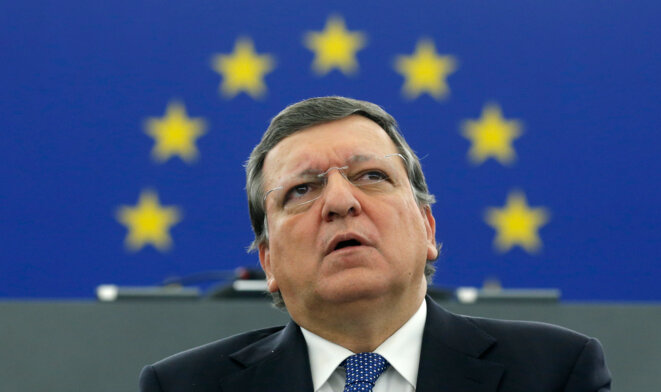
The recent decision by former European Commission president José Manuel Barroso to join Wall Street bank Goldman Sachs as an advisor caused outrage across much of Europe. Apart from, that is, at the heart of the Brussels institution itself where Barroso's successor Jean-Claude Juncker has only just, and grudgingly, criticised the move. However, disgruntled EU staff feel Barroso's appointment further tarnishes the EU's image and are examining ways to sanction their former boss. Ludovic Lamant reports.
All his blog posts
The Mediapart Club
Join the discussion
Mediapart’s journalists also use their blogs, and participate in their own name to this space of debates, by confiding behind the scenes of investigations or reports, doubts or personal reactions to the news.
La 13e édition du festival multidisciplinaire Hors Pistes, qui s’ouvre ce vendredi à Paris, s’attache aux manières de « dire la nation » à distance du discours national identitaire.
Quentin Ravelli est l’auteur d’un diptyque remarqué sur la crise espagnole : d’un côté, « Bricks », film qui vient de sortir en salle, et de l’autre, un livre, « Les briques rouges », publié aux éditions Amsterdam.
A Bruxelles, « L’assemblée d’avril » organise durant onze jours un « campement artistique et citoyen » en réaction aux crises des démocraties européennes.
Leur conférence de presse est passée inaperçue, tandis que les médias n’avaient d’yeux que pour les cérémonies romaines de la fin de semaine. Mais les conseillers municipaux espagnols, passés par le Parlement européen mi-mars, s’emploient, eux aussi, à défendre une certaine conception, plus sociale, de l’Europe. Ils en appellent à la désobéissance.
Ils sont plus de 500 à dire leur inquiétude. Des réalisateurs, techniciens, programmateurs de festivals et critiques ont adressé une lettre ouverte au gouvernement socialiste d’Antonio Costa, pour l’inciter à annuler une réforme du financement qui menace la diversité du cinéma portugais.