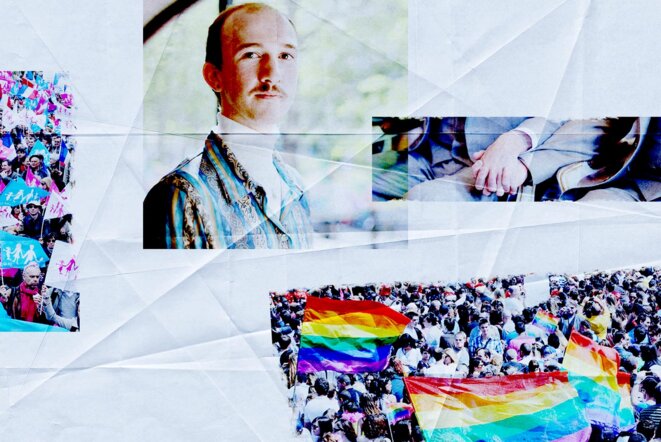
April 23rd marks the tenth anniversary of the French parliament’s approval of legislation allowing people of the same sex the rights of marriage and child adoption. In the run-up to that, the bill was fiercely opposed in mass demonstrations organised by a movement of Catholics, the Right and the far-right. Louis was just 11-years-old when his parents took him on the marches, which he remembers as being fun. Now aged 22 and gay, he looks back on the traumatic years since, growing up in a family of homophobic, traditional Catholics, and says that he hopes to benefit himself from the same-sex marriage law, “to show my parents that one can be homo and happy”. Rozenn Le Carboulec reports.
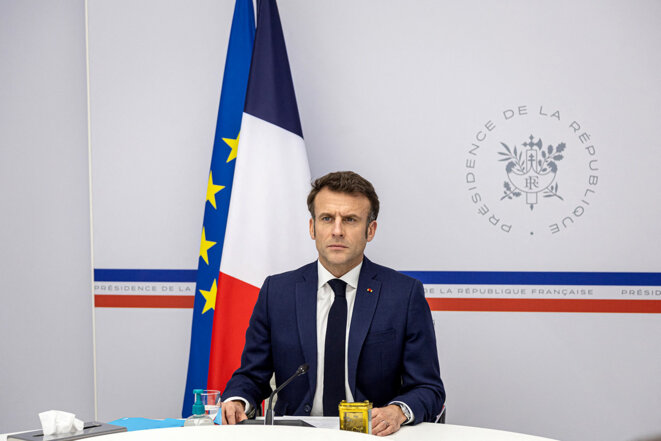
President Emmanuel Macron, according to his entourage, said he had “no scruples” about walking over the rights of Parliament by using an article of the French constitution to force his reform of the pensions system through the chamber, which was denied a vote on the legislation because he knew it would be rejected. In this op-ed article, Mediapart’s publishing editor Edwy Plenel argues that the move shines a clear light on a presidency which, far from acting as a barrage against the far-right, opens up a path for it by accustoming France to its anti-democratic violence and anti-egalitarian ideology.
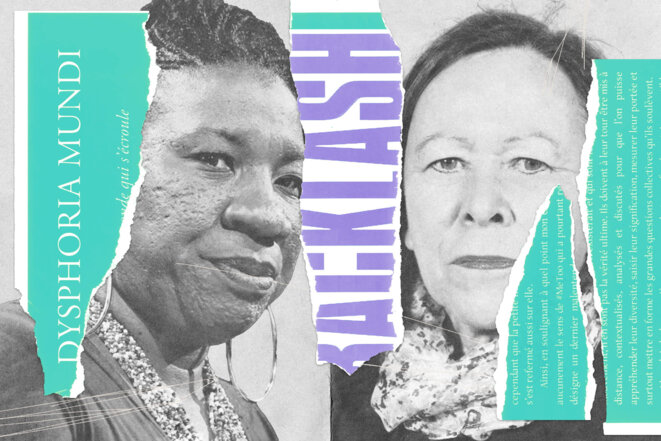
A “revolution”, a “jolt” an “emancipation” … however one wants to describe this contemporary feminist period, the fact remains that five years after it began #MeToo is at a crossroads; weakened for internal reasons and opposed by those whom it challenges. In this article, the first in a series, Lénaïg Bredoux and Joseph Confavreux assess the current status of the #MeToo movement.
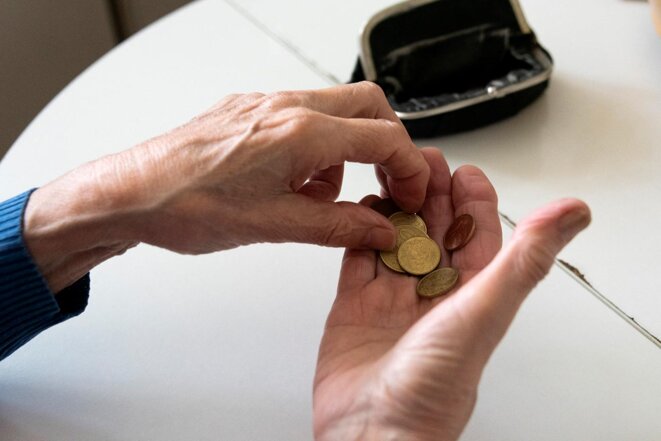
While the overall inflation rate in France over the 12 months up to March this year was 5.6%, food prices over the same period rose by 15.8%, according to a provisional estimation by France's National Institute of Statistics and Economic Studies. In this interview with Mediapart, economist Florence Jany-Catrice sets out how inflation, beyond creating a fall in purchasing power, is also driving a further rise in social inequalities.
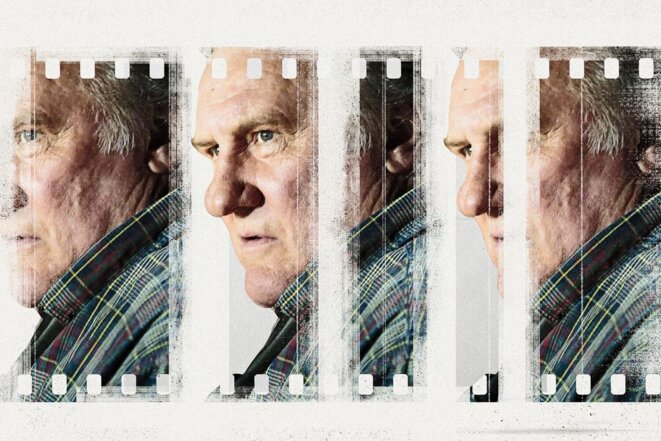
During an investigation lasting several months Mediapart has gathered numerous testimonies that accuse actor Gérard Depardieu of inappropriate words or gestures. The accusations come from actresses, make-up artists and production staff. Often taking place in public, the events are said to have occurred during the shooting of eleven films that came out between 2004 and 2022. The director Fabien Onteniente says that on one occasion he confronted the famous French actor over his behaviour. Depardieu himself denies any criminal behaviour. Meanwhile, one actress has just given her account to the French justice system. Marine Turchi reports.
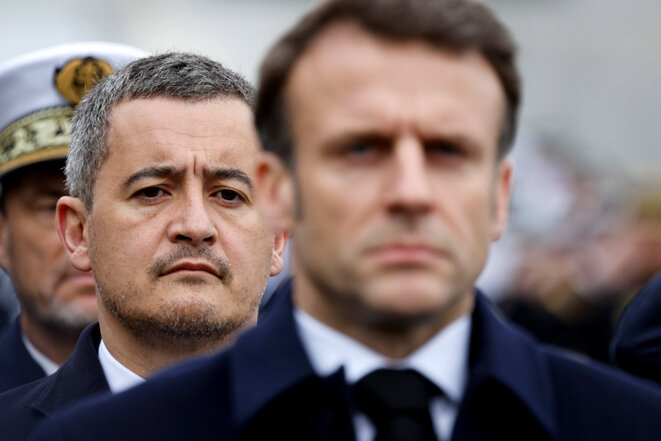
Emmanuel Macron and his supporters – including interior minister Gérald Darmanin – have not learnt the lessons from the president's first term and the fact that, twice in a row, the far-right candidate Marine Le Pen made it through to the second round of a French presidential election, argues Ellen Salvi in this op-ed article. All the while, she says, the government continues to lower the level of public debate, with the far-right being the main beneficiaries.
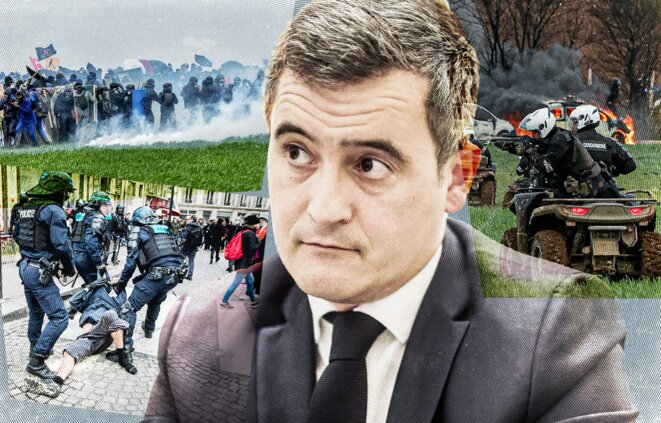
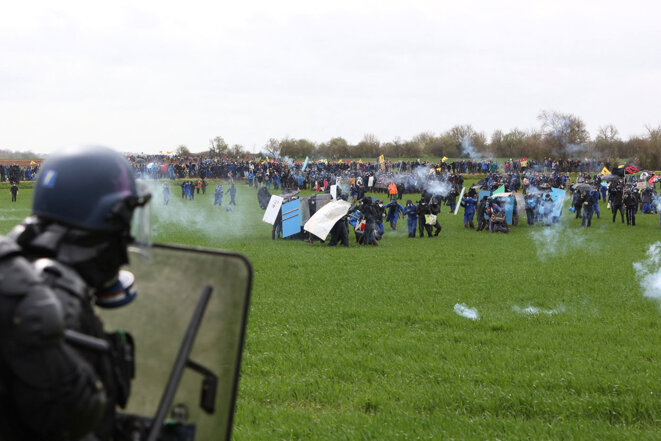
In the space of one week France's high-profile minister of the interior issued a series of bold but false declarations. These assertions concerned the typical profile of the “troublemakers” present at France's recent demonstrations, the police's controversial BRAV-M motorbike unit, the type of ammunition fired at the water protests at Sainte-Soline in west France and the obstacles that prevented the emergency services from reaching people who had been badly injured at the same demonstrations. France's top administrative body the Conseil d'État described one of Gérald Darmanin's pronouncements as “false”. Matthieu Suc reports.
Earlier this year the lost remains of 27 infants were finally discovered in shallow graves close to a former French military camp used 60 years ago to intern Harkis, the Algerian auxiliaries who fought alongside France’s army in the Algerian war of Independence, and their families. The infants, whose parents were reluctantly admitted to France in 1962, were among 31 recorded to have died amid the harsh conditions at the isolated camp in southern France. But despite announcements of a future memorial cemetery for the children, their families are increasingly angry at the delays for a search to begin for the other missing remains, and call for the opening of an investigation into the many mysteries surrounding the events. Prisca Borrel reports.
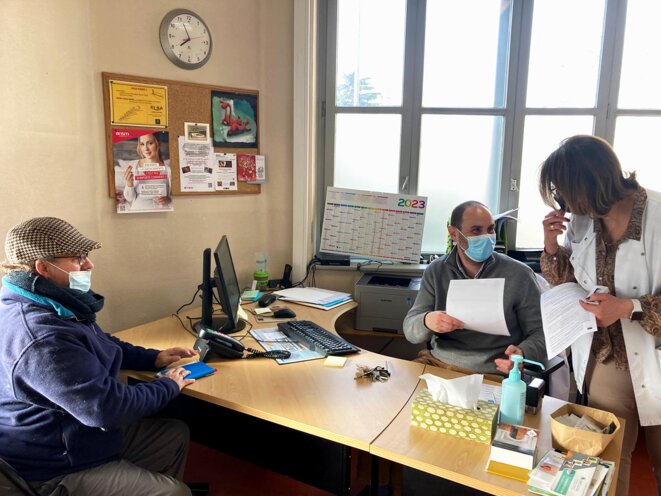
Addiction to medicines that are prescribed to ease pain, anxiety or to help someone sleep is a major and very public problem in the United States. But in France the scale of the problem is significantly underestimated. Mediapart has had access to a unique clinical service in the eastern city of Lyon that specialises in dealing with patients who have become hooked on prescription drugs. Health correspondent Rozenn Le Saint reports.
If one single proof were needed of the justness of the environmental cause, then this is provided by the frenzied repression regularly deployed against it, writes Mediapart’s publishing editor Edwy Plenel in this op-ed article. From the anti-nuclear protests at Creys-Malville on the Franco-Swiss border in the 1970s to the recent demonstrations against agricultural water reservoirs at Sainte-Soline in west France, and including the sinking of the 'Rainbow Warrior' in Auckland harbour in 1985 and the anti-dam protests at Sivens in south-west France in 2014, the movement's martyrs have stood up against its opponents in France. These opponents are, he argues, proponents of a calamitous capitalism that is now paving the way for carbo-fascism.