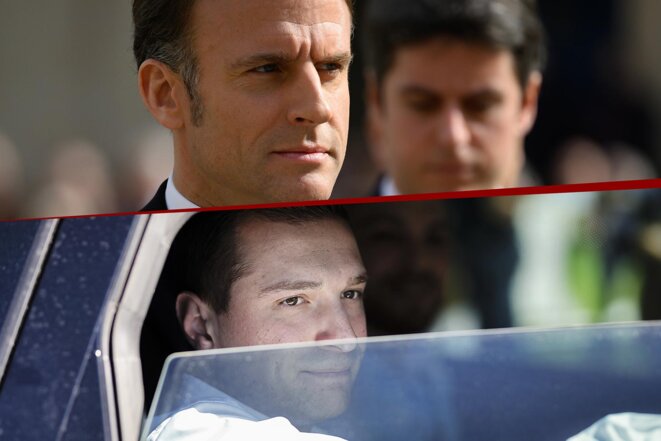
As the far-right gains support across Europe, President Emmanuel Macron continues to portray them as the only political alternative to him and his party in France. The different strands of the French Left therefore need to work together or run the risk of being marginalised in the European elections on June 9th, writes Mediapart publishing editor Carine Fouteau.
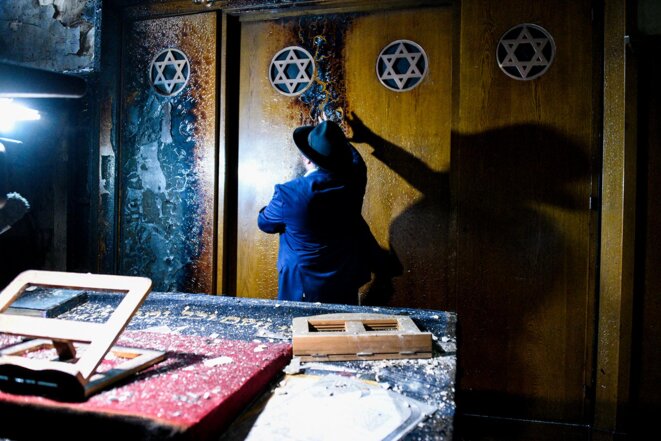
Anti-Semitism is witnessing a resurgence in France at the moment, and is even being stirred up from abroad. In this op-ed article Mediapart co-founder Edwy Plenel argues that neither the fact that it is being exploited to help Israel's cause, nor the fact that there are also other racisms that need combatting, can justify underestimating the dangers involved in this rise of anti-Jewish sentiment.
In April this year President Emmanuel Macron was filmed playing alongside celebrities and former football stars in a charity match to raise money for young people in hospital. But behind this and other similar charity football games there is also a lucrative business. Captains of industry are being charged up to 75,000 euros for each star-studded encounter, which buys them media exposure and a place at a post-match dinner held at the Elysée. As Antton Rouget reports, the money raised from this is not given to charities. Instead, the proceeds are going to a company owned by the son of the veteran sports journalist who runs the charity involved in the matches.
Eight people from seven countries who are separately related to individuals who have died from extreme weather events this week filed lawsuits, together with three NGOs, against the directors and shareholders of French oil and gas giant TotalEnergies, who they accuse of crimes of manslaughter and placing lives in danger through the group’s knowing contribution to climate change. Mickaël Correia reports.
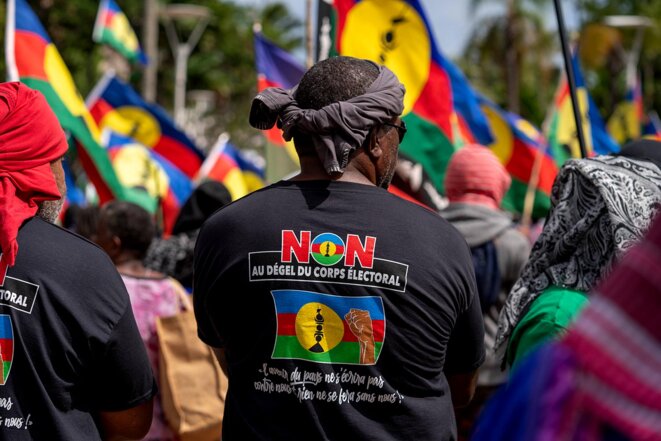
A young Kanak close to a roadblock in Nouméa, capital of New Caledonia.
French President Emmanuel Macron left Paris for New Caledonia on Tuesday, in a bid to defuse the unrest in France’s Pacific Ocean territory that has claimed the lives of at least six people over the past week. The eruption of rioting last week followed a move by Paris to allow recent settlers on the archipelago the right to vote in local elections, which will have the effect of diminishing the political representation of the indigenous Kanak people. Mediapart turned to French anthropologist and researcher specialised in New Caledonian affairs Benoît Trépied for his insight into the anger of the archipelago's young Kanaks, who are at the forefront of the violent protests.
A sixth person was on Saturday reported to have been killed in the ongoing unrest in the French overseas territory of New Caledonia, amid increasing calls for Emmanuel Macron and his government to place on hold the legislation that sparked the violence. This will give newly arrived settlers, mostly European, on the South Pacific archipelago the right to vote in local elections, whereas until now the electoral register was frozen in order that the indigenous Kanak people maintain their political representation. In this analysis of the crisis, Mediapart publishing editor Carine Fouteau says that an almost four-decade-long process of decolonization is now at a crossroads, and at stake is the survival of the Kanak people who have been gradually turned into a minority under French domination since the mid-19th century.
The French government on Wednesday announced the establishment of a state of emergency in the Pacific Ocean territory of New Caledonia, where four people, including a gendarme, have died and many others were injured after two nights of rioting. The troubles were prompted by anger at new legislation to change the electoral register which will have the effect of diminishing the political representation of the archipelago’s indigenous Kanak people. “We’ve entered a deadly spiral," said France's high commissioner for the territory, Louis Le Franc. Gilles Caprais reports from the New Caledonian capital Nouméa, after the second night of violence.
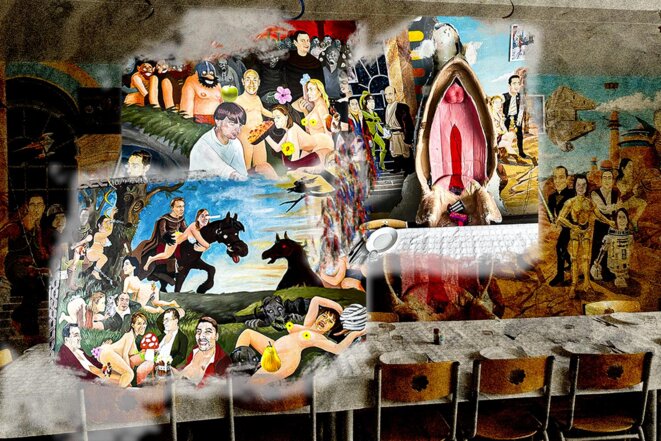
In a number public hospitals around France, the staff rooms of junior doctors – where they take meals and hold parties – are painted with sexist and pornographic frescos. While often these are scenes of orgies involving caricatures of consultants and junior doctors, at least one depicted the rape of a health minister. Last year the health authorities ordered hospitals to remove the frescos, but as Mediapart reports here, many have not done so because of opposition, not least from elder doctors, against a “cancel culture”. Meanwhile, feminist activists say the hospital murals are perpetuating a “an apologia of the culture of rape”. Prisca Borrel and Caroline Coq-Chodorge report.
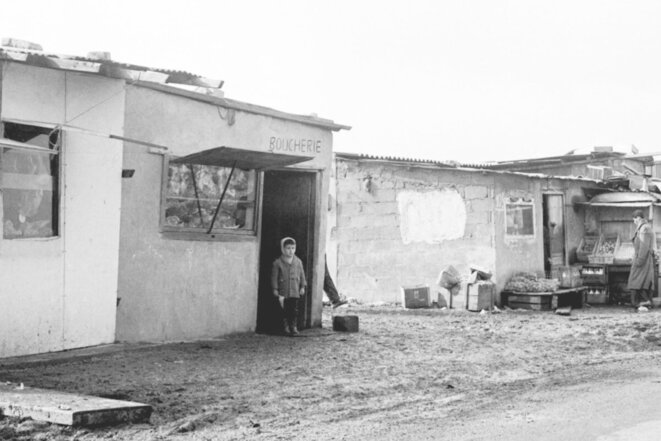
By the mid-1960s, around 75,000 immigrant workers and their families, who arrived in France as cheap labour during the post-war economic boom that began in the 1950s, lived in appalling conditions in shantytowns close to towns and cities, and notably Paris. The camps were only finally demolished in the mid-1970s, but their legacy lives on. French sociologist Margot Delon recently published a study in which she interviewed those who grew up in the shantytowns, and which offers an insight into the grim reality of a world from which thousands sought, and some succeeded, to escape. This review by Faïza Zerouala.
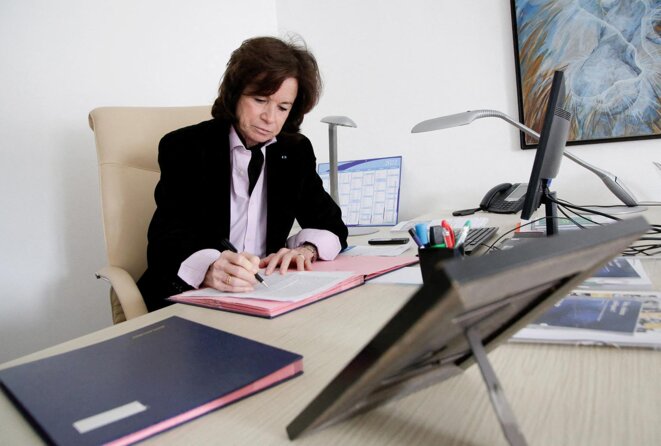
The organisation tasked with combating sexism in French society, the Haut Conseil à l’Égalité entre les Femmes et les Hommes (HCE), is itself in the middle of a crisis, according to internal documents and testimonies from staff and former staff obtained by Mediapart. Its president Sylvie Pierre-Brossolette, whose comments on a variety of topics have outraged employees at the HCE, said she had no intention of “explaining” herself to Mediapart. Sarah Brethes reports.